Friday, October 25, 2013

Uganda among the Top-10 Most Popular destinations for tourists in Sub-Saharan Africa

Uganda is among the 10 destinations that are on course to turn into popular tourists’ destinations in Sub-Saharan Africa, according to a World Bank report. The Tourism in Africa: Harnessing Tourism for Growth and Improved Livelihoods report indicates that Uganda together with Rwanda, Burkina Faso, Gambia, Malawi, Mozambique, Senegal, Zambia, Zimbabwe and the Seychelles are scaling up tourism and emerging as a tourism destination.
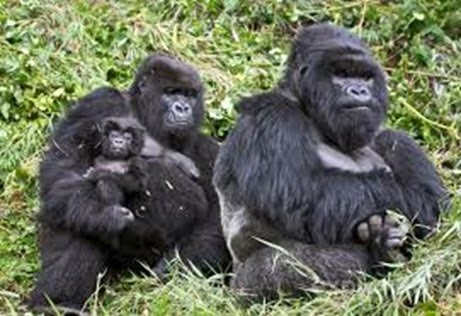
rwanda mountain gorillas

According to Tourism Update the report, titled Tourism in Africa: Harnessing Tourism for Growth and Improved Livelihoods, stated Sub Saharan Africa’s tourism industry was set to drive economic growth on the continent and directly employ 6.7 million people by 2021.

Tourism is one of the largest and fastest growing sectors of the world economy, and tourism in Africa is ripe for development, the report notes.

For example, the number of tourists arriving in SSA has grown over 300% since 1990, with 2012 marking a high of 33.8 million tourists who visited the region.

Income generated from tourism has also climbed: Receipts from hotels, tours and other attractions in 2012 amounted to over US$36bn and directly contributed just over 2.8% to the region’s GDP, according to the report.

The report said these countries had simplified their tourism policies, liberalised air transport and diversified tourism while protecting their communities and environments, which created a positive investment climate for tourism development.

The World Bank has urged SSA governments to form alliances with the private sector-and the private sector to partner with government at local, regional and national levels.

Together they can plan and develop tourism infrastructure, increase transparency in land ownership and create a business-friendly environment for tour operators and other companies. When sustainably managed, tourism fuels economic transformation, accelerates reform, triggers infrastructure improvements, and empowers women and minorities in countries throughout Africa.

Wednesday, October 23, 2013

MURCHISON FALLS FERRY GROUNDED

MURCHISON FALLS FERRY GROUNDED
murchison ferry
The Murchison Falls Ferry is undergoing repairs to enhance Visitor safety. It was grounded on the 22nd October in order to install New ferry Pontoons. The ferry is expected to resume its routes on the 1st of November 2013. Tour Operators are advised to use the Karuma route for activities on the Northern Bank .
According to UWA, the contractor has been briefed to expedite the works so that it doesn't interfere with the preparations for the eclipse events.

UWA regrets all inconveniences it may have caused!!!

For any unusual challenges, contact the Conservation Area Manager, for Murchison Falls National Park, Mr. Tom Okello on 0772 550 294 and Tourism Warden , Joshua Masereka on 0783 482 298.

Tuesday, October 15, 2013

Nyungwe National Park nominated for Global Award

NYUNGWE NATIONAL PARK has made the cut of seven from the continent shortlisted for the 2013 World Travel Awards. The accolade follows last year’s British Guild of Travel Writers’ Global Award that the park received for its effort to harmonize tourism, wildlife and the agricultural community in one of Africa’s last surviving rainforests.

Nyungwe has been nominated alongside with Kalahari Game Reserve (Botswana), Etosha National Park (Namibia), Kruger National Park (South Africa), Masai Mara National Reserve (Kenya), Serengeti National Park (Tanzania), and Kidepo Valley National Park in Uganda.

Speaking to us yesterday, Clare Akamazi, the acting Chief Executive Officer of Rwanda Development Board, expressed optimism that Nyungwe would win the prestigious International Award.“It’s not the first time Nyungwe is recognized for its rich biodiversity; last year the park work the British Guild of Travel Writers’ Globe Award. It’s because the park focuses on conserving the environment and at the same time promoting tourism,” she said.

“Nyungwe Nziza” (beautiful Nyungwe) Project was created to strengthen sustainable eco-tourism in and around Nyungwe National Park.

The rainforest national park is one of the world’s richest and most diverse ecosystems and home to 25% of all Africa’s primates and is home to a quarter of Africa’s species of primates, 300 species of birds, and constitutes one of the oldest and rarest high altitude habitats in the central and eastern Africa.

The Awards

The World Travel Awards was established in 1993 to acknowledge, reward and celebrate excellence across sectors of the tourism industry.
The winners are voted by individual professionals and consumers worldwide. According to the World Travel Awards website, last year’s winners were voted by peoples from over 170 countries.
Each year, World Travel Awards cover the globe with a series of regional gala ceremonies staged to celebrate individual and collective success with each key geographical region.
All regional winners then compete in a final round of voting to decide who walks away with the ultimate accolade in the tourism and travel industry.

The continental ceremonies will take place in Nairobi October 16, while the grand finale is set for November 30, in Doha Qatar.

Last year Rwanda’s tourism industry generated $281m compared to $251M in the previous year, an increase of 17 per cent, according to the Rwanda Development Board.

    6 days gorilla trek and Chimps in Nyungwe
 9 days Rwanda Gorillas, all other primates safari 
 9 days Gorillas and cultural tour
 10 Days Uganda Rwanda Tour 
 11 Days Uganda Rwanda gorillas wildlife Safari  tour 
 12 Days Uganda Rwanda gorillas 


Monday, August 5, 2013

Uganda Offers Discounted Gorilla Permits For November 2013 and Promotional Gorilla Tours

We have reliably learnt and would like to share the news with you – the Uganda Wildlife Authority in conjunction will be offering discounts on gorilla permits for November 2013!

mountain-gorilla-silverback-male-silverback

The current standard gorilla permit price USD500.00 but for November 2013, it will be at USD350.00 for non-resident foreigners. In addition to this, Gorillas and Wildlife Safaris will be offering a USD50.00 per person discount off all Uganda gorilla trek safaris booked for November 2013. Some of the safari packages you can book to enjoy this promotion gorilla safari discounts include:
3 days Uganda Gorilla tour
Uganda 4 days Gorilla tracking tour with Safari in Queen Elizabeth National Park
Uganda 5 days Gorilla tracking tour with Wildlife Safari in Queen Elizabeth National Park
Park
5 days Uganda Gorillas, Chimps Tour
5 days Rwanda, Uganda Gorillas
6 Days Gorilla Trek tour, Kibale Chimps tracking, Wildlife BIG 5 Safaris in Queen Elizabeth National
6 days gorilla tracking, wildlife safari
7 days Uganda tour and holiday to Murchison Falls, mountain gorillas, Chimpanzees in Kibale Forest and Gorillas in Bwindi Impenetrable
7 days Gorillas, chimpanzee, wildlife 
8 days Uganda Gorilla Game safari
9 days Gorillas, primates wildlife
All Inclusive 12 days Uganda Safari

So please book your gorilla trekking safari for November now to enjoy this discount. This idea is a welcome one as Uganda Looks to improve her tourist inflows.

Uganda was voted the best tourist destination by lonely planet and has recorded the highest tourism growth in the whole of Africa in 2012. Tourism has been sighted by the President of Uganda as a sector that will drive the country out of poverty in the next coming years. With this discount on gorilla permits especially in low seasons will not only increase on tourists inflow but will create awareness, tourism earnings for the betterment of the sector.

Is November a Good Month to Track the Mountain Gorillas?
Discounted gorilla permits will always be announced every year for the months of November, April and May to enable tourists travel during low season in Uganda. Tourists are encouraged to take advantage of these months as accommodation rates also tend to go down lowering the general price of a gorilla safari. Some tourists have been influenced to think that this discount is only in months when it is raining highly making gorilla trekking a bit tough. This is not wholly true as Bwindi Impenetrable National Park is located in a high altitude area with tropical rain forests and thus its climate is influenced by a number of factors including even westeries (winds) from the Congo. This therefore means that Bwindi Impenetrable National Park receives rainfall throughout the whole year and it can rain every after 30 minutes irrespective of whether it is a dry or rainy season.
How to book your November 2013 Discounted Gorilla permits?
Please contact us for your discounted gorilla permits (Once announced) and we will pre purchase it for you and organize a gorilla tour that fits your budget, interest and time. All we need from you is the exact date when you intend to trek and we will check availability of gorilla permits at Uganda Wildlife Authority which is a body mandate to sell gorilla permits on behalf of Uganda Government and the ministry of Tourism and Wildlife. Once we find out that UWA has permits, you will need to send us your names as they appear on your passport, your nationality so that we forward them to Uganda Wildlife Authority to issue your gorilla permit.
How do I pay for my November 2013 Discounted gorilla permit?
Once you have decided on the dates, we will send you an invoice with our bank account details to enable you effect your payments. We usually require full payment of gorilla permits.

How do I know that my permit has been pre purchased?
Once your money show on our account, our office staff will check-in at Uganda Wildlife Authority with all your passport details and once your permit is issued, then we will scan it and send you a copy.

To claim you cut off the gorilla tour price please send an email to info@gorillasandwildlifesafaris.com or visit the website  (http://www.gorillasandwildlifesafaris.com ) and ask for reduction in gorilla tour price to reflect this discount.
See you on trek!

Wednesday, July 17, 2013

Hiking Mt Visoke, Volcanoes National Park Rwanda

Mount Visoke (also Bisoke) is an extinct volcano in the Virunga Mountains of the Albertine Rift, the western branch of the East African Rift. It straddles the border of Rwanda and the Democratic Republic of the Congo, but the summit is located in Rwanda. It is located approximately 35 km northeast of the town of Goma and adjacent Lake Kivu.

The mountain is located within Rwandan Volcanoes National Park and Congolese Virunga National Park. The steep slopes of the peak are densely covered with equatorial rainforest and alpine meadows. The summit does not gather snow, but is often shrouded in fog. Bisoke is one of the mountains considered a habitat for the Endangered mountain gorilla, and the Karisoke Research Center founded by Dian Fossey is located in the valley to the west.

Mt Visoke stands at 3700m, it has the typical conic shape of a “perfect” volcano and in its crater lies a deep crater lake. For those interested in climbing Mt Visoke the volcano does not present an exceptionally demanding climb but it is nevertheless still a tough hike. The high elevation demands extra strength of climbers and the whole excursion can take between 5 hours and the whole day depending on the speed of the walk and the frequency of stops. The ascent typically takes around 3 hours.

An eruption in 1957 formed two small cones on the north flank, 11 km from the summit. The walk around the crater rim is highly recommended. Allow seven hours for the entire trip. Lake Ngezi (9,843 ft./3,000 m), a small, shallow crater lake, is the easiest hike in the park; it takes only three to four hours round-trip from the Visoke departure point.Mount-Visoke-bisoke-rwanda-hike

During the climb, you will cross a series of different vegetation habitats starting with bamboo forests, then moving into Hagenia - Hypericum forest and finally moving through Senecio - Lobelia bush near the summit.

Current park fees for the climb are USD$ 75 per person, this includes the park’s guide and can be purchased on the day of the trek from the parks headquarters, no advance booking is necessary. The trek starts at 07:00am from the Park’s headquarters in Kinigi from where visitors will drive / be driven to the start point of the trek. Porters can also be hired from the park headquarters.

Related Articles:

All you need to know about Golden Monkey Tracking in Volcanoes National Park Rwanda

When is the Best time for gorilla trekking/ tracking in Rwanda and Uganda?

What to wear and take when trekking to see the gorillas?

How to do a 1-Day Rwanda mountain gorilla trekking tour ...

All you need to know about Golden Monkey Tracking in Volcanoes National Park Rwanda
Mountain Gorilla Trekking Tour Packages in Rwanda and Uganda
3 days Uganda Gorilla tour
4 days Rwanda Gorilla Tour  -
1 day Gorilla trek Rwanda with tour price
2 days Gorilla tracking Rwanda with tour price
3 day Gorilla tracking Rwanda with tour price
5 days Gorillas trek Rwanda and Safari in Queen Elizabeth National Park Uganda
5 days Rwanda, Uganda Gorillas

Monday, July 15, 2013

New Tax (Value Added Tax) on Tourism Lodges Gives Uganda Tour Operators Headache

Up on reading the 2013/14 annual Uganda government budget, new taxes were introduced on all accommodation facilities (18% Value Added Tax) with effect from July 2013.

 And we have been receiving numerous emails from the lodges with credit notes and revised invoices for all the bookings. Of course this puts us in a very awkward position with our already confirmed clients' bookings but the government won't just give up to relent on their decision. We have been trying all ways to absorb the increase but it's just to big for us.

Future safaris booked  will have the new 18% Value Added Tax included in the price quote to our clients – since the present increase was a surprise move and caught the hospitality industry and tourism sector off-guard and since there was no preparing for it we will have to add a surcharge covering the amount of the 18% Value Added Tax. Sadly there is no extra value for the Tourist – however there is for the cash-strapped Ugandan government.

This will mean significant higher costs to visitors of up-country park lodges – and certainly there is not going to be a free lunch for anyone – not only will tourists pay more, convention, conference attendees will also incur the new charges.

Taxes exist in every country including Uganda – some countries allow mechanisms for a refund of taxes paid as visitors leave the country – sorry, your taxes are going to stay in Uganda and hopefully will be put to good use improving the infrastructure and other needed areas of the Pearl of Africa.

Leading stakeholders have in recent days gone on rare record in the media over these actions, accusing government of not just mere lipservice towards the sector but of creating a work environment radically opposed to the often talked about an "enabling environment," a phrase often used to self glorify economic advances even if glaringly absent.

"What they have done is create a disabling environment for the tourism industry. The tourist board which is supposed to promote the country, got a paltry 250 million Uganda shillings. What the hell are they thinking that can do other than pay rent and utilities and maybe staff?" ranted another regular source, for obvious reasons wishing to remain anonymous.

"This will lead to job losses in the sector and will only make an already tough situation more difficult. Others of our neighbors treat tourism as a priority sector, and here it is almost as if we are punished. Maybe they want to reduce tourism so that oil exploration can go ahead without us raising issues like in Murchison, where they want to pump oil in a wildlife park. We are completely at a loss to understand how a sector with the biggest potential for immediate job creation, FDI and forex earnings can be treated so badly. This is unacceptable, completely unacceptable," said yet a third source met on Friday, all expressing their utter frustration with the turn of events.

Leading lodge operator in the country claimed, also on condition of anonymity, that their occupancies will suffer as a result of the tariff increases. It could not be immediately ascertained how the new VAT addition will affect conference participants now heading to Uganda for the Routes Africa meeting and other conferences, as their accommodation cost is also bound to increase by 18 percent.

For any inquires please consult your sales consultant.


Tuesday, July 2, 2013

What should I pack on Visit, tour or safari to Uganda?


What should I bring with me on my visit /tour/safari/holiday to Uganda, what essentials should I pack as I plan to visit Uganda?
·         Daypack
·         High SPF sunscreen (Uganda is located on the equator!)
·         Flashlight
·         Insect  repellent.
·         Spare or rechargeable batteries (these are difficult to find once you are in the Parks).
·         Waterproof bags to protect equipment
·         Electric plug adaptors for 240 volts AC 50 HZ. UK style square-pin plugs are used.
·         Some people find contact lens uncomfortable in Uganda because of the dust – you may find it more comfortable to were glasses while on the road.
·         Antiseptic handwash.
·         An International Driving License if you are thinking of hiring a vehicle.
Clothing
·         Good walking boots/ shoes
·         Sandals or other light shoes
·         Waterproof jacket or rain poncho
·         Lighter clothing for Kampala and the savannah, with layers for cooler evenings,
·         Warm clothing for mountainous regions, including thermal layers and a fleece.
·         Sun hat/cap
·         Uganda is a conservative country, and visitors should dress respectfully. Avoid the very short skirts and very short shorts.
Should I Bring any Specialist Equipment?
This depends on your interest – for photography, birding and wildlife enthusiasts we recommend the following:
Binoculars: The better ones start at about $250: you get what you pay for! Waterproof binoculars are great in Uganda as they are also dustproof.
For most travelers stick with 8-10 magnification and 32 objectives which are heavy to carry all day.
Cameras: Choose something you know can handle  - a heavy camera with many settings will be off-putting for some people to use. For good wildlife shots, 8et at least 8x optical zoom. Six to eight megapixel is fine unless you want poster-size photos. Bring a lens cloth to remove dust, several changes of batteries (even if you use rechargeable – not all sites have power points) and take several 1GB memory cards instead of one large one to avoid losing all your photos in case something goes wrong.