Showing posts with label leopard uganda. Show all posts

Tuesday, February 4, 2014

6 Things you must not miss on Lake Mburo National Park Safari

is a compact gem, located conveniently close to the highway that connects Kampala to the parks of western Uganda (about 4 hours driving from Kampala). It is the smallest of Uganda’s savannah national parks and underlain by ancient Precambrian metamorphic rocks which date back more than 500 million years. This 260km2 park’s precarious past has seen wildlife virtually eliminated several times: firstly in the various attempts to rid the region of tsetse flies, then to make way for ranches, and finally as a result of subsistence poaching. 20% of the park’s areas is a wetland.

1. Wildlife

The park’s varied habitants support 68 mammal species. Rarities include impala, which in Uganda only lives in Lake Mburo , and Burchell’s zebra and eland which are only found here and in Kidepo.
Other species include warthog, buffalo, oribi, Defessa waterbuck and reedbuck. Leopard and hyena are also present while the crocodile and over 300 hippos are found in the lake.
Previously extinct in the park, lions have been recently sighted.

zebra_lake_mburo
Burchell’s zebra

several antelopes species inhabit Lake Mburo National Park Leopard sighting in Lake Mburo National Park, Uganda

2. Birding

crested crane
The Crested Crane, Uganda’s national symbol

Lake Mburo National Park is home to 315 bird species. These include the red-face barbet, only seen in , Africa finfoot, the rarely seen shoebill stork, Papyrus yellow warbler, Saddle-billed stork, brown-chested lapwing, African-wattled lapwing, Carruther’s Cisticola, Tabora (long-tailed) Cisticola, African ScopsOwl, Abyssinian Ground Horbill, and White-winged Warbler.

Acacia woodland bird species are especially well represented, while forest species may be found in rubanga Forest. These include Blue-breasted kingfisher, Hairly-breasted Barbet and Yellow-rumped tinkerbird, among others.

The best birding spots in are the swampy valley of Warukiri; the road between the camp and Rwonyo jetty; and the viewing platform which overlooks the salt lick. Rubanga forest can be visited on foot by prior arrangement with the warden – this is a real draw for keen birders. Rare species such as the African Finfoot and Red-faced Barbet -  only seen in Lake Mburo National Park – are two of the forest’s featured species.

3. The launch trip on Lake Mburo

338314_487067517979256_1907589884_o
Hippos

326860_462747217077953_439717885_o
Nile crocodile

The wildlife-rich eastern banks of Lake Mburo can be explored during tranquil two-hour noat voyage. Keep an eye out for crocodiles, buffalo, and hippos as well as colorfull kingfishers, magnificent fish eagles, hammerkops and their enormous nests and even bizarre-looking shoebill.

4. Hiking and Nature Walks

Unusually, the whole park is open to walkers as long as they are accompanied by a ranger guide. At Rwonyo, a guided walk leads to the salt lick where many animals are attracted to the salty rocks. Walks on the western side of the lake and take two hours. At this time of the day, you may encounter hyenas returning to their dens and hippos retreating to the lakes.

5. Horseback safaris

Horseback safaris are an exciting way to view wildlife including elland and buffalo. Also commonly sighted are warthog, topi, impala, dukier, bushback, waterbuck and zebra. The four-hour hacks take visitors up to the hilltop viewpoints with the option of bush breakfasts or sundowners.

6. Sport Fishing

Lake Mburo contains around six species of fish, with tilapia being the the most common. The designated fishing spot is at Mazinga. Visitors planning to fish here should carry their own equipment and obtain a permit from Uganda Wildlife Authority.

Aside fro  the abundance of wildlife, the best thing about this little park is the peace by the lake. For the entire stay in the park, you will experience numerous uninterrupted sightings of wildlife and yet have the opportunity to relax by the calm lakes.


Safari Packages to Lake Mburo National Park


Wednesday, January 23, 2013

7 Must Sees on Safari tours to Queen Elizabeth National Park

The 1978km2 Queen Elizabeth National Park is understandably Uganda’s most popular tourist destination. The Park’s diverse ecosystems, which include sprawling savanna, shady, humid forests, sparkling lakes and fertile wetlands, make it the ideal habitat for over 95 mammal species including classic big game, ten primate species including chimpanzees and over 600 species of birds.  It was founded in 1952 as Kazinga National Park and renamed 2 years later to commemorate a visit by Queen Elizabeth II. 

Set against the backdrop of the jagged Rwenzori Mountains, the park’s magnificent vistas include dozens of enormous craters carved dramatically into rolling green hills, panoramic views of the Kazinga channel with its banks lined with hippos, buffalo and elephants, and endless Ishasha Plains, whose fig trees hide lions ready to pounce on herds of unsuspecting Uganda kob.

As well as its outstanding wildlife attractions, “Queen” has a fascinating cultural history. There are many opportunities for visitors to meet with the local communities and enjoy story telling, dance, music, and more.

1. Big Game

With an astonishing 5000 hippos, 2500 elephants and over 10,000 buffalo thriving in its grasslands and shorelines, Queen  guarantees sightings of some of Africa’s most iconic species. Hearing the elephants’ calls reverberating around Queen’s crater-filled valleys is a magical experience.

Hippos along Kazinga Channel, Queen Elizabeth National Park Elephants along Kazinga Channel, Queen elizabeth National Parkbushbuck in Queen Elizabeth National Park

Other common herbivores include warthogs, waterbucks, Uganda Kob and topi, as wells as the sitatunga antelope.

 A herd of antelopes in Queen Elizabeth National Park Uganda


2. Big Cats Tree climbing Lion in Ishasha sector, Queen Elizabeth National Park

A leopard seen at Queen Elizabeth National ParkQueen’s most elusive inhabitants are its felines: lions, leopard, civet, genal and serval cats.

Lions are found throughout the park, but the most renowned live in the southern sector of Ishasha, where they rest on the limbs of fig trees. Solitary leopards are norcturnal and fiendishly well camouflaged! The smaller cats are also predominantly norcturnal and best spotted on night game drives.


A herd of lions in Kasenyi plains, Queen Elizabeth National Park

3. Birds

Birding in Queen Elizabeth National Park is an incredible treat as it contained a variety of habitats that range from savanna to wetlands to lowland forests. This diversity is reflected in the list of over 600 bird species, the biggest of any protected area in East Africa, and phenomenal of such a small area. Queen Elizabeth National Park is classified as an Important Bird Area (IBA) by Birding International. A majority of birds found in this area are regarded as famous birds of East Africa and are a must see for birdwatchers in Africa!

The park’s confluence of savanna and forest, linking to the expansive forests of the DR Congo allow visitors to spot East as well as Central African species.

 Double toothed barbet agnificent chap with his odd beak is an African Spoon bill and he is with an Egyptian goose (taking a break from Tahir square)Spur winged Lapwing

African Skimmer

Present in the park are numerous water birds, woodland and forest dwellers in the Maramagambo Forest, 54 raptors and various migratory species. Key species include the martial eagle, black-rumped buttonqail, African skimmer, Chapin’s flycatcher, pinkbacked pelican, African broadbill, Verreaux’s eagle owl, black bee-eater, white tailed lark, whitewinged warbler, papyrus gonolek, papyrus canary, corncake, lesser and greater flamingo, shoebill, bar-tailed godwit.

For the best birding in Queen, don’t miss these birding hotspots: Kazinga Channel, Kasenyi Area, Mweya Pennisular, Maramagambo forest, Ishasha sector, Lake Kikorongo, Katunguru Bridge Area and Katwe Area.

4. The Launch Trip along Kazinga Channel

boat ride with elephantsThe Kazinga Channels is an oasis for many of the fascinating species that inhabit the park, and taking a boat tour along it gives visitors the chance to cruose just meters from hundreds of enormous hippos and buffalos while elephants linger on the shoreline.

An average of 60 bird species can be spotted during the trip. Carrying upto 40 passengers, the boats guuarantee a seat with a view, while expert ranger guides narrate the creatures’ stories

The launch trips last two hour and run 3-4 times a day.


 175464_493225570696784_1334864289_o
Crocodile along Kazinga Channel

Elephants in Kazinga Channel

5. Chimpanzee tracking and Primate Viewing

Ten primates species enjoy the park’s diverse habitats, the most popular of which is undoubtedly the chimpanzee. Vervet and black-and-white colobus monkeys are easily spotted in the trees, but the bolds of all are the baboons – be sure to keep car windows closed to avoid food thefts!

Kyambura Game Reserve,clip_image001 also known as Kyambura Gorge, is one of the most popular tourist draw of  Queen Elizabeth National Park (QENP) in Uganda. It is home to a variety of wildlife, including the only primates in the Queen Elizabeth National Park. The area is an important water source for many animals and is surrounded by savanna, but is generally noted for its high concentration of primate life located in the gorge.

Here is where you can see habituated chimpanzees and other types of primates including red-tailed monkey, black-and-white colobus, baboons and vervet monkeys. The park is also known for its variety of avian species including various falcons, the blue-headed bee-eater and the African Finfoot.
The Gorge forms the border between Queen Elizabeth National Park and the Kyambura Wildlife Reserve, a little visited tract of savannah notable less for its wildlife viewing than the waterbirds – in particular flamingo attracted to its lovely crater lakes.

Trekking the chimps in Kyambura Gorge is more physically challenging and therefore is suitable only for reasonably fit people. But it is a real rainforest experience, and the place is fantastic. In my opinion it is one of the best place for chimpanzee trekking in Uganda.


Maramagambo Forest

Buzzing with primates, including chimpazees, baboons and several monkey species, the forest is also alive with numerous birds including the rare forest flycatcher, white-naped pigeon and striking Rwenzori Turaco. One must visit the ‘comorant house’, a large tree that has been turned white by the birds that roost here at night. The shady forest also conceals crater lakes and the “Bat Cave” with a specially constructed viewing room.


6. The Explosion Craters, Lake Katwe Salt Works, Rwenzori Mountains

The 72 huge round basins scattered across the equator are evidence of the Albertine Rift’s bubbling volcanic past, and are a must-see with a particular interest in the region’s fascinating geological history. The 27km drive between Kabatoro Gate and the Queen’s Pavilion takes in views of the enormous craters, circular lakes, the Rift Valley escarpment and the Kazinga Channel, all in front of the mighty backdrop of the Rwenzori mountains.

lake katwe
Lake Katwe

One other famous lookout points is the Katwe Salt Lake where traditional salt mining had been practiced since the 16th century. The neighboring Lake Munyanyange is a bird sanctuary, as well as a migratory location for the lesser flamingo from August to November.

7. Caves and Cultural Tourism

Tucked beneath the shady canopy of the Maramagambo Forest is the “Bat Cave”. The cave has a viewing room from where visitors cn observe the bats as well as pythons that live alongside them… did you know that these serpents live amongst their prey?!

For a more cultural cave experience, how about a trip to the historic cave at Nyanz’ibiri community, where a local guide will explain to you how it was once used for offering sacrifices and cleansing misfortunes … and as a hiding place during Uganda’s rule by Idi Amin.

Uganda’s Queen Elizabeth National Park is really a Medley of Wonders!


More about Queen Elizabeth National Park

Accommodations, Lodgings in Queen Elizabeth National Park >>

Queen Elizabeth National Park Information

Include Queen Elizabeth National Park on your tailor-made trip around Uganda (and Rwanda) by contacting one of our specialists...

Call a specialist on +256 772 979425 or email info@gorillasandwildlifesafaris.com

Thursday, October 11, 2012

Leopard sighted in Uganda's Lake Mburo National Park

Not Happy!!!

You go on a few days well earned leave and all hell brakes loose back at the lodge. 

Thankfully the guests at the lodge couldn't have been happier.


More leopard sightings than you can shake a stick at!!!! 

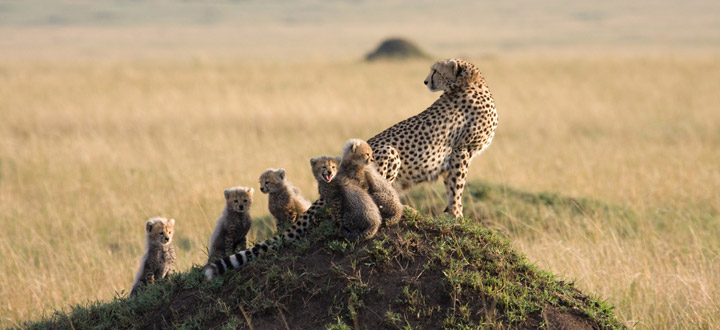
Two separate groups managed to see a mother and her three cubs feasting on a kill and two nights ago a lucky couple managed to see a leopard take down a young impala only a few metres from their vehicle. More sightings of a mother and cub in daylight. And hyena sightings and single leopard sightings............

Leopard with kids in Lake Mburo National Park Uganda


Currently there is a great guy at the lodge called Damian, there for training experience, and in the three weeks he has been there, and the four times he has driven in the park he has seen five leopards.

Happy leopard hunting guys,

Chris