Showing posts with label safari to uganda. Show all posts

Tuesday, February 4, 2014

6 Things you must not miss on Lake Mburo National Park Safari

is a compact gem, located conveniently close to the highway that connects Kampala to the parks of western Uganda (about 4 hours driving from Kampala). It is the smallest of Uganda’s savannah national parks and underlain by ancient Precambrian metamorphic rocks which date back more than 500 million years. This 260km2 park’s precarious past has seen wildlife virtually eliminated several times: firstly in the various attempts to rid the region of tsetse flies, then to make way for ranches, and finally as a result of subsistence poaching. 20% of the park’s areas is a wetland.

1. Wildlife

The park’s varied habitants support 68 mammal species. Rarities include impala, which in Uganda only lives in Lake Mburo , and Burchell’s zebra and eland which are only found here and in Kidepo.
Other species include warthog, buffalo, oribi, Defessa waterbuck and reedbuck. Leopard and hyena are also present while the crocodile and over 300 hippos are found in the lake.
Previously extinct in the park, lions have been recently sighted.

zebra_lake_mburo
Burchell’s zebra

several antelopes species inhabit Lake Mburo National Park Leopard sighting in Lake Mburo National Park, Uganda

2. Birding

crested crane
The Crested Crane, Uganda’s national symbol

Lake Mburo National Park is home to 315 bird species. These include the red-face barbet, only seen in , Africa finfoot, the rarely seen shoebill stork, Papyrus yellow warbler, Saddle-billed stork, brown-chested lapwing, African-wattled lapwing, Carruther’s Cisticola, Tabora (long-tailed) Cisticola, African ScopsOwl, Abyssinian Ground Horbill, and White-winged Warbler.

Acacia woodland bird species are especially well represented, while forest species may be found in rubanga Forest. These include Blue-breasted kingfisher, Hairly-breasted Barbet and Yellow-rumped tinkerbird, among others.

The best birding spots in are the swampy valley of Warukiri; the road between the camp and Rwonyo jetty; and the viewing platform which overlooks the salt lick. Rubanga forest can be visited on foot by prior arrangement with the warden – this is a real draw for keen birders. Rare species such as the African Finfoot and Red-faced Barbet -  only seen in Lake Mburo National Park – are two of the forest’s featured species.

3. The launch trip on Lake Mburo

338314_487067517979256_1907589884_o
Hippos

326860_462747217077953_439717885_o
Nile crocodile

The wildlife-rich eastern banks of Lake Mburo can be explored during tranquil two-hour noat voyage. Keep an eye out for crocodiles, buffalo, and hippos as well as colorfull kingfishers, magnificent fish eagles, hammerkops and their enormous nests and even bizarre-looking shoebill.

4. Hiking and Nature Walks

Unusually, the whole park is open to walkers as long as they are accompanied by a ranger guide. At Rwonyo, a guided walk leads to the salt lick where many animals are attracted to the salty rocks. Walks on the western side of the lake and take two hours. At this time of the day, you may encounter hyenas returning to their dens and hippos retreating to the lakes.

5. Horseback safaris

Horseback safaris are an exciting way to view wildlife including elland and buffalo. Also commonly sighted are warthog, topi, impala, dukier, bushback, waterbuck and zebra. The four-hour hacks take visitors up to the hilltop viewpoints with the option of bush breakfasts or sundowners.

6. Sport Fishing

Lake Mburo contains around six species of fish, with tilapia being the the most common. The designated fishing spot is at Mazinga. Visitors planning to fish here should carry their own equipment and obtain a permit from Uganda Wildlife Authority.

Aside fro  the abundance of wildlife, the best thing about this little park is the peace by the lake. For the entire stay in the park, you will experience numerous uninterrupted sightings of wildlife and yet have the opportunity to relax by the calm lakes.


Safari Packages to Lake Mburo National Park


Tuesday, December 3, 2013

Uganda Wildlife Authority Launches Night Game Drives in National Parks

Uganda Wildlife Authority (UWA) has launched night drives in a bid to boost tourism in the country. The drive launched last week is aimed at attracting more tourists to boost the economy. This comes after the authority embarked on massive promotion of tourism in the country.

Dr. Andrew Seguya, the executive director of Uganda Wildlife Authority, says the launch of the night drives at the parks is a big achievement for Uganda. He says many animals; particularly the carnivorous ones are active at night hunting for prey. He says this launch will give tourists better opportunities to view the animals hunting. He says the authority has already purchased open roof vehicles for the night drives.

Dr. Seguya says Uganda is expected to reap millions in foreign exchange after the launch.

He has appealed to the Ugandans to take this opportunity to view the wildlife of the country. Seguya says it is a rich experience to drive through the park at night while viewing the beautiful animals in the country.

Simplicious Gessa, the Public Relations Officer at Uganda Wildlife Authority, says the authority is set to introduce more packages for Ugandans.

Gesa says with time if the facilities are in place and the situation stabilizes, the authority may offer one day free visits for the locals to the parks. He says the authority is looking forward to the day when the locals will embrace wildlife as part of them and are ready to protect the animals.

He has appealed to the Ugandans to appreciate what nature has given them and be ready to protect it. Gessa says the authority will do everything to protect the wildlife and ensure that Uganda takes the lead in promoting tourism in the world.


Safaris where you can do night game drives


clip_image0013 Days Lake Mburo National Park:
Uganda’s smallest savannah national parks and it is home to 350 bird species as well as zebra, impala, eland, buffalo, Oribi, Defassa waterbuck, leopard, hippo, hyena, topi and reedbuck.

Continue Reading »

3 Days Murchison Falls Safari:
Murchison Falls National Park lies at the northern end of the Albertine Rift Valley. The park is bisected by the Victoria Nile, which plunges 45m over the remnant rift valley wall ....

Continue Reading »

clip_image0023 Days Queen Elizabeth Tour:
We take you for a magical wildlife experience to Uganda’s most popular tourist destination. Set against the backdrop of the jagged Rwenzori Mountains

Continue Reading »

5 Days Gorilla Trekking And Queen Elizabeth:
In just 5 days, we are good enough to combine your interests of visiting the Gorillas in Bwindi with the best of Wildlife in Queen Elizabeth National Park.

Continue Reading »

clip_image0036 Days Total Wildlife Safari:
Uganda’s most recommended wildlife safari, for wild animal lovers, it is the biggest chance ever to see all the Big Five starting with Rhino down to the Lions.

Continue Reading »

10 Days Incredible Tour:
Discover Uganda’s most beautiful parks, from the visitors that have booked our 10 days incredible, they testify as the best Uganda tourist circuit enabling them encounter the rarest of the rare in the Africa

Wednesday, March 20, 2013

Vaccinations, medication, Healthy risks to consider while visiting Uganda

Information about vaccinations, immunization and medications you need to consider as yo plan to travel to Uganda and Rwanda for your Holiday
What vaccinations do I need?
A yellow fever vaccine is essential – bring your certificate with you.
Hepatitis A and B, meningitis, polio, tetanus and typhoid vaccinations are also recommended.
A Rabies vaccination is recommended for anyone who expects to be in close contact with animals or in a remote area.
Be aware that some of these require a course of injections, and others take several days to take effect. So you should visit your doctor or travel clinic as soon as possible before you travel.
Should I bring any other medications?
Anti-malarial tablets are recommended throughout Uganda – visit your local travel clinic to determine which type is best for you. Note: Chloroquine does not protect against malaria in Uganda.
Bring all prescription medications with you – they may not be readily available in Uganda.
Be sure to purchase travel insurance before you begin your trip, including medical evacuation in case of an emergency.
What Other Healthy Risks Are There?
Even if you are taking anti-malarials, you should still wear an insect repellent, long-sleeved shirts, long trousers and closed shoes. This will also help protect you from other diseases carried by mosquitoes, and other insects such as tsetse flies.
All accommodation in high-risk areas will have mosquito nets  - be sure to use them.
Avoid swimming in Uganda’s lakes – they carry a high risk of bilharzias.
Tap water is not suitable for drinking, though bottled water is readily available throughout the country.

Thursday, January 31, 2013

Common Tourist Visa A Top Priority for East Africa Community for 2013

Dr. Richard Sezibera, EAC Secretary General has said the introduction of a single tourist Visa to the region, and the revival of an East African Passport across the member states, is one of the main priorities for the trade bloc in 2013 including the removal of non-tariff barriers in the aviation and tourism sectors.

These issues have been causing major disappointments among the tourism industry, which has for long been struggling with the expensive image of East Africa when travelling to several countries, where Visa fees for a family of four can run into 1.000 US Dollars if visiting all 5 member states.

This added cost is seen as an obstacle to promoting cross region safari packages and while Kenya permits the re-entry after obtaining an initial Visa when visiting other countries like Uganda, Rwanda, Burundi or Tanzania, none of the other countries in the region is offering the same option to tourists.

Stakeholders have for long blamed bureaucrats of dragging their feet over technical issues like revenue sharing, which in view of the highly advanced immigration technology in place at immigration check points today is now seen as a mere excuse by some member states to slow down integration and prolong the existence of other NTB’s in place.

The idea for a common Visa was first suggested by the Ugandan delegation in 2001 at the East African Community Committee for Tourism and Wildlife that was welcomed and shelved in bureaucracy.

Former Kenyan tourism minister Najib Balala early last year blamed dark forces from within the EAC of obstructing progress in such crucial areas, and for few was there any doubt in which direction his remarks were directed. Time will tell if during the remaining 11 ½ months of 2013 this long overdue task will be completed or dragged into yet another year.

[The East African Community (EAC) is an intergovernmental organisation comprising five countries in East Africa: Burundi, Kenya, Rwanda, Tanzania and Uganda. The geographical region encompassed by the EAC covers an area of 1.8 million square kilometres, with a combined population of about 132 million (July 2009 est.). ]


Related articles

Indifference among States Puts Single East Africa Community Tourist visa Plans in Balance
Who Needs and How to Apply for Rwanda Visa– Tourist Visa Entry Requirements

Wednesday, January 23, 2013

7 Must Sees on Safari tours to Queen Elizabeth National Park

The 1978km2 Queen Elizabeth National Park is understandably Uganda’s most popular tourist destination. The Park’s diverse ecosystems, which include sprawling savanna, shady, humid forests, sparkling lakes and fertile wetlands, make it the ideal habitat for over 95 mammal species including classic big game, ten primate species including chimpanzees and over 600 species of birds.  It was founded in 1952 as Kazinga National Park and renamed 2 years later to commemorate a visit by Queen Elizabeth II. 

Set against the backdrop of the jagged Rwenzori Mountains, the park’s magnificent vistas include dozens of enormous craters carved dramatically into rolling green hills, panoramic views of the Kazinga channel with its banks lined with hippos, buffalo and elephants, and endless Ishasha Plains, whose fig trees hide lions ready to pounce on herds of unsuspecting Uganda kob.

As well as its outstanding wildlife attractions, “Queen” has a fascinating cultural history. There are many opportunities for visitors to meet with the local communities and enjoy story telling, dance, music, and more.

1. Big Game

With an astonishing 5000 hippos, 2500 elephants and over 10,000 buffalo thriving in its grasslands and shorelines, Queen  guarantees sightings of some of Africa’s most iconic species. Hearing the elephants’ calls reverberating around Queen’s crater-filled valleys is a magical experience.

Hippos along Kazinga Channel, Queen Elizabeth National Park Elephants along Kazinga Channel, Queen elizabeth National Parkbushbuck in Queen Elizabeth National Park

Other common herbivores include warthogs, waterbucks, Uganda Kob and topi, as wells as the sitatunga antelope.

 A herd of antelopes in Queen Elizabeth National Park Uganda


2. Big Cats Tree climbing Lion in Ishasha sector, Queen Elizabeth National Park

A leopard seen at Queen Elizabeth National ParkQueen’s most elusive inhabitants are its felines: lions, leopard, civet, genal and serval cats.

Lions are found throughout the park, but the most renowned live in the southern sector of Ishasha, where they rest on the limbs of fig trees. Solitary leopards are norcturnal and fiendishly well camouflaged! The smaller cats are also predominantly norcturnal and best spotted on night game drives.


A herd of lions in Kasenyi plains, Queen Elizabeth National Park

3. Birds

Birding in Queen Elizabeth National Park is an incredible treat as it contained a variety of habitats that range from savanna to wetlands to lowland forests. This diversity is reflected in the list of over 600 bird species, the biggest of any protected area in East Africa, and phenomenal of such a small area. Queen Elizabeth National Park is classified as an Important Bird Area (IBA) by Birding International. A majority of birds found in this area are regarded as famous birds of East Africa and are a must see for birdwatchers in Africa!

The park’s confluence of savanna and forest, linking to the expansive forests of the DR Congo allow visitors to spot East as well as Central African species.

 Double toothed barbet agnificent chap with his odd beak is an African Spoon bill and he is with an Egyptian goose (taking a break from Tahir square)Spur winged Lapwing

African Skimmer

Present in the park are numerous water birds, woodland and forest dwellers in the Maramagambo Forest, 54 raptors and various migratory species. Key species include the martial eagle, black-rumped buttonqail, African skimmer, Chapin’s flycatcher, pinkbacked pelican, African broadbill, Verreaux’s eagle owl, black bee-eater, white tailed lark, whitewinged warbler, papyrus gonolek, papyrus canary, corncake, lesser and greater flamingo, shoebill, bar-tailed godwit.

For the best birding in Queen, don’t miss these birding hotspots: Kazinga Channel, Kasenyi Area, Mweya Pennisular, Maramagambo forest, Ishasha sector, Lake Kikorongo, Katunguru Bridge Area and Katwe Area.

4. The Launch Trip along Kazinga Channel

boat ride with elephantsThe Kazinga Channels is an oasis for many of the fascinating species that inhabit the park, and taking a boat tour along it gives visitors the chance to cruose just meters from hundreds of enormous hippos and buffalos while elephants linger on the shoreline.

An average of 60 bird species can be spotted during the trip. Carrying upto 40 passengers, the boats guuarantee a seat with a view, while expert ranger guides narrate the creatures’ stories

The launch trips last two hour and run 3-4 times a day.


 175464_493225570696784_1334864289_o
Crocodile along Kazinga Channel

Elephants in Kazinga Channel

5. Chimpanzee tracking and Primate Viewing

Ten primates species enjoy the park’s diverse habitats, the most popular of which is undoubtedly the chimpanzee. Vervet and black-and-white colobus monkeys are easily spotted in the trees, but the bolds of all are the baboons – be sure to keep car windows closed to avoid food thefts!

Kyambura Game Reserve,clip_image001 also known as Kyambura Gorge, is one of the most popular tourist draw of  Queen Elizabeth National Park (QENP) in Uganda. It is home to a variety of wildlife, including the only primates in the Queen Elizabeth National Park. The area is an important water source for many animals and is surrounded by savanna, but is generally noted for its high concentration of primate life located in the gorge.

Here is where you can see habituated chimpanzees and other types of primates including red-tailed monkey, black-and-white colobus, baboons and vervet monkeys. The park is also known for its variety of avian species including various falcons, the blue-headed bee-eater and the African Finfoot.
The Gorge forms the border between Queen Elizabeth National Park and the Kyambura Wildlife Reserve, a little visited tract of savannah notable less for its wildlife viewing than the waterbirds – in particular flamingo attracted to its lovely crater lakes.

Trekking the chimps in Kyambura Gorge is more physically challenging and therefore is suitable only for reasonably fit people. But it is a real rainforest experience, and the place is fantastic. In my opinion it is one of the best place for chimpanzee trekking in Uganda.


Maramagambo Forest

Buzzing with primates, including chimpazees, baboons and several monkey species, the forest is also alive with numerous birds including the rare forest flycatcher, white-naped pigeon and striking Rwenzori Turaco. One must visit the ‘comorant house’, a large tree that has been turned white by the birds that roost here at night. The shady forest also conceals crater lakes and the “Bat Cave” with a specially constructed viewing room.


6. The Explosion Craters, Lake Katwe Salt Works, Rwenzori Mountains

The 72 huge round basins scattered across the equator are evidence of the Albertine Rift’s bubbling volcanic past, and are a must-see with a particular interest in the region’s fascinating geological history. The 27km drive between Kabatoro Gate and the Queen’s Pavilion takes in views of the enormous craters, circular lakes, the Rift Valley escarpment and the Kazinga Channel, all in front of the mighty backdrop of the Rwenzori mountains.

lake katwe
Lake Katwe

One other famous lookout points is the Katwe Salt Lake where traditional salt mining had been practiced since the 16th century. The neighboring Lake Munyanyange is a bird sanctuary, as well as a migratory location for the lesser flamingo from August to November.

7. Caves and Cultural Tourism

Tucked beneath the shady canopy of the Maramagambo Forest is the “Bat Cave”. The cave has a viewing room from where visitors cn observe the bats as well as pythons that live alongside them… did you know that these serpents live amongst their prey?!

For a more cultural cave experience, how about a trip to the historic cave at Nyanz’ibiri community, where a local guide will explain to you how it was once used for offering sacrifices and cleansing misfortunes … and as a hiding place during Uganda’s rule by Idi Amin.

Uganda’s Queen Elizabeth National Park is really a Medley of Wonders!


More about Queen Elizabeth National Park

Accommodations, Lodgings in Queen Elizabeth National Park >>

Queen Elizabeth National Park Information

Include Queen Elizabeth National Park on your tailor-made trip around Uganda (and Rwanda) by contacting one of our specialists...

Call a specialist on +256 772 979425 or email info@gorillasandwildlifesafaris.com

Thursday, January 17, 2013

How safe is Uganda for Tourists?

 How safe is Uganda for Tourists?
Uganda is generally considered to be a safe, stable country with low crime rates. The Sudan border region and the Karamoja in the north should be avoided (with exception of Kidepo Valley National Park).
Use common sense in the cities – do not carry large amounts of cash or valuables, and keep money and credit cards in an inside pocket.

Tuesday, January 8, 2013

World Wild Fund (WWF) Boosts Conservation of Rwenzori Mountains National Park

The World Wild Fund (WWF), under its Rwenzori Mountains Conservation and Environment Management Project, has devised several approaches to minimise degradation of the park.View of mt. speke, one of the  Rwenzori Mountains ranges

Mr David Duli, the country director WWF, an international conservation NGO, said the park is of great importance to the world because of its botany and beauty and therefore requires expertise to strengthen its conservation.

“We came up with the project in order to strengthen the conservation of the Rwenzori Mountains ecosystem and maintain its biodiversity and water catchment values in harmony with sustainable utilisation of resources for the benefit of Uganda and the international community” Mr Duli said. He noted that conservation efforts are helping the park to regenerate. The park covers the Rwenzori Mountain catchment area which, among others, includes Mubuku, Nyamwamba, Mpanga, Semliki rivers that flow from the mountain.

Rwenzori Mountains National Park is located in southwestern Uganda on the east side of the  Albertine rift valley. It is along the border with the Democratic Republic of the Congo (DRC), just above the equator. It is also a UNESCO World Heritage Site. It is situated in the Bundibugyo, Kabarole, and Kasese districts, 25 km from the small town of Kasese. The park has area of 996 km2, 70% of which is above 2,500 m.

The park comprises most of the centre and eastern half of the Rwenzori Mountains. The ice-capped Rwenzori Mountains are even higher than the Alps. Margherita Peak, one of Mount Stanley's twin summits is Africa's third highest peak at 5,109 m. Africa's fourth and fifth highest peaks (Mount Speke and Mount Baker) are also located in the park. The park has glaciers, snowfields, waterfalls, and lakes and is one of Africa's most beautiful mountain region.

Biodiversity is extraordinarily high with 17 regionally endemic birds and 12 regionally endemic mammals. The elephant, common chimpanzee and l'hoests monkey are globally threatened species (IUCN 1994b). The park is noted for its remarkable plants, which has been described as some of the most beautiful in the world (Riley, Laura; William Riley (2005). Nature's Strongholds: The World's Great Wildlife Reserves).

Flower of Dendrosenescios in Rwenzori with a beautifull bird percing on top

The broken montane forest dominated by Sybmphonia globulifera, Prunus, Yoshania alpina, Albizia spp. and Dombeya spp. occurs at about 2400 m. 199 tree species (18% of the country's total) have so far been recorded in this zone . Next is the bamboo (Arundinaria alpina) forest up to an altitude of 3000 m, a heather zone dominated by giant heathers such as Phillpia trimera and small trees such as Hagenia and Rapanea, frequently over 10 m in height up to 3800 m, and afro-alpine moorland that ends at the snowline at 4400 m.
There are five distinct vegetation zones in the park, which change with altitude. Most significant are the giant heathers, groundsels, ericas and lobelias of the tree heath and alpine zones.

The park has 241 species of birds (27% of the country's total), 78 species of butterfly, and four primate species.


The Kasese District natural resource officer, Mr Joseph Kitswera, said there has been a reduction in soil erosion and landslides. “Bare hills were restored which has reduced soil erosion, landslides and siltation in our rivers,” Mr Kitswera said.

He said conservation of the park will improve tourism in the Rwenzori region. More than a million trees have been planted on degraded hills in the Park covering more than 1,000 hectares of the protected area.


The Minister of Tourism, Ms Maria Mutagamba, who visited the park recently, said degradation in the parks is reducing.

“Much as the culture still remains, the problem has come down compared to the past when it was very rampant,” she said.

One hundred and two mammals species were recorded in the park. The Rwenzori duiker Cephalophus rubidus is found nowhere in the world and the Rwenzori otter shrew Micropotamogale rwenzorii is only known from here and Nyungwe National Park in Rwanda. The park has elephant, giant forest hog, sitatunga in small numbers and buffaloes, which had once disappeared, have re-appeared. Hyrax and leopard also occur in  the park as well as four species of diurnal primate: the common chimpanzee (curently estimated 500 indiviuals, Plumptre et al 2003a) found in the lower altitude forest areas, a sub-speceis of Agolan colobus (colobus angolensis ruwenzorii), the Rwenzori colobus, restricted to this park, L'Hoests monkey and the blue monkey 

Because of its physical and biological values, the park was recognized as a World Heritage Site in 1994. Among rare reptiles, the strange-nosed chameleon Bradypodion xenorhinum is endemic to the Rwenzoris.

Friday, January 4, 2013

Indifference among States Puts Single East Africa Community Tourist visa Plans in Balance

PLANS to have an East African Community (EAC) single tourist visa remain in balance as some partner states show signs of indifference with regard to adopting common policies necessary to spearhead the project.

Although it was initially envisaged as a fundamental initiative that would help attract more foreign earnings through increased tourists, some member countries seem to be dragging their feet in implementation.

Rica Rwigamba, in charge of Tourism and Conservation at the Rwanda Development Board (RDB), could not tell exactly when the regional visa will start operating.
She said that delays by other member countries have derailed progress.
“Everybody would want to have it but there are some pre-requisite factors, especially harmonising immigration policies and ICT to help ease the process. We are pushing it but we realised it requires a lot of consultations because we need to be at the same level,” she said.

Rwigamba explained that while Rwanda had made significant strides in use of ICT, there was need for the rest of the EAC partner states to move at the same pace if the trading bloc is to become a single tourist destination.


Initially, the single tourist visa had been planned to be operational by July 2012.

For instance, coming to Rwanda, one can apply for a visa online and get it, a facility that can hardly be found in other member states.

It is expected that the projected single visa would save potential tourists time and the rigorous process of having to jump from one embassy to the other to apply for different visas to travel across the East African region.

“Today travelers want to have a much wider menu. And it is easier to market the block as a single destination as opposed to one country. It means having features like the Mountain Gorillas in Rwanda, Maasai Mara in Kenya, Kilimanjaro in Tanzania, among others, all on one menu,” she said.

The long procedures in acquiring visa by tourists, especially those from Europe, the Americas sometimes discourages them, forcing them to divert to other destinations.

The EAC Sectoral Council on Tourism and Wildlife Management has called on partner states to fast-track the introduction of the single EAC tourist visa, saying the process was taking unnecessarily too long.
The move to have the single EAC visa followed an appeal by tourism boards of the five partner states requesting for a common visa to accelerate promotion of the region as a single tourist destination.

Rwigamba, however, says that they expect to have hold negotiations at the ministerial level starting next year during which they will assess the recommendations and determine a way forward.

Tourism in east Africa is among the highest earners in terms of investments, with enormous employment opportunities.
In Rwanda, from January to September 2012 tourism is estimated to have generated US$210.5 million, compared to US$184.4 million it generated during the same period in 2011 – that represents an increase of 14 per cent.
The number of tourists from EAC member states and Democratic Republic of Congo also increased from 498,617 to 639,536.

The majority of the international tourists came from the United States of America, United Kingdom, Belgium and Germany, according to official figures.

Thursday, November 29, 2012

Lonely Planet names Uganda ‘THE 2013 BIRD-WATCHING DESTINATION’

As 2012 is slowly getting ready to hand over to the next year in line a new tagline will take over from the hype of this year, as The Pearl of Africa turned 50 and when the Lonely Planet Guide had named Uganda as their top destination for the year. While measuring the success in terms of numbers and revenues will take a bit longer, until the relevant data have been correlated and published, the country’s tourism industry is nevertheless setting its sights on the future. With over 1.000 bird species found in Uganda, bird watching has brought in growing numbers of hobby ornithologists from around the world but even within has ‘birding’ found new friends.

The Big Bird Watching Day is now an annual event, supported by the Uganda Wildlife Authority which grants free access to the park, and this annual bird count a few weeks ago has underscored once again the rich diversity of birds found, not just in parks but across the entire country. Organized by Nature Uganda and supported by the conservation and tourism fraternities, the event has now been transformed into naming Uganda being named a preferred bird watching destination, an accolade which will undoubtedly raise even more interest from abroad to come here and explore for instance Bwindi Forest, which the Africa Bird Club earlier this year declared the Number One birding site in Africa or in Queen Elizabeth National Park, home to over 600 bird species alone.

Nature Uganda and Birdlife International have mapped out 34 sites across Uganda as important bird watching areas, some inside but many outside the country’s protected areas which makes access possible without any park fees, though such payments of course go to the good use of maintaining park infrastructure.

The Uganda Tourist Board will make bird watching a major promotional activity for 2013 to highlight the country’s rich natural resources beyond being just known as the world’s biggest primate destination or for the adventure tourism attractions Uganda now has to offer.

Monday, November 19, 2012

Uganda Wildlife Authority Starts Mountain Bike Riding in Mt. Elgon National Park

The Uganda Wildlife Authorities has introduced mountain bike-riding in Mt. Elgon National Park as a new tourist activity.

The assistant warden at the national park, Mr Stephen Nyadru, while speaking at the launch on Friday, said the move is aimed at attracting more tourists. He said activities will include traversing of rocks, washouts, and steep declines, on dirt trails, logging roads, and gravel roads that wind along lazy streams through forested valleys or trails that climb up steep mountainsides; and other unpaved environments.

“This is the first time we are introducing this form of tourism. We feel that after climbing the mountain, usually tourists remain dull during descending so this will be able to give them another exercise down the hills as a modern form of tourism in Uganda,” said Mr Nyadru.

He said the specific advantages of mountain bike-riding combines pleasure of being in the mountains with the health advantages of altitude and gradients, significant level of physical exercise and the possibility to cover longer distances.

The tourism official said the new activity complements other old tourists attractions.
They include scenic peaks, gorges, hot-springs, magnificent waterfalls, caves, and flora & fauna.

Others are the talking tree along in Kapkwai, and the caldera and crater lakes/pools. The Mt. Elgon area conservation manager, Mr Adonia Bintorwa, said on the first day of launching, the park earned Shs12 million from Ireland bikers - Concern Worldwide - who were on a tri-adventure of Mt Elgon.

Mr James Mcmanas, the expedition leader of about 17 bikers from Concern worldwide Ireland, said mountain bike or mountain bicycle (abbreviated MTB) created for off-road cycling, makes Mt Elgon now a place to go for all bikers.

The 1145km² Mt. Elgon National Park lies on an extinct volcano, one of uganda’s oldest physical features, first erupting around 20 million years ago. Mt. Elgon is capped by one of the world’s largest intact calderas, 40km² in size. This was created after an unusually violent eruption emptied the volcano’s magma reservoir. The cone, no longer supported by underlying molten rock, collapsed inwards, permanently blocking the main vent.

Mt. Elgon was once Africa’s highest mountain, far exceeding Kilimanjaro’s current 5895m. Millenia of erosion have reduced its hieghts to 4321m, relegating it to the 4th hieghest peak in East Africa and 7th on the continent.

Saturday, September 8, 2012

What is the Weather Like in Uganda?

Uganda enjoys a tropical climate, though the heat it tempered by the altitude, as much of the country is more than 1000m above sea level.

Rainy seasons are from March to May, and September to November.

IMG_7288

Dry seasons are from December to February and mid- June to mid August.

Average temperatures range from about 16˚C (61˚) in the southwestern highlands to 25˚C (77˚F) in the northwest; but in the northeast, temperatures exceed 30˚C (86˚F).

Monday, September 3, 2012

New bird sightings in Murchison Falls National Park

Goods News reaching us here from a bird guide George Kafu at Murchison Falls is the presence of Pel's Fishing Owl and African Finfoot at Chobe River near Chobe Lodge.

http://gorillasandwildlifesafaris.com/uganda/uganda_murchison%20falls%20and%20chimpanzee.htm

He has just seen the Owl a few minutes ago on a walk around the Lodge area. The records for this bird at Murchison Falls have been reducing and making if very rare. 
Any one going there can give it a try. 
Chobe River is on the eastern part of the Park and is easily accessible.

Saturday, August 25, 2012

Number of UK tourists to Uganda soars


The number of tourists coming to Uganda from the UK and Ireland has surpassed previous years’ records despite the recent Ebola outbreak. 

A statement from the Uganda High Commission in London said there were increased applications for Uganda immigration entry visas averaging about 50 applications per day. The peak was in May-June when applications reached the 80 per day mark.
Buffaloes in Queen Elizabeth National Park

The outgoing High Commissioner, Joan Rwabyomere, attributed this to the prevailing peace in the country and the distinctive attraction of Uganda as a tourist destination arising out of the variety of its game stock and its unspoilt scenic beauty.
 She noted that the tourism industry had grown enormously in Uganda with clearly visible features including improved service delivery, facilities and awareness.

Uganda generally has substantial natural resources for tourism with a variety of landscape and ecosystems, climates and cultures.


Rwabyomere added that the Uganda Mission had the capacity to process the high numbers of applications.

 Individual and group applications are processed in one working day with collection being on the next day between 11:00 a.m. and 1:00 p.m. Applications received through the Post take up to a week to be processed.

Tourism in Uganda is an important generator of foreign exchange, high-end employment, and investment.
 According to the World Economic Forum, the sector contributed over shs1.5 trillion ($660m), 8 per cent contribution to Gross Domestic Product in 2010. 
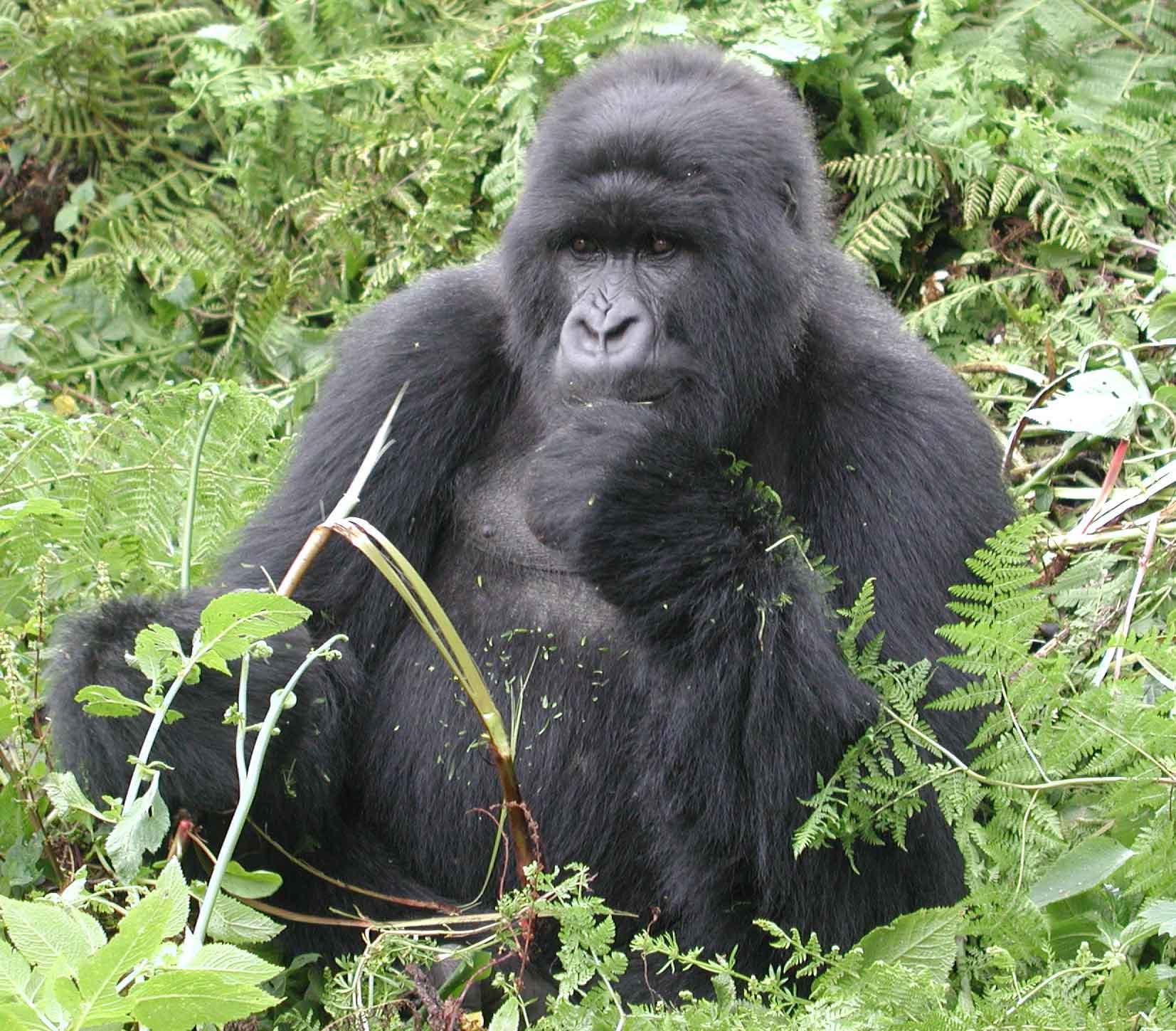
Mountain gorilla tracking is one major tourist attraction in Uganda

The Government has therefore encouraged increased investment in tourism, particularly in travel, accommodation and related facilities because this enhances tourists' experience in the country.