Showing posts with label Rwanda Gorilla tour. Show all posts

Wednesday, January 18, 2017

How tough is the Rwanda gorilla trek? Which is the hardest/ easiest, best gorilla group to track

Which is the toughest mountain gorilla group to track in Rwanda, which gorilla group is the most popular to track, easiest gorilla family to track, how many hours does the gorilla tracking take in Rwanda? Susa, Kwitonda, Sabinyo, Umahoro?

Which is the toughest mountain gorilla group to track in Rwanda, which gorilla group is the most popular to track, easiest gorilla family to track, how many hours does the gorilla tracking take in Rwanda? Susa, Kwitonda, Sabinyo, Umahoro?

This is one of the most frequently asked questions about gorilla tracking in Rwanda. And it is also perhaps the most difficult to answer. So many variables are involved, and if they all conspire against you, you could be in for a genuinely exhausting outing (indeed on rare occasions, the guides have had to carry tourists down). On the other hand, if everything falls your favour, the excursion will be little more demanding than the proverbial stroll in the park.

The trek to see the gorillas has two distinct phases. The first is the hike from the closest car park to the forest and national park boundary, which usually takes 30-60 minutes depending on the speed of the party and the group they are visiting. The second is trek into the forest in search of the gorillas, which will usually have been located by the advance trackers by the time reach the forest edge.

The first part of the trek is predictable, and it is usually quite flat and undemanding unless you are going to the Susa (Susa-A), which involves a longer and steeper ascent. The second part is more difficult to predict, as it will depend on the exact location of the gorillas on the day, and on the steepness of the terrain en route. Other factors in determining how tough it will be include the density of the vegetation (bending, crawling through the jungle can be tiring especially if you have to dodge vicious nettles) and whether it has rained recently, in which case everything will be muddier and quite slippery underfoot.

At risk of stating the obvious, age and fitness levels are key factors in how difficult the hike will feel. Susa Group aside, moderately fit people under the age of 40 seldom feel any significant strain, but a high proportion of trackers are in their 50s or 60s, in which case the hike might be something tougher. As one trekker has previously commented in the Bradt Guide (Rwanda): ‘We think you underestimate how strenuous the gorilla trip is. We are both 61 but fit and well, bicycle to work each day , and still we had to take regular breaks due to problems with breathing’. That said, while many older travellers do find the track quite demanding, it is very unusual that they are so daunted as to turn back.

An important factor in how difficult the hike will be is which group you are allocated. As a rule, the hike to the Susa Group is the most demanding (but also most rewarding, with more than 40 gorillas on show), while the Sabinyo Group is the most reliably straightforward to reach. The hikes to Kwitonda, Hirwa and Group Thirteen are also usually quite undemanding, whereas the hikes to Amahoro Umubano Groups tend to be more difficult, but not as tough as the Susa Group.

Unfortunately, these things aren’t set in stone, and any group might be unusually demanding (or easy) to reach on a bad day. Furthermore, nobody can guarantee which group you will be allocated in advance. However the guides at Kinigi do make a conscious attempt to match individuals to the most suitable group, especially if they are asked to. Generally the party for the Susa (Susa-A) consists of the lean-looking under-30s, while the opposite holds true for Sabinyo party.

Two further factors are uneven underfoot conditions and high altitude. Most visitors to Africa live in towns and cities where roads and sidewalks are paved, and parks are serviced by neatly footpaths, so they are unused to walking on the more irregular and seasonally slippery surfaces typical of the ascent paths and forest floor. It will help enormously in this regard to wear strong waterproof shoes or hiking boots with a good tread and solid ankle support. Furthermore, if you think you might struggle in these conditions, there is a lot to be said for avoiding the rainy seasons, in particular March-May, when conditions can be dauntingly muddy.

Don’t underestimate the tiring effect of altitude. The trekking takes place at elevations of 2.500-3,000m above sea level, not high enough for altitude sickness to be a concern but sufficient to knock the breath out of anybody – no matter how fit – who has just flown in from a low altitude. For this reason, visitors who are spending a while in Rwanda might think seriously about leaving their gorilla tracking until they’ve been in the country a week or so, and are better acclimatised. Most of Rwanda lies above 1,500m, and much of the country is higher – a couple of days at Nyungwe, which lies above 2,000m, would be good preparation for the Virungas. Likewise if you are coming from elsewhere in Africa, try to plan your itinerary so that you spend your pre-Rwanda days at medium to high altitude: for example, were you flying in from Kenya, a few days in Nairobi (2,300m) or even the Maasai Mara (1,600m) would be far better preparation than time at the coast.

Guides will generally offer you a walking stick at the start of the hike, and, even if you normally shun such props, it is worth taking up the offer to help support you on those slippery mountain paths. If you have luggage, hire a porter too. Once on the trail, take it easy, and don’t be afraid to ask to stop for a few minutes whenever you feel tired. Drink plenty of water and carry some quick calories – biscuits and chocolate can both be bought at supermarkets in Ruhengeri. The good news is that most people who track gorillas find the hike to be far less demanding than they expect, and 99% of cases, whatever exhaustion you might feel on the way up will vanish with the adrenalin charge that follows the first sighting of the silverback gorilla!

Rwanda Gorilla Trek Tours


Thursday, June 11, 2015

2015 Gorilla's families in Rwanda- the 10 Mountain gorilla families for tracking in Volcanoes National Park

As of January 2015, there are 10 habituated gorilla groups which are for tourism purposes, and these are the ones that gorilla trackers visit. At maximum 8 persons can visit each gorilla gorilla group per day spending a maximum one hour each visit. These groups include Susa group, Sabinyo, Amahoro, Group 13 (Agasha group), Kwitonda, Umubano, Bwengye, Hirwa, Karinsimbi, Ugenda.
In Rwanda, you can only track mountain gorilla in Volcanoes National Park (Parc National des Volcans), a part of the wider Virunga (mountains). At least 480 mountain gorillas inhabit this (Virunga) complex and live at altitudes ranging from 2,300-4,500 m ranging within the southern part of Virunga National Park (DRC), and the Volcanoes National Park northern Rwanda, while a few use the Mgahinga National Park, southwestern Uganda.
In Rwanda, Gorilla’s families or groups are divided into two those which are for the study/ research purposes and these are only accessed by scientists and researchers. These include: Beetsme, and Pablo’s Shida’s and have the largest number of individuals.
There are then also 10 habituated gorilla groups which are for tourism purposes, and these are the ones that gorilla trackers visit. At maximum 8 persons can visit each gorilla gorilla group per day spending a maximum one hour each visit. These groups include Susa group, Sabinyo, Amahoro, Group 13 (Agasha group), Kwitonda, Umubano, Bwengye, Hirwa, Karinsimbi, Ugenda.

1. Susa Group (Susa A Family) - the gorilla group that was famously studied by Dian Fossey.
It derives its name from the Susa River which flows through their home range. This family is the hardest to trek as it tends to range high into the mountains but RDB’s Tourism & Conservation trackers will know well in advance where the group is located the day before in advance for the next trackers. Sometimes tourists have been barred from tracking the group because of its distant location. This group is very impressive with a family size now of 28 gorilla membersSusa gorilla group Rwanda with 3 Silverbacks. It was the largest gorilla group before it split into two. The group had 42 individuals and when one visited it, all you could see where Gorillas all over. The group is well known for the young twins named Byishimo & Impano who are very playful. It also contains one of the oldest known habituated gorillas, Poppy. Born in 1976 Poppy is believed to be from one of Dian Fossey's original gorilla groups.
Typically, a mother abandons one of the twins, as it is almost impossible for her to care for both. As we watched the mother, Nyabitondore, care for the twins, Impano and Byishimo, at times we thought she would go insane from the task. But today you can enjoy the two bouncing around and playing as if nothing ever happened.

2. Karisimbi Family (Susa-B)
This is the family that split from the Original Susa (Susa-A) family and now it’s called Susa-B or Karisimbi Group. It contains 15 individuals and it always stays in the slopes of Karisimbi Volcano (4507M). which the highest pick of Rwanda. The Karisimbi Group is better suited to visits for more serious hikers. It appears that they have established their home range high up on the slopes of the Karisimbi caldera. Thus, a visit to this group may well end up as a full-days trek. The group sometimes migrates to higher altitude and hence makes tracking difficult. However, RDB tourism and conservation guides know where to find the group a day before. Tracking this gorilla family may sometimes be prohibited because of its distant location.

3. Sabyinyo Gorilla Group
Sabyinyo is an easily accessible group led by the powerful silverback Guhonda. Guhonda, the largest silverback of all the groups, who is well known for his massive physical appearance. Guhonda has kept his main challenger, Ryango, out of his group as a lonely silverback. There are fewer members within this family than in the other groups however they are equally impressive as a family.
The group was named after the Sabyinyo volcano which means "old man's teeth". Sabyinyo is one of the groups closest to the park's edge with 8 individuals: 1 Silverback (the biggest in the park); 3 Adult females; 1 Non adult female; 2 Juveniles and 1 Baby.

4. Amahoro Gorilla Group
Meaning "peaceful group", Amahoro, is the most peaceful of all the gorilla groups. The group has 17 individuals: 1 Silverback; 2 Blackbacks; 5 Adult females; 2 Sub adult males; 2 Juveniles and 5 Babies.  However, peace comes at a price. Ubumwe, the group's silverback is so peaceful, easy going and calm, he has lost group members to Charles in the Umubano group.
To reach Amahoro one must endure a fairly steep climb however the climb is well worth it once in contact with this tranquil group.

Amahoro gorilla group

5. Umubano Group

Meaning "neighborliness", Umubano a family of 11 individuals: 1 Silverback; 1 Sub adult male; 3 Adult females and 6 Babies.Umubano were originally Amahoro members but broke off after the dominant silverback (Ubumwe) was challenged by Charles, now the leader of Umubano.

As Charles matured into a silverback of the same rank as Ubumwe, he could not stand being given orders and decided to stage a fight and challenge Ubumwe. The fight went on for weeks and then months. Finally, Charles managed to snatch from Ubumwe a few females and formed his own group; thus Umubano was formed. Since then, he has commanded respect and recognition from Ubumwe. We have observed, on various occasions, interactions between the two silverbacks, but no fighting has been seen since the great battle ended.


6. 13 Group (aka Agasha Group)
When first habituated this group had only 13 members hence its name. Now the group has approximately 25 members: 1 Silverback; 12 Adult females; 2 Sub adult female; 3 Juvenile and 7 Babies. Formerly this group was commanded by Nyakarima who was challenged by Agashya meaning "the news". Agashya indeed made news by first watching and estimating Nyakarima's strengths and eventually challenging him to a fierce fight by taking off with his whole group. This was a shock to Nyakarima and an unprecedented event in observed gorilla history. Agashya then moved up the volcano to secure his group and make sure Nyakarima did not track them. Agashya has since increased his group's numbers by snatching from other groups and assimilating other lone gorillas, rapidly increasing the group from 12 to 25 individuals.
Agashya is known, at the first sign of trouble, to take his whole group up to the top of the volcano. Once, while we were taking a group of tourists to see Group 13 this exact scenario unfolded. Agashya felt that there was another silverback who was about to challenge him. In response, he took the group up the volcano. Every time we thought we were close to see them, Agashya would move the group further uphill. We did not reach them until the very top, where we finally got a chance to see them. By the time we got back to the car we had walked for 12 hours. While it was an exhausting day, it was magical to see gorillas at the top the world.

13 gorilla group

7. Kwitonda Family
This 18-member group is led by a silverback known as Kwitonda which means “humble one” and has two silverbacks and one blackback. Having migrated from DRC, this group tends to range far making it a moderately difficult trek. Together with Susa B this is one of the difficult groups to track

Kwitonda gorilla group

8. Hirwa Group (meaning "lucky one")
This group came into the lime light on the 17th of June 2006 when trackers witnessed its formation by the merging of some members from two different existing families, namely from Group 13 and Sabyinyo making a very small group then. As luck would have it, other gorillas joined the group and now Hirwa has 9 individuals: 1 Silverback; 3 Adult females; 2 Sub adult females and 3 Babies.

Despite being the newest group on the block, Hirwa exhibits strength and holds its own amongst all the other established groups.

Hirwa gorilla group

9. Bwenge Family
The family size of this group is 11 individuals with Silverback. It is mostly found on the Slopes of the Karisoke Volcano. The group is led by a silverback named Bwenge and was formed in 2007 when he left his natal group and was gradually joined by females from other groups. This group has had some hard times; this is because there were some deaths of 6 infants. However now the group is growing strong with 2 successful births in the last few years and a strong capable silverback leader. The trek to see the group is tough and one has to hike up the hill or like 3 hours (gaining approximately 600m in elevation). The trails are sometimes muddy and very steep. Apparently it was also the group that was featured in the movie "Gorillas in the Mist".


10. Ugenda Family
This Group is found in Karisimbi area of Rwanda. The Family Size consists of 11 gorillas with 2 silverbacks. Its name means “being on the move” and was named because it was always moving from one area to another. Since it’s not in one place, tracking it may be some how difficult and involves also moving from one place to another to locate them.

Related articles:

Comparing Gorilla Trekking Tours : Uganda Vs Rwanda – Compare prices, experience, hardness,etc

When is the Best time for gorilla trekking/ tracking in Rwanda and Uganda?

2 days Gorilla tracking Rwanda with tour price
3 day Gorilla tracking Rwanda with tour price
Gorillas trekking  and Chimps Rwanda - 4 days tour

7 Days Rwanda Primates Tour

9 Days Rwanda Tour

Friday, June 5, 2015

What to wear and take when trekking to see the gorillas?

What to wear and take when trekking to see the gorillas; what should I wear for gorilla tracking; what is the dress code for gorilla tracking; what should I pack for gorilla tracking; how should I prepare for gorilla tracking/ trekking?

Put on your sturdiest walking shoes, and thick trousers and a long-sleeved top as protection against vicious stinging nettles. It’s often cold when you set out, so start off with a sweatshirt or jersey (which also help protect against nettles). The gorillas are thoroughly used to people, so it makes little difference whether you wear bright or muted colours. rwanda mountain gorillas

Whatever clothes you wear to go tracking are likely to get very dirty as you slip and slither in the mud, so if you have pre-muddied clothes, you might as well wear them. When you are grabbing handloads of thorny vegetation, a pair of old gardening gloves are helpful. If you feel safer with a walking-stick, you will be offered a wooden one at the start of the ascent.

Carry as little as possible, ideally in a waterproof bag of some sort. During the rainy season,a poncho or raincoat might be a worthy addition to your daypack, while sunglasses and a hat are a good idea at any time of the year. You may well feel like a snack during the long hike, and should certainly carry enough drinking water - at least one litre, more to visit the Susa Group. Bottled water is sold in Ruhengeri town. Especially during the rainy season, make sure your camera gear is well protected – if your bag isn’t waterproof, seal your camera gear in a plastic bag.

Binoculars are not necessary to see the gorillas. In theory, birdwatchers want to carry binoculars, though in practice only the dedicated are likely to make use of them – the trek up to the gorillas is normally very directed, and walking up the steep slopes and through the thick vegetation tends to occupy one’s eyes and mind.

If you are carrying much gear and food/water, it is advisable to hire one of the porters who hang about at the car park in the hope of work. This costs Rfr5,000 per porter. Locals have asked us to emphasize that it is not demeaning or exploitative to hire a porter to carry your daypack; on the contrary, tourists who refuse a porter for ‘ethical reasons’ are simply denying income to poor locals and making it harder for them to gain any benefit from tourism.

You may need to show your passport or some other form of identification when you check-in; find out about this from ORTPN beforehand.

Gorilla Safaris

    3 Days Gorilla Tour:
    For many years, we pride at arranging and organizing the best Gorilla experiences, book with us the most interesting and popular safaris in Africa as we turn your dream holiday to reality.

    Continue Reading »

    4 Days Kibale And Bwindi Tour:
    We are very certain that you will find this experience very unique; it takes you to Kibale, Africa’s greatest tropical rain forests for Chimpanzee trekking.

    Continue Reading »

    5 Days Gorilla Trekking And Queen Elizabeth:
    In just 5 days, we are good enough to combine your interests of visiting the Gorillas in Bwindi with the best of Wildlife in Queen Elizabeth National Park.

    Continue Reading »

    7 Days Amazing Discoveries:
    A great journey across Uganda taking you in the highlights and Uganda’s best Safari parks. This safari has been long time favorite with safari enthusiasts.

    Continue Reading »

    10 Days Incredible Tour:
    Discover Uganda’s most beautiful parks, from the visitors that have booked our 10 days incredible, they testify as the best Uganda tourist circuit enabling them encounter the rarest of the rare in the Africa jungles

    Continue Reading »

    11 Days Great Adventure:
    Carefully planned and sorted with high end Lodge facilities throughout the safari. Have a chance of visiting Uganda’s best national parks while staying at high premium Lodge facilities

    Continue Reading »

Wednesday, January 15, 2014

Rwanda’s Mountain Gorilla Naming Ceremony (Kwita Izina) set for Awards

Rwanda’s annual Kwita Izina, which invlolves the Rwandan tradition of having the community and invited guests name the baby Mountain Gorillas, will join two other projects for the United Nations World Tourism Organisation Ulysses Award.

The finals are set for Madrid, Spain on January 22nd. This was announced by the Rwanda Development Board (RDB) after a list of the finalists were published at the end of last year.

“We are so grateful for this chance to participate in the finals of innovative projects by UNWTO,” Valentine Rugwabiza, the RDB Chief Executive Officer said.

He said this was a global recognition of the efforts by Rwanda in innovative, community focused and sustainable tourism.

Kwita Izina was launched in 2005 and has so far seen 173 baby gorillas named by different people who include the Rwandan President Paul Kagame, the First Lady Jeanette Kagame, various Hollywood stars, renowned journalists, tourism personalities, conservationists among others.

Such an event is in line with creating and raising awareness for the conservation of the endangered mountain gorillas. At the same time Rwandan tourist attractions and destinations are promoted, particularly for the community surrounding the Volcanoes National Park where the gorillas live.
“Rwanda is on the right track of developing tourism and RDB will continue forming a basis for continued positioning of the country as a high end destination that puts first sustainable tourism development which integrates both biodiversity and the community development,” the Head of Tourism and Conservation at RDB, Rica Rwigaba, said.
She said this was a great opportunity to market Rwanda even more widely in the tourism industry.

During the forthcoming 10th edition of Kwita Izina later this year, it is anticipated that the event will get increased publicity due to UN-WTO recognition.

To date, the event has raised Rwf586,838,751, (about $978,065) for community development as part of the RDB’s tourism revenue sharing scheme.
it has evolved from a one day celebration to weeks and this mainly benefits the surrounding community.

Since 2003 UNWTO awards for excellence and Innovation in Tourism have honored tourism initiatives that contribute to advanced tourism through knowledge and innovation in line with principles of the UNWTO Global Code of Ethics for Tourism and United Nations Millennium Development Goals.

This event has again increased on revenue got from tourism and therefore this is why it is crucial to be developed even more.

Meanwhile according to UNWTO, compared to the same period in 2012, international tourist arrivals grew 5 percent in the first nine months of 2013, UNWTO’s latest ‘UNWTO World Tourism Barometer’ shows that destinations around the world welcomed a record 845 million overnight visitors in the first nine months of this year. That’s 41 million more overnight visitors than the first nine months of 2012.

Growth was especially strong in Europe and Asia Pacific, where international tourists numbers rose 6 percent.

Thursday, March 7, 2013

Hirwa Group–A mountain gorilla family in Volcanoes National Park, Rwanda

 Hirwa Group (meaning "lucky one")

This group came into the lime light on the 17th of June 2006 when trackers witnessed its formation by the merging of some members from two different existing families, namely from Group 13 and Sabyinyo making a very small group then. As luck would have it, other gorillas joined the group and now Hirwa has 9 individuals: 1 Silverback; 3 Adult females; 2 Sub adult females and 3 Babies.

Despite being the newest group on the block, Hirwa exhibits strength and holds its own amongst all the other established groups.

clip_image002

Monday, March 4, 2013

13 Group (aka Agasha Group) Gorilla Family in Rwanda’s Volcanoes National Park

13 Group (aka Agasha Group) Gorilla Family

When first habituated this group had only 13 members hence its name. Now the group has approximately 25 members: 1 Silverback; 12 Adult females; 2 Sub adult female; 3 Juvenile and 7 Babies.

Formerly this group was commanded by Nyakarima who was challenged by Agashya meaning "the news". Agashya indeed made news by first watching and estimating Nyakarima's strengths and eventually challenging him to a fierce fight by taking off with his whole group. This was a shock to Nyakarima and an unprecedented event in observed gorilla history. Agashya then moved up the volcano to secure his group and make sure Nyakarima did not track them. Agashya has since increased his group's numbers by snatching from other groups and assimilating other lone gorillas, rapidly increasing the group from 12 to 25 individuals.

Group 13 Gorilla Family (Agasha Group) in Rwanda's Volcanoes Naional ParkAgashya is known, at the first sign of trouble, to take his whole group up to the top of the volcano. Once, while we were taking a group of tourists to see Group 13 this exact scenario unfolded. Agashya felt that there was another silverback who was about to challenge him. In response, he took the group up the volcano. Every time we thought we were close to see them, Agashya would move the group further uphill. We did not reach them until the very top, where we finally got a chance to see them. By the time we got back to the car we had walked for 12 hours. While it was an exhausting day, it was magical to see gorillas at the top the world.

Karisimbi Gorilla Family (Susa-B gorilla group) of Volcanoes National Park, Rwanda

Karisimbi Gorilla Family (Susa-B gorilla group) of Volcanoes National Park, Rwanda

This is the family that split from the Original Susa (Susa-A) family and now it’s called Susa-B or Karisimbi Group. It contains 15 individuals and it always stays in the slopes of Karisimbi Volcano (4507M). which the highest pick of Rwanda. The Karisimbi Group is better suited to visits for more serious hikers. It appears that they have established their home range high up on the slopes of the Karisimbi caldera. Thus, a visit to this group may well end up as a full-days trek. The group sometimes migrates to higher altitude and hence makes tracking difficult. However, RDB tourism and conservation guides know where to find the group a day before. Tracking this gorilla family may sometimes be prohibited because of its distant location.

Related articles:

2013 Gorilla's families in Rwanda- the 10 Mountain gorilla families for tracking in Volcanoes National Park

Comparing Gorilla Trekking Tours : Uganda Vs Rwanda – Compare prices, experience, hardness,etc
When is the Best time for gorilla trekking/ tracking in Rwanda and Uganda?
How to do a 1-Day Rwanda mountain gorilla trekking tour ...

Visit and Track Mountain Gorillas in Rwanda with these packages
1 day Gorilla trek Rwanda with tour price
2 days Gorilla tracking Rwanda with tour price
3 day Gorilla tracking Rwanda with tour price
Gorillas trekking Rwanda - 4 days tour

Saturday, March 2, 2013

Sabyinyo Gorilla Group–A mountain gorilla family from Volcanoes National Park Rwanda

Sabyinyo Gorilla Group - A mountain gorilla family from Volcanoes National Park Rwanda

Sabyinyo is an easily accessible group led by the powerful silverback Guhonda. Guhonda, the largest silverback of all the groups, who is well known for his massive physical appearance. Guhonda has kept his main challenger, Ryango, out of his group as a lonely silverback. There are fewer members within this family than in the other groups however they are equally impressive as a family.
The group was named after the Sabyinyo volcano which means "old man's teeth". Sabyinyo is one of the groups closest to the park's edge with 8 individuals: 1 Silverback (the biggest in the park); 3 Adult females; 1 Non adult female; 2 Juveniles and 1 Baby.
clip_image002


Related articles:
2013 Gorilla's families in Rwanda- the 10 Mountain gorilla families for tracking in Volcanoes National Park
Comparing Gorilla Trekking Tours : Uganda Vs Rwanda – Compare prices, experience, hardness,etc
When is the Best time for gorilla trekking/ tracking in Rwanda and Uganda?
How to do a 1-Day Rwanda mountain gorilla trekking tour ...

Visit and Track Mountain Gorillas in Rwanda with these packages

1 day Gorilla trek Rwanda with tour price
2 days Gorilla tracking Rwanda with tour price
3 day Gorilla tracking Rwanda with tour price
Gorillas trekking Rwanda - 4 days tour

Amahoro Gorilla Group – A mountain gorilla family of Volcanoes National Park, Rwanda

Amahoro Gorilla Group – A mountain gorilla family of Volcanoes National Park, Rwanda

Meaning "peaceful group", Amahoro, is the most peaceful of all the gorilla groups. The group has 17 individuals: 1 Silverback; 2 Blackbacks; 5 Adult females; 2 Sub adult males; 2 Juveniles and 5 Babies.
However, peace comes at a price. Ubumwe, the group's silverback is so peaceful, easy going and calm, he has lost group members to Charles in the Umubano group.

To reach Amahoro one must endure a fairly steep climb however the climb is well worth it once in contact with this tranquil group.

Amahoro Gorilla Family group Volcanoes National Park Rwanda
Related articles:

2013 Gorilla's families in Rwanda- the 10 Mountain gorilla families for tracking in Volcanoes National Park
Comparing Gorilla Trekking Tours : Uganda Vs Rwanda – Compare prices, experience, hardness,etc
When is the Best time for gorilla trekking/ tracking in Rwanda and Uganda?
How to do a 1-Day Rwanda mountain gorilla trekking tour ...

Visit and Track Mountain Gorillas in Rwanda with these packages
1 day Gorilla trek Rwanda with tour price
2 days Gorilla tracking Rwanda with tour price
3 day Gorilla tracking Rwanda with tour price
Gorillas trekking Rwanda - 4 days tour

Thursday, February 28, 2013

Wednesday, January 9, 2013

RDB intensifies Gorilla monitoring over conflict in DRC Congo

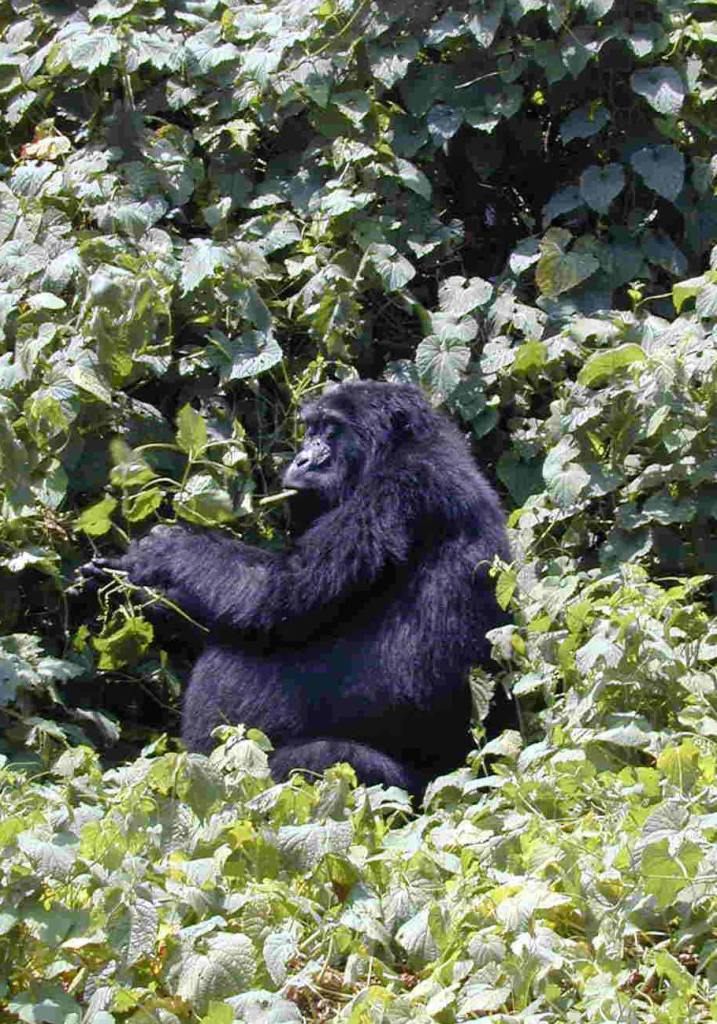
A wild mountain gorilla feeding away in Volcanoes National Park, Rwanda

KIGALI - Following the recent insurgency in DRC near the Rwanda/Congo border, Rwanda Development Board (RDB) has embarked on an exercise to closely monitor the primates.

According to Rica Rwigamba, who is in charge of tourism at RDB, the gorillas succumbed to extreme cold weather in the Virunga Massif in the Northern Province.

“There is high mortality rate of babies (Gorillas) between 1 to 3 years. But, we have increased close monitoring by the wardens who will report any abnormality or sign of illness so that our veterinary doctors treat them immediately,” Rwigamba said.

Rwigamba, however, said that tourism activities have not been affected by the conflict in DRC. 

“Our aim is to increase the number of gorillas and to conserve them; what happened was unusual, but it was a loss in terms of conservation,” she said.

Monday, January 7, 2013

Rwanda Development Board (RDB) Recognizes Local Communities role in promoting Gorilla Tourism

Revenues generated from the tourism sector have this year increased by 11 per cent compared to the same period (January-June) last year.

A mountain gorilla in Volcanoes National Park
Information from Rwanda Development Board (RDB) indicates that so far, US$128.3m has been raised compared to us$115.6m generated in the same period last year.


Noteworthy, is that the rare Mountain Gorillas contributed more money, since majority of the tourists are interested in the Gorillas that live in the Volcanoes National Park.


The head of the tourism body at RDB, has pointed out that this increase in revenues for the sector, will ultimately trickle down to the communities that live around the Virunga, in addition to financing conservation efforts.


For tourism to continue to grow and flourish especially in regard to the rare mountain gorillas that are characterized as being on the verge of extinction, the role of conservation efforts can not be over emphasised.
And to carry out successful conservation, the local communities around the Virunga Mountains have a fundamental role to play. As has been noted, the local communities must have a stake in the tourism sector and a sense of ownership.


This is only possible when they are direct beneficiaries of the revenues that accrue from the tourist attractions and activity in their area. This will help in avoiding poaching and land use in a manner that destroys the natural habitat of  for example; the mountain gorillas.


By ensuring that the proceeds from the sector trickle down to the community, the managers of the tourism sector are investing in the sustainability of tourism and also guaranteeing social welfare of the communities.

Friday, January 4, 2013

Indifference among States Puts Single East Africa Community Tourist visa Plans in Balance

PLANS to have an East African Community (EAC) single tourist visa remain in balance as some partner states show signs of indifference with regard to adopting common policies necessary to spearhead the project.

Although it was initially envisaged as a fundamental initiative that would help attract more foreign earnings through increased tourists, some member countries seem to be dragging their feet in implementation.

Rica Rwigamba, in charge of Tourism and Conservation at the Rwanda Development Board (RDB), could not tell exactly when the regional visa will start operating.
She said that delays by other member countries have derailed progress.
“Everybody would want to have it but there are some pre-requisite factors, especially harmonising immigration policies and ICT to help ease the process. We are pushing it but we realised it requires a lot of consultations because we need to be at the same level,” she said.

Rwigamba explained that while Rwanda had made significant strides in use of ICT, there was need for the rest of the EAC partner states to move at the same pace if the trading bloc is to become a single tourist destination.


Initially, the single tourist visa had been planned to be operational by July 2012.

For instance, coming to Rwanda, one can apply for a visa online and get it, a facility that can hardly be found in other member states.

It is expected that the projected single visa would save potential tourists time and the rigorous process of having to jump from one embassy to the other to apply for different visas to travel across the East African region.

“Today travelers want to have a much wider menu. And it is easier to market the block as a single destination as opposed to one country. It means having features like the Mountain Gorillas in Rwanda, Maasai Mara in Kenya, Kilimanjaro in Tanzania, among others, all on one menu,” she said.

The long procedures in acquiring visa by tourists, especially those from Europe, the Americas sometimes discourages them, forcing them to divert to other destinations.

The EAC Sectoral Council on Tourism and Wildlife Management has called on partner states to fast-track the introduction of the single EAC tourist visa, saying the process was taking unnecessarily too long.
The move to have the single EAC visa followed an appeal by tourism boards of the five partner states requesting for a common visa to accelerate promotion of the region as a single tourist destination.

Rwigamba, however, says that they expect to have hold negotiations at the ministerial level starting next year during which they will assess the recommendations and determine a way forward.

Tourism in east Africa is among the highest earners in terms of investments, with enormous employment opportunities.
In Rwanda, from January to September 2012 tourism is estimated to have generated US$210.5 million, compared to US$184.4 million it generated during the same period in 2011 – that represents an increase of 14 per cent.
The number of tourists from EAC member states and Democratic Republic of Congo also increased from 498,617 to 639,536.

The majority of the international tourists came from the United States of America, United Kingdom, Belgium and Germany, according to official figures.

Tuesday, November 13, 2012

How to do a 1-Day mountain gorilla trekking tour from Kigali

Up to recently I kept receiving many emails from intending visitors on whether it is really possible to do a gorilla trek in one day without a hassle, and my answer of course is – YES, it is possible in Rwanda.

The Kigali International Airport is just about 2½ hours of driving on paved roads from the Volcanoes National Park, the home to the mountain gorillas. And if the gorilla trekking commences at 7:00 AM, the main requirement here is to get to the Volcanoes National Park assembling point before that time. So if you can depart from Kigali in the early morning hours, 3 hours before this time you can certainly make it. Gorilla trekking can go for as many as 8 hours and once the activity is done, you can make your way back to Kigali with much ease. However much you will be tired, who cares? You have the memories to carry home.

A 1-day gorilla trek (with Gorillas and Wildlife Safaris) costs $1160 for one person, $940 and this includes the gorilla permit. Compare this cost to a 3-days gorilla trek: 1276$ for one person, 1035$ for 2 persons, then you see the difference in costs and how much you save. Of course this comes about after you consider the accommodation costs, the car hire costs for the gorilla trek with your driver, your meals, etc.

None the less, we can’t underscore the necessity for an overnight near the Park or on Kinigi town for several reasons if not to avoid risks like car breakdowns which may delay you to the point of missing out on your lifetime experience with the gorillas.

You might get lucky and get a close group (where you only have about a 45minute trek I think from trailhead to the group) - but some groups e.g. Susa can be far away and you could spend the best part of the day trekking. Plus people tend to want to head straight for a shower after the trek so that's why you almost always do need at least a night stay around Volcanoes National Park.

But yes, you can do a 1-day gorilla trek but for factors outlined above, you may consider otherwise e.g. early start (what if you get a flat tyre?), not assigned group until you're there so no guarantee of a group nearby, if you get wet or have a tough trek, you probably would want to get showered and changed fairly quickly.


Related articles:

Comparing Gorilla Trekking Tours : Uganda Vs Rwanda – Compare prices, experience, hardness,etc

My mountain gorilla tracking experience in Bwindi's Oruzogo gorilla family

How To Book Gorilla tracking & Trek Permits in Uganda and Rwanda

Affordable Private Road Transfers to Bwindi

Uganda Cuts Gorilla Trek Permit Prices to $350
Mountain Gorillas Aside, Why Does Earth need Bwindi so badly?

Mountain Gorilla Trekking Tour Packages in Rwanda and Uganda

1 day Gorilla trek Rwanda with tour price
2 days Gorilla tracking Rwanda with tour price
3 day Gorilla tracking Rwanda with tour price

3 days Uganda Gorilla tour
4 days Rwanda Gorilla Tour  -
5 days Gorillas trek Rwanda and Safari in Queen Elizabeth National Park Uganda
5 days Rwanda, Uganda Gorillas
6 days gorilla tracking, wildlife safari
14 days Uganda Rwanda Safari
7 days Uganda Gorilla Safaris
9 days Gorillas, primates wildlife
8 days Uganda Gorilla Game safari
7 days Gorillas, chimpanzee, wildlife -

Wednesday, October 10, 2012

Biggest Seasonal Gorilla Tour Discounts Ever in Uganda and Rwanda!

This is probably the lowest prices that anyone can get for a gorilla tracking tour in Rwanda and Uganda, I have  never been so blown away by such low tour prices both for budget tourists and luxury.
Budget Gorilla Tours Uganda Rwanda - https://www.gorillasandwildlifesafaris.com/gorilla%20safaris/DiscountGorillaToursSeasonalOfferPricesUgandaRwandaSafaris.htm
Tourists for for a gorilla tour and safari in Uganda and Rwanda
A friend of mine first mentioned to me but I first ignored it. This company in Uganda has cut prices to the extent of a gorilla tour at US$800per person including the gorilla permits. And they are serious!
Budget Gorilla Tours Uganda Rwanda - https://www.gorillasandwildlifesafaris.com/gorilla%20safaris/DiscountGorillaToursSeasonalOfferPricesUgandaRwandaSafaris.htm
A heavily pregnant mountain gorilla on self-medication in Uganda's Bwindi


If you are planning a gorilla tour or safari to Uganda and Rwanda in the next 7 months, you must consider visiting this site definetly. They deal in budget/ low cost and moderate tours and I have seen great and impressing customer reviews about them. 

Well I cannot give you all the details but if you check out their website,
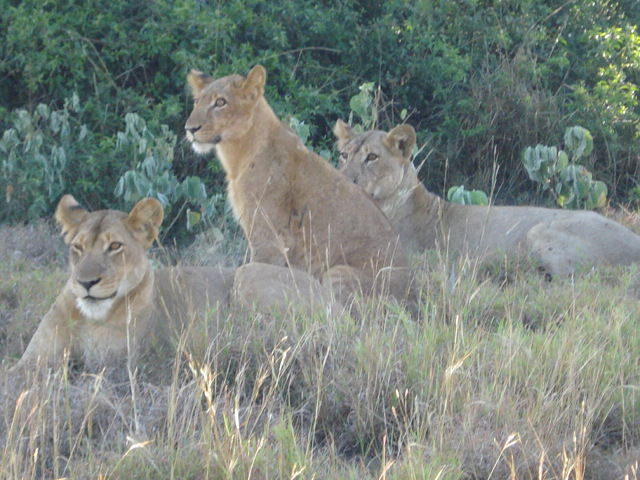
Lions on Uganda Tour - Budget Gorilla Tours Uganda Rwanda - https://www.gorillasandwildlifesafaris.com/gorilla%20safaris/DiscountGorillaToursSeasonalOfferPricesUgandaRwandaSafaris.htm
Lions in Ishasha (Uganda) targeting/ strategically to hunt Uganda Antelopes
(www.gorillasandwildlifesafaris.com/gorilla safaris/DiscountGorillaToursSeasonalOfferPricesUgandaRwandaSafaris.htm)   for your own gorilla tour discounts. 

There are several packages on offer, including the 1 day Rwanda gorillas, 2 Days Rwanda Gorillas, 5 Days Chimps and gorillas, 3 Days Uganda Gorillas,etc,     
Gorillas and Wildlife Safaris has cut tour prices on all Uganda / Rwanda Gorilla Tours Packages and Safaris from October 2012 to May 2013. 

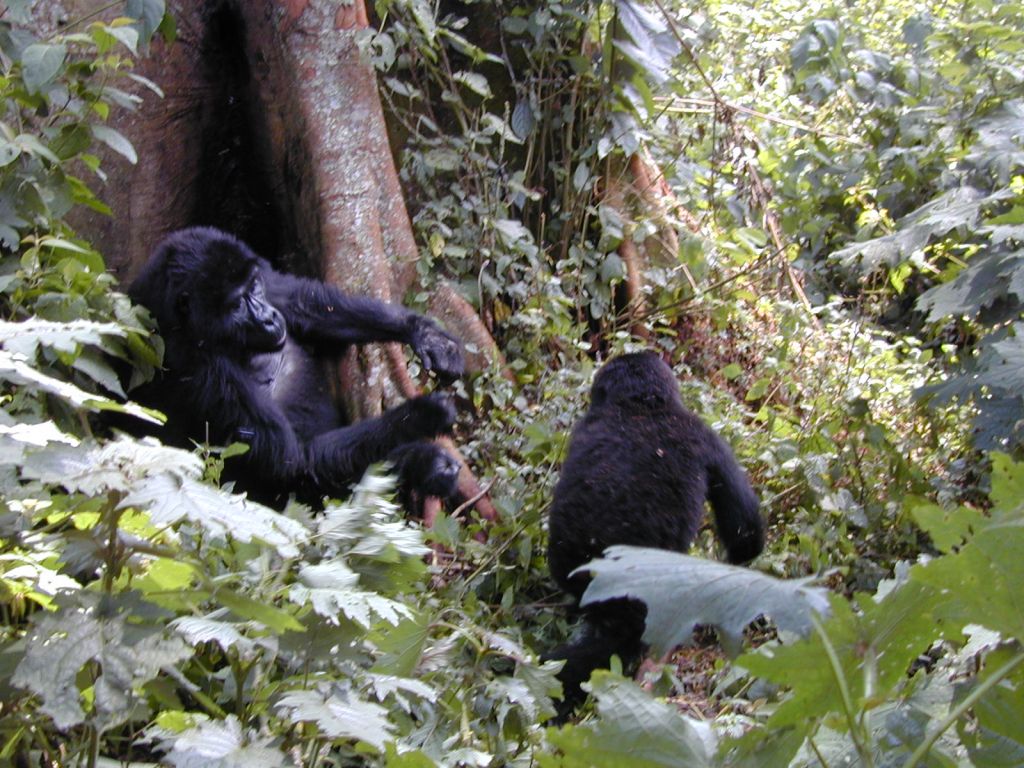
A Wild Mountain Gorilla conversint with its juvenile after a fight. Budget Gorilla Tours Uganda Rwanda - https://www.gorillasandwildlifesafaris.com/gorilla%20safaris/DiscountGorillaToursSeasonalOfferPricesUgandaRwandaSafaris.htm
After a fight, Mountain gorillas in Uganda's Bwindi make-up
All other Uganda Tours have had their tour prices cut for the low season but I have just picked out these few. Why don't you check them out today?