Showing posts with label mountain gorillas. Show all posts

Wednesday, January 18, 2017

How tough is the Rwanda gorilla trek? Which is the hardest/ easiest, best gorilla group to track

Which is the toughest mountain gorilla group to track in Rwanda, which gorilla group is the most popular to track, easiest gorilla family to track, how many hours does the gorilla tracking take in Rwanda? Susa, Kwitonda, Sabinyo, Umahoro?

Which is the toughest mountain gorilla group to track in Rwanda, which gorilla group is the most popular to track, easiest gorilla family to track, how many hours does the gorilla tracking take in Rwanda? Susa, Kwitonda, Sabinyo, Umahoro?

This is one of the most frequently asked questions about gorilla tracking in Rwanda. And it is also perhaps the most difficult to answer. So many variables are involved, and if they all conspire against you, you could be in for a genuinely exhausting outing (indeed on rare occasions, the guides have had to carry tourists down). On the other hand, if everything falls your favour, the excursion will be little more demanding than the proverbial stroll in the park.

The trek to see the gorillas has two distinct phases. The first is the hike from the closest car park to the forest and national park boundary, which usually takes 30-60 minutes depending on the speed of the party and the group they are visiting. The second is trek into the forest in search of the gorillas, which will usually have been located by the advance trackers by the time reach the forest edge.

The first part of the trek is predictable, and it is usually quite flat and undemanding unless you are going to the Susa (Susa-A), which involves a longer and steeper ascent. The second part is more difficult to predict, as it will depend on the exact location of the gorillas on the day, and on the steepness of the terrain en route. Other factors in determining how tough it will be include the density of the vegetation (bending, crawling through the jungle can be tiring especially if you have to dodge vicious nettles) and whether it has rained recently, in which case everything will be muddier and quite slippery underfoot.

At risk of stating the obvious, age and fitness levels are key factors in how difficult the hike will feel. Susa Group aside, moderately fit people under the age of 40 seldom feel any significant strain, but a high proportion of trackers are in their 50s or 60s, in which case the hike might be something tougher. As one trekker has previously commented in the Bradt Guide (Rwanda): ‘We think you underestimate how strenuous the gorilla trip is. We are both 61 but fit and well, bicycle to work each day , and still we had to take regular breaks due to problems with breathing’. That said, while many older travellers do find the track quite demanding, it is very unusual that they are so daunted as to turn back.

An important factor in how difficult the hike will be is which group you are allocated. As a rule, the hike to the Susa Group is the most demanding (but also most rewarding, with more than 40 gorillas on show), while the Sabinyo Group is the most reliably straightforward to reach. The hikes to Kwitonda, Hirwa and Group Thirteen are also usually quite undemanding, whereas the hikes to Amahoro Umubano Groups tend to be more difficult, but not as tough as the Susa Group.

Unfortunately, these things aren’t set in stone, and any group might be unusually demanding (or easy) to reach on a bad day. Furthermore, nobody can guarantee which group you will be allocated in advance. However the guides at Kinigi do make a conscious attempt to match individuals to the most suitable group, especially if they are asked to. Generally the party for the Susa (Susa-A) consists of the lean-looking under-30s, while the opposite holds true for Sabinyo party.

Two further factors are uneven underfoot conditions and high altitude. Most visitors to Africa live in towns and cities where roads and sidewalks are paved, and parks are serviced by neatly footpaths, so they are unused to walking on the more irregular and seasonally slippery surfaces typical of the ascent paths and forest floor. It will help enormously in this regard to wear strong waterproof shoes or hiking boots with a good tread and solid ankle support. Furthermore, if you think you might struggle in these conditions, there is a lot to be said for avoiding the rainy seasons, in particular March-May, when conditions can be dauntingly muddy.

Don’t underestimate the tiring effect of altitude. The trekking takes place at elevations of 2.500-3,000m above sea level, not high enough for altitude sickness to be a concern but sufficient to knock the breath out of anybody – no matter how fit – who has just flown in from a low altitude. For this reason, visitors who are spending a while in Rwanda might think seriously about leaving their gorilla tracking until they’ve been in the country a week or so, and are better acclimatised. Most of Rwanda lies above 1,500m, and much of the country is higher – a couple of days at Nyungwe, which lies above 2,000m, would be good preparation for the Virungas. Likewise if you are coming from elsewhere in Africa, try to plan your itinerary so that you spend your pre-Rwanda days at medium to high altitude: for example, were you flying in from Kenya, a few days in Nairobi (2,300m) or even the Maasai Mara (1,600m) would be far better preparation than time at the coast.

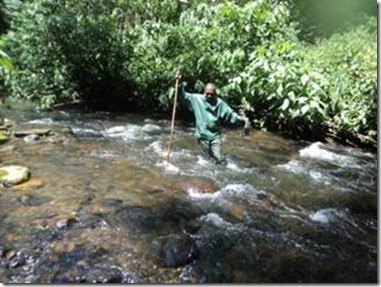
Guides will generally offer you a walking stick at the start of the hike, and, even if you normally shun such props, it is worth taking up the offer to help support you on those slippery mountain paths. If you have luggage, hire a porter too. Once on the trail, take it easy, and don’t be afraid to ask to stop for a few minutes whenever you feel tired. Drink plenty of water and carry some quick calories – biscuits and chocolate can both be bought at supermarkets in Ruhengeri. The good news is that most people who track gorillas find the hike to be far less demanding than they expect, and 99% of cases, whatever exhaustion you might feel on the way up will vanish with the adrenalin charge that follows the first sighting of the silverback gorilla!

Rwanda Gorilla Trek Tours


Wednesday, August 5, 2015

Bwindi Habituates 2 more gorilla families for Tourism

Two new groups of mountain gorillas are being habituated for tourism and research in Bwindi Impenetrable National Park.

The groups, named Bushaho and Bikingi, are named for their home ranges and contain some individuals from previously habituated groups. Both groups are led by former Nkuringo group silverbacks, Bahati and Bikingi.

There are 8 babies between these two groups (6 in Bikingi and 2 in Bushaho)! The groups are being habituated for tourism, yes.

Habituation allows veterinarians to visit the groups regularly and closely monitor them for any sign of illness or injury - and intervene to save a life when it is necessary. It also allows the rangers to monitor the group on a daily basis - and for instance, report a gorilla who has become caught in a poacher's snare so that veterinarians can intervene and administer the necessary treatment immediately.

When combined with the estimated 480 gorillas inhabiting the Virunga Volcanoes to the south (the only other location where mountain gorillas exist) , the world’s population of mountain gorilla now stands at 880. The mountain gorillas of Bwindi and the Virungas are the only gorilla populations known to be increasing; all other populations are thought to be in decline due to hunting and habitat loss.

The rise in mountain gorilla populations also indicates the success of a continued collaboration between the Uganda Wildlife Authority with the Institut Congolais pour la Conservation de la Nature (ICCN) in the Democratic Republic of Congo and the Rwanda Development Board (RDB); the Virunga Mountains lie on the borders of three countries, requiring the participation of agencies from Uganda, Democratic Republic of Congo, and Rwanda for effective monitoring and enforcement. Bwindi, however, is located in Uganda, but in the spirit of regional collaboration, the ICCN and RDB sent support teams for the 2011 Bwindi census effort.

Although far fewer in number than their western relatives, mountain gorillas have had a profound effect on both the public and the naturalists who have encountered them. While collecting specimens in Africa for the American Museum of Natural History in the early 20th Century, U.S. explorer Carl Akeley became concerned about the future of the mountain gorilla, helping to establish Africa’s first national park—now Virunga National Park—in 1925 to protect the gorillas.

Thursday, July 30, 2015

New Mountain Gorillas Census set for September 2015

A new census for Mountain Gorillas is set for September 2015 in the Great Virunga Massif is set for September, 2015, the Greater Virunga Trans boundary Collaboration- GVTC has said.
The massif includes Uganda's Bwindi and Mgahinga National Park, Virunga National Park in DR Congo and the Volcanoes National Park in Rwanda.

The last mountain gorillas census was conducted in September 2011 and its results indicated a 3.2% increase in gorilla population (to a total of about 880 in the wild) in the Greater Virunga the previous ones  having been conducted in 2006, 2002 and 1997. All other censuses before have taken place in a duration spacing of five years apart.

This census is aimed at estimating the current gorilla numbers of Uganda’s BINP, document information on illegal activities, the gorillas distribution and compile information on other mammals in the ecosystem.

The organizations involved in the planning and eventual implementation of the activity include Uganda Wildlife Authority, the Greater Virunga Trans boundary Collaborative Secretariat (GTVCS), the Institut Congolais pour la Conservation de la Nature, the Rwanda Development Board, local governments and the International Gorilla Conservation Programme, Max Planck Institute for Evolutionary Anthropology, Conservation Through Public Health, the Mountain Gorilla Veterinary Project, the Dian Fossey Gorilla Fund – International and us, the Institute for Tropical Forest Conservation.

James Byamukama, the Programme Manager at GVTC says the exercise, which should have started earlier, was delayed by the insecurity in DR Congo.  He however adds that they are set to conduct the census in September starting in Virunga National Park.
Byamukama says with the census, the collaboration will be able to plan for future conservation efforts and the emerging trends of threats to gorilla population. Periodic censuses of endangered populations of high-profile species including gorillas help conservationists to understand their population dynamics assess the success of conservation programmes aimed at ensuring their survival

Blogger Tags:
, and to ensure that they receive continued attention from the global conservation community.

The method of use in this census will be the sweep method as well as fecal samples collected for generic analysis.  In the sweep method, teams traverse each marked sector of the park in a zigzag manner. They look for fresh gorilla trails till their nests are found and counted.  The estimates are made based on nests encountered in the due course of the census. The estimates are made based on nests encountered in the due course of the census. In great apes mammals, research has proven that the sweeping has been the most efficient method to date unlike the transect,experts assert.
In a preparatory census meeting of the stakeholders recently in Kabale, UWA’s Senior Monitoring and Research co-coordinator, Mr. Aggrey Rwesiba stated how important this exercise is to Uganda Wildlife Authority. He noted that the census provided vital information for establishing best management strategies that could be applied at both local and global scales to conserve the mountain Gorilla population. He accordingly  stressed that the census was an important index for the different stakeholders on the effectiveness of their work towards conserving the mountain gorillas.

Unlike other censuses done before in Bwindi, generic analysis where the fecal samples will be analyzed to minimize error and ascertain more accurate figures of the gorillas. It is estimated that a distance of not less than 600km will be covered by various teams to be involved in the census around the entire. Many staff from Bwindi Impenetrable National Park has already committed themselves to be part of this historical event of counting gorillas and preparation are in a high notch. The vegetation and terrain of Bwindi forest make it uniquely different from that Virungas. This makes the census more challenging as well as exciting, something to look forward to. 
The Conservation Area Manager of Bwindi Mgahinga Conservation Area, Mr. Pontius Ezuma has committed resources such as standby vehicles for the field teams and security all through the census exercise. In his own admission, he expects a rigorous time ahead thus the need to adequately prepare since the exercise has to be accommodated with many routine activities in park.
In the census carried out in Bwindi population in was carried out in 2002,  results showed that the population had increased since the previous census in 1997 by approximately 7%, to 320 individuals according to McNeilage and others 2006 while the Virunga population currently numbers around 380 gorillas . Another census of the Bwindi gorilla population was carried out between April and June 2006 to determine the population's total size and structure, its distribution across Bwindi, and the potential impact of human disturbance on the population.
The results at the time showed show that the 5 habituated groups in Bwindi contained a total of 76 individuals at the time of the census. In addition to these, 25 unhabituated groups were found, containing 227 individuals along with 11 lone silverback males, giving a total uncorrected population count of 314 individuals.

Though gorillas have few natural predators, they are endangered due to the loss of habitat and forest clearing. They also fall victim to hunting for the wildlife trade, and through accidental snaring by poachers who are targeting antelopes for meat. Diseases that affect humans also pose a threat to apes and can spread quickly in such small populations.

Thursday, June 11, 2015

2015 Gorilla's families in Rwanda- the 10 Mountain gorilla families for tracking in Volcanoes National Park

As of January 2015, there are 10 habituated gorilla groups which are for tourism purposes, and these are the ones that gorilla trackers visit. At maximum 8 persons can visit each gorilla gorilla group per day spending a maximum one hour each visit. These groups include Susa group, Sabinyo, Amahoro, Group 13 (Agasha group), Kwitonda, Umubano, Bwengye, Hirwa, Karinsimbi, Ugenda.
In Rwanda, you can only track mountain gorilla in Volcanoes National Park (Parc National des Volcans), a part of the wider Virunga (mountains). At least 480 mountain gorillas inhabit this (Virunga) complex and live at altitudes ranging from 2,300-4,500 m ranging within the southern part of Virunga National Park (DRC), and the Volcanoes National Park northern Rwanda, while a few use the Mgahinga National Park, southwestern Uganda.
In Rwanda, Gorilla’s families or groups are divided into two those which are for the study/ research purposes and these are only accessed by scientists and researchers. These include: Beetsme, and Pablo’s Shida’s and have the largest number of individuals.
There are then also 10 habituated gorilla groups which are for tourism purposes, and these are the ones that gorilla trackers visit. At maximum 8 persons can visit each gorilla gorilla group per day spending a maximum one hour each visit. These groups include Susa group, Sabinyo, Amahoro, Group 13 (Agasha group), Kwitonda, Umubano, Bwengye, Hirwa, Karinsimbi, Ugenda.

1. Susa Group (Susa A Family) - the gorilla group that was famously studied by Dian Fossey.
It derives its name from the Susa River which flows through their home range. This family is the hardest to trek as it tends to range high into the mountains but RDB’s Tourism & Conservation trackers will know well in advance where the group is located the day before in advance for the next trackers. Sometimes tourists have been barred from tracking the group because of its distant location. This group is very impressive with a family size now of 28 gorilla membersSusa gorilla group Rwanda with 3 Silverbacks. It was the largest gorilla group before it split into two. The group had 42 individuals and when one visited it, all you could see where Gorillas all over. The group is well known for the young twins named Byishimo & Impano who are very playful. It also contains one of the oldest known habituated gorillas, Poppy. Born in 1976 Poppy is believed to be from one of Dian Fossey's original gorilla groups.
Typically, a mother abandons one of the twins, as it is almost impossible for her to care for both. As we watched the mother, Nyabitondore, care for the twins, Impano and Byishimo, at times we thought she would go insane from the task. But today you can enjoy the two bouncing around and playing as if nothing ever happened.

2. Karisimbi Family (Susa-B)
This is the family that split from the Original Susa (Susa-A) family and now it’s called Susa-B or Karisimbi Group. It contains 15 individuals and it always stays in the slopes of Karisimbi Volcano (4507M). which the highest pick of Rwanda. The Karisimbi Group is better suited to visits for more serious hikers. It appears that they have established their home range high up on the slopes of the Karisimbi caldera. Thus, a visit to this group may well end up as a full-days trek. The group sometimes migrates to higher altitude and hence makes tracking difficult. However, RDB tourism and conservation guides know where to find the group a day before. Tracking this gorilla family may sometimes be prohibited because of its distant location.

3. Sabyinyo Gorilla Group
Sabyinyo is an easily accessible group led by the powerful silverback Guhonda. Guhonda, the largest silverback of all the groups, who is well known for his massive physical appearance. Guhonda has kept his main challenger, Ryango, out of his group as a lonely silverback. There are fewer members within this family than in the other groups however they are equally impressive as a family.
The group was named after the Sabyinyo volcano which means "old man's teeth". Sabyinyo is one of the groups closest to the park's edge with 8 individuals: 1 Silverback (the biggest in the park); 3 Adult females; 1 Non adult female; 2 Juveniles and 1 Baby.

4. Amahoro Gorilla Group
Meaning "peaceful group", Amahoro, is the most peaceful of all the gorilla groups. The group has 17 individuals: 1 Silverback; 2 Blackbacks; 5 Adult females; 2 Sub adult males; 2 Juveniles and 5 Babies.  However, peace comes at a price. Ubumwe, the group's silverback is so peaceful, easy going and calm, he has lost group members to Charles in the Umubano group.
To reach Amahoro one must endure a fairly steep climb however the climb is well worth it once in contact with this tranquil group.

Amahoro gorilla group

5. Umubano Group

Meaning "neighborliness", Umubano a family of 11 individuals: 1 Silverback; 1 Sub adult male; 3 Adult females and 6 Babies.Umubano were originally Amahoro members but broke off after the dominant silverback (Ubumwe) was challenged by Charles, now the leader of Umubano.

As Charles matured into a silverback of the same rank as Ubumwe, he could not stand being given orders and decided to stage a fight and challenge Ubumwe. The fight went on for weeks and then months. Finally, Charles managed to snatch from Ubumwe a few females and formed his own group; thus Umubano was formed. Since then, he has commanded respect and recognition from Ubumwe. We have observed, on various occasions, interactions between the two silverbacks, but no fighting has been seen since the great battle ended.


6. 13 Group (aka Agasha Group)
When first habituated this group had only 13 members hence its name. Now the group has approximately 25 members: 1 Silverback; 12 Adult females; 2 Sub adult female; 3 Juvenile and 7 Babies. Formerly this group was commanded by Nyakarima who was challenged by Agashya meaning "the news". Agashya indeed made news by first watching and estimating Nyakarima's strengths and eventually challenging him to a fierce fight by taking off with his whole group. This was a shock to Nyakarima and an unprecedented event in observed gorilla history. Agashya then moved up the volcano to secure his group and make sure Nyakarima did not track them. Agashya has since increased his group's numbers by snatching from other groups and assimilating other lone gorillas, rapidly increasing the group from 12 to 25 individuals.
Agashya is known, at the first sign of trouble, to take his whole group up to the top of the volcano. Once, while we were taking a group of tourists to see Group 13 this exact scenario unfolded. Agashya felt that there was another silverback who was about to challenge him. In response, he took the group up the volcano. Every time we thought we were close to see them, Agashya would move the group further uphill. We did not reach them until the very top, where we finally got a chance to see them. By the time we got back to the car we had walked for 12 hours. While it was an exhausting day, it was magical to see gorillas at the top the world.

13 gorilla group

7. Kwitonda Family
This 18-member group is led by a silverback known as Kwitonda which means “humble one” and has two silverbacks and one blackback. Having migrated from DRC, this group tends to range far making it a moderately difficult trek. Together with Susa B this is one of the difficult groups to track

Kwitonda gorilla group

8. Hirwa Group (meaning "lucky one")
This group came into the lime light on the 17th of June 2006 when trackers witnessed its formation by the merging of some members from two different existing families, namely from Group 13 and Sabyinyo making a very small group then. As luck would have it, other gorillas joined the group and now Hirwa has 9 individuals: 1 Silverback; 3 Adult females; 2 Sub adult females and 3 Babies.

Despite being the newest group on the block, Hirwa exhibits strength and holds its own amongst all the other established groups.

Hirwa gorilla group

9. Bwenge Family
The family size of this group is 11 individuals with Silverback. It is mostly found on the Slopes of the Karisoke Volcano. The group is led by a silverback named Bwenge and was formed in 2007 when he left his natal group and was gradually joined by females from other groups. This group has had some hard times; this is because there were some deaths of 6 infants. However now the group is growing strong with 2 successful births in the last few years and a strong capable silverback leader. The trek to see the group is tough and one has to hike up the hill or like 3 hours (gaining approximately 600m in elevation). The trails are sometimes muddy and very steep. Apparently it was also the group that was featured in the movie "Gorillas in the Mist".


10. Ugenda Family
This Group is found in Karisimbi area of Rwanda. The Family Size consists of 11 gorillas with 2 silverbacks. Its name means “being on the move” and was named because it was always moving from one area to another. Since it’s not in one place, tracking it may be some how difficult and involves also moving from one place to another to locate them.

Related articles:

Comparing Gorilla Trekking Tours : Uganda Vs Rwanda – Compare prices, experience, hardness,etc

When is the Best time for gorilla trekking/ tracking in Rwanda and Uganda?

2 days Gorilla tracking Rwanda with tour price
3 day Gorilla tracking Rwanda with tour price
Gorillas trekking  and Chimps Rwanda - 4 days tour

7 Days Rwanda Primates Tour

9 Days Rwanda Tour

Friday, April 10, 2015

Rukina - Bwindi/ Ruhija’s head silverback gorilla (of Kyanguriro gorilla family) dies

RUKINA, the former dominant silverback in the Ruhiija sector based Kyaguriro family passed on, on Easter Monday April 6th,2015.

It is estimated that that Rukina was born around 1984. He was well identified as a group member of the Kyagurilo Group in the late 1990's when he was a young silverback.

It was at this time that he was named 'Rukina', meaning 'playful' in Rujiga, due to his playful nature as a young adult. He became the dominant silverback of the group in August of 2004, following a 3 year struggle for dominance over the previous dominant silverback (Zeus). Through genetic analysis of fecal samples, we confirmed that he sired his first offspring when he was still a subordinate male in 2002.
Overall, he likely sired 10 offspring, most of whom are currently still infants. During his 11 year tenure as the dominant silverback he attracted four females into his group from neighboring groups, attesting to his ability to be a good leader. He was a very tolerant silverback, spending a lot of time with the adult females as well as his many infants. At the time of his death, the group was at its largest size, containing 21 gorillas, including 8 adult females.


He contributed to the understanding of the ecology and social behavior of Bwindi mountain gorillas due to the focus of research on his group by the Max Planck Institute of Evolutionary Anthropology since 1998. He helped promote the plight of the critically endangered mountain gorillas around the world by being filmed for several documentary films including one by the BBC.


This group is now being led by Rukara the next Silverback. There was a great instability in the group from yesterday till today. However, in the afternoon the trackers noted some bit of calmness though this may take a bit of time before the group fully recovers from this unexpected shock. May his soul rest in peace

Mountain Gorilla Trekking Tour Packages in Rwanda and Uganda
3 days Uganda Gorilla tour
4 days Rwanda Gorilla Tour -
2 days Gorilla tracking Rwanda with tour price
3 day Gorilla tracking Rwanda with tour price
5 days Gorillas trek Rwanda and Safari in Queen Elizabeth National Park Uganda
5 days Rwanda, Uganda Gorillas
6 days gorilla tracking, wildlife safari
14 days Uganda Rwanda Safari
7 days Uganda Gorilla Safaris
9 days Gorillas, primates wildlife
8 days Uganda Gorilla Game safari
7 days Gorillas, chimpanzee, wildlife -

Monday, June 23, 2014

Rwanda’s Kwita Izina (Mountain Gorilla Naming) Ceremony for July 01, 2014

Rwanda will celebrate the birth of 18 baby gorillas at the 10th anniversary of Kwita Izina, the annual gorilla naming ceremony. The event will take place in Kinigi, Musanze on 1 July 2014. This year’s theme is ‘A Decade: Conserving-Empowering-Growing’.

“On this occasion, we will not only celebrate the birth of one of the world’s most endangered species but also the efforts of individuals, organisations and nations involved in the preservation of these rare animals,”

Rwanda’s community led conservation efforts have led to a 26.3% growth in the population of gorillas since 2003 and Kwita Izina has been key to this success. This is also thanks to the Government of Rwanda which has ensured tourism flourishes in a secure and enabling environment.”

Early this year, Kwita Izina won second prize in the UNWTO Ulysses Award for Innovation in Public Policy and Governance. The Rwanda Development Board recognises enhanced national conservation practices and community ownership of projects around the Volcanoes National Park that have seen beneficiaries empowered and their lives improved.

Rwanda’s tourism sector has also been growing remarkably. In 2013, Rwanda hosted 1,137,000 visitors who generated $294m, up from $62m in 2000. This increase is attributed to Rwanda’s attractiveness as a travel destination, new airline routes, especially in West Africa, spearheaded by our national carrier RwandAir, an increase in unique experiences for tourists and the county’s stability and welcoming visa policies.

Kwita Izina will be marked by a series of activities starting with the launch of Basumba Primary School in Bigogwe, Nyabihu District on 26 June 2014. The school of six classrooms has been built with funds from the Shared Revenue Scheme which gives 5% of tourism profits from National Parks back to the communities surrounding the gorilla habitat. This launch will be followed by a mix of conservation, business, cultural and entertainment activities.

Kwita Izina is inspired by the ancient Rwandan tradition of naming babies soon after they are born. In the nine years since the event was established, 161 mountain gorillas have been named in a celebration of nature and the communities who protect the magnificent animals.

Kwita Izina Activities:

26 June: Official launch of Basumba Primary School in Bigogwe, Nyabihu District. The school of six classrooms has been built with funding from the Shared Revenue Scheme. It will enable over 380 children to easily access education facilities.

28 June: Global Umuganda. Participants will have an opportunity to participate in the Global Umuganda. The community work reflects on the culture and commitment of Rwandans to clean and conserve the environment.

28 June: B2B meetings, Serena Hotel, Kigali: This platform will provide an opportunity for local tourism operators to showcase Rwanda tourism experiences to domestic, regional and international markets.

29-30 June: Gorilla Conservation and Community Exhibition at Musanze Stadium. The aim of the exhibition is to showcase what has been achieved in conservation and community empowerment through the 5% revenue sharing scheme.

30 June: Igitaramo (Community Party) in Kinigi is a night of cultural immersion with performances from local dance troupes and musicians.

1 July: Kwita Izina Gorilla Naming Ceremony at Volcanoes National Park

Key Tourism and Hospitality Facts and Figures:

Rwanda has three National Parks: Akagera National Park, Nyungwe National Park and Volcano National Park.
Rwanda has many unique tourist attractions including the mountain gorillas, golden monkeys, eco-tourism, heritage & leisure experiences.
Rwanda is becoming increasingly attractive for Conference Tourism (MICE); recently hosting the African Development Bank meetings and will host the World Export Development Forum in September, among other events.
In 2010, Rwanda hosted 666,000 visitors who generated US$ 200M - a 14% increase from 2009. In 2013, Rwanda hosted 1,137,000 visitors who generated $294m, up from $62m in 2000.
Tourism receipts are expected to grow at a compound annual rate of 25% until 2017 (EDPRS 2 targets).

Rwanda has over 380 accommodation establishments and approx. 6,500 accommodation rooms. Upper range occupancy rate is 70%, with foreigners accounting for 97% of beds availed.
The rapid growth of RwandAir in addition to other airlines serving Kigali such as KLM, SN Brussels, Qatar Airways, Turkish Airlines, Kenya Airways and Ethiopian Airlines allow for easy access to the country from all over the world.

For gorilla permits availability for other months, most certainly the dates are available but please contact us to confirm before you go ahead with your flights bookings.

In case you want gorilla tracking in Uganda, kindly drop us an email (info@gorillasandwildlifesafaris.com and gorillasandwildlifesafari@gmail.com) and we will let you know of the possibilities.

Rwanda and Uganda Gorilla Treks: Tracking Gorillas and Chimps across Uganda and Rwanda in Volcanoes National Park, Bwindi Impenetrable, Kibale National Park


4 days Uganda+ Rwanda Gorilla
This is a 4 day safari which starts and ends in Kigali- Rwanda with 2 gorilla permits (for Parc Nationale des Volcanoes and Bwindi in Uganda) included in the. Having a chance to see some of the last remaining 840 mountain gorillas in the world is a wonderful experience. It offers you an opportunity to track gorillas two times.


5 Days of Rwanda Uganda gorillas, primates with Golden Monkeys Tracking trekking Rwanda
T
his is a 4 day safari which starts and ends in Kigali- Rwanda. One gorilla permit for Parc Nationale des Volcanoes is included in the cost but the other gorilla trackings require other permits to be paid at time of booking. Having a chance to see some of the last remaining 700 mountain gorillas in the world is a wonderful experience. It offers you an opportunity to track gorillas two times. Parc Nationale des Volcanoes in Rwanda has five habituated gorilla families and tracking most groups in the afro-montane forest usually takes a few hours. You can also climb a volcano, visit the remains of Dian Fossey's grave or visit the endangered golden monkey.


5 days Uganda+ Rwanda Gorillas
with gorilla treks in Volcanoes National Park and Bwindi Impenetrable National Park. The tour starts  and ends in Uganda. You can choose to track golden monkeys instead of doing a second gorilla trek in Rwanda.


5 days Rwanda+ Uganda Gorilla tracking tour
This is a 5 day safari which starts and ends in Kigali- Rwanda with 2 gorilla permits (for Parc Nationale des Volcanoes and Bwindi in Uganda) included in the. Having a chance to see some of the last remaining 700 mountain gorillas in the world is a wonderful experience. It offers you an opportunity to track gorillas two times and thus have a totally different experience with two different gorilla families each in a very unique habitat.


5 days Gorillas trek Rwanda and Safari in Queen Elizabeth National Park Uganda
This is a 5 day safari which starts and ends in Kigali- Rwanda. One gorilla permit for Parc Nationale des Volcanoes is included in the cost but the other gorilla trackings require other permits to be paid at time of booking. Having a chance to see some of the last remaining 700 mountain gorillas in the world is a wonderful experience. It offers you an opportunity to track gorillas two times. Parc Nationale des Volcanoes in Rwanda has five habituated gorilla families and tracking most groups in the afro-montane forest usually takes a few hours. You can also climb a volcano, visit the remains of Dian Fossey's grave or visit the endangered golden monkey.
Queen Elizabeth National Park to see wildlife like lions, leopard, elephants, hippos, buffalo plus over 500 bird species.


5-day Uganda Rwanda gorillas tracking safari + Lake Bunyonyi Canoe Trek
with gorilla treks in Volcanoes National Park and Bwindi Impenetrable National Park. The tour starts  and ends in Uganda or Rwanda. You can choose to track golden monkeys instead of doing a second gorilla trek in Rwanda.

Monday, August 5, 2013

Uganda Offers Discounted Gorilla Permits For November 2013 and Promotional Gorilla Tours

We have reliably learnt and would like to share the news with you – the Uganda Wildlife Authority in conjunction will be offering discounts on gorilla permits for November 2013!

mountain-gorilla-silverback-male-silverback

The current standard gorilla permit price USD500.00 but for November 2013, it will be at USD350.00 for non-resident foreigners. In addition to this, Gorillas and Wildlife Safaris will be offering a USD50.00 per person discount off all Uganda gorilla trek safaris booked for November 2013. Some of the safari packages you can book to enjoy this promotion gorilla safari discounts include:
3 days Uganda Gorilla tour
Uganda 4 days Gorilla tracking tour with Safari in Queen Elizabeth National Park
Uganda 5 days Gorilla tracking tour with Wildlife Safari in Queen Elizabeth National Park
Park
5 days Uganda Gorillas, Chimps Tour
5 days Rwanda, Uganda Gorillas
6 Days Gorilla Trek tour, Kibale Chimps tracking, Wildlife BIG 5 Safaris in Queen Elizabeth National
6 days gorilla tracking, wildlife safari
7 days Uganda tour and holiday to Murchison Falls, mountain gorillas, Chimpanzees in Kibale Forest and Gorillas in Bwindi Impenetrable
7 days Gorillas, chimpanzee, wildlife 
8 days Uganda Gorilla Game safari
9 days Gorillas, primates wildlife
All Inclusive 12 days Uganda Safari

So please book your gorilla trekking safari for November now to enjoy this discount. This idea is a welcome one as Uganda Looks to improve her tourist inflows.

Uganda was voted the best tourist destination by lonely planet and has recorded the highest tourism growth in the whole of Africa in 2012. Tourism has been sighted by the President of Uganda as a sector that will drive the country out of poverty in the next coming years. With this discount on gorilla permits especially in low seasons will not only increase on tourists inflow but will create awareness, tourism earnings for the betterment of the sector.

Is November a Good Month to Track the Mountain Gorillas?
Discounted gorilla permits will always be announced every year for the months of November, April and May to enable tourists travel during low season in Uganda. Tourists are encouraged to take advantage of these months as accommodation rates also tend to go down lowering the general price of a gorilla safari. Some tourists have been influenced to think that this discount is only in months when it is raining highly making gorilla trekking a bit tough. This is not wholly true as Bwindi Impenetrable National Park is located in a high altitude area with tropical rain forests and thus its climate is influenced by a number of factors including even westeries (winds) from the Congo. This therefore means that Bwindi Impenetrable National Park receives rainfall throughout the whole year and it can rain every after 30 minutes irrespective of whether it is a dry or rainy season.
How to book your November 2013 Discounted Gorilla permits?
Please contact us for your discounted gorilla permits (Once announced) and we will pre purchase it for you and organize a gorilla tour that fits your budget, interest and time. All we need from you is the exact date when you intend to trek and we will check availability of gorilla permits at Uganda Wildlife Authority which is a body mandate to sell gorilla permits on behalf of Uganda Government and the ministry of Tourism and Wildlife. Once we find out that UWA has permits, you will need to send us your names as they appear on your passport, your nationality so that we forward them to Uganda Wildlife Authority to issue your gorilla permit.
How do I pay for my November 2013 Discounted gorilla permit?
Once you have decided on the dates, we will send you an invoice with our bank account details to enable you effect your payments. We usually require full payment of gorilla permits.

How do I know that my permit has been pre purchased?
Once your money show on our account, our office staff will check-in at Uganda Wildlife Authority with all your passport details and once your permit is issued, then we will scan it and send you a copy.

To claim you cut off the gorilla tour price please send an email to info@gorillasandwildlifesafaris.com or visit the website  (http://www.gorillasandwildlifesafaris.com ) and ask for reduction in gorilla tour price to reflect this discount.
See you on trek!

Wednesday, March 6, 2013

Mountain Gorillas Aside, Why Does Earth need Bwindi so badly?


What else is there in Bwindi apart from mountain Gorillas? What else can one do in Bwindi apart from tracking mountain gorillas; why is Bwindi an IUCN World Heritage site?Bwindi Impenetrable National Park home of Uganda mountain gorillas
 
L-hoerst Monkeys and primates in Bwindi
L-Hoerst Monkeys, 1 of the 12 primates in Bwindi
With an ever growing importance now being attached to tourism development in East Africa, each country is trying to find a niche tourist attraction where they have competitive advantage over the other.
In Uganda, the endangered mountain gorilla is the flag bearing attraction. Thousands of tourists (largely foreigners) come to Uganda every year for tours to track (or trek) these mountain gorillas.
 
Almost a half of the remaining 780 mountain gorillas on earth inhabit the impenetrable Bwindi National Park, the rest being scattered in the Viungas (shared by Rwanda, Uganda and DRC). This makes Bwindi a very important region for tours in Uganda. Almost the entire Uganda tourism industry has a bearing with Bwindi. Tourists who come for gorilla tours frequently end up visiting other national parks in Uganda as well.
 
This brings us to the question, Besides the mountain gorillas, what’s so special with Bwindi to the extent that the IUCN declared is a World Heritage Site?
 
clip_image004Bwindi is characterized by steep hills and narrow valleys with a general incline from the north and west to the south-western corner. Together with some remnant lowland forest outside the boundary, the park constitutes an important water catchment area serving the surrounding densely populated agricultural land.
With an area of 32,092ha and an altitudinal range of 1,I 90-2,607m, Bwindi is one of the few large expanses of forest in East Africa where lowland and montane vegetation communities meet. Combined with its probable role as a Pleistocene refuge, the forest hosts an extremely high biodiversity.
 
Bwindi is the most diverse forest in East Africa for tree species (more than 163 species) and ferns (more than 104 species), as well as other taxa. The trees account for 38% of the total recorded for the country and include 10 species not found elsewhere. A further 16 species have only a very restricted distribution in south-west Uganda, and one species, Lovoa swynnertonii, is globally threatened .
 
Bwindi has one of the richest animal-life communities in East Africa, including over 214 species of forest bird (> 65% of the Uganda’s total), 7 species of diurnal primate (58% of the country’s total), and 202 species of butterfly (84% of the country’s total).
Highly significant is the presence of almost one half (380 of about 780) of the world’s population of mountain gorillas.
Entagered Mountatin Gorillas of Bwindi, Uganda
Endagered Mountain Gorillas of Bwindi
Bwindi is also an important locality for the conservation of Afromontane fauna, in particular those endemic to the mountains of the western rift valley. At least 70 of the 78 montane forest bird species occurring in the Albertine Rift region are found in the forest, including 22 of the 27 endemics.
 
In the case of butterflies, 8 Albertine Rift endemics are known to occur in the forest, which may be the most important in Africa for the conservation of montane butterflies.
Overall, Bwindi contains 9 globally threatened species: mountain gorilla, common chimpanzee, I’hoests monkey, African elephant, African green broadbill, Grauer’s rush warbler, Chaplin’s flycatcher,African giant swallowtail and cream-banded swallowtail.
Black and White Colobus monkeys in Bwindi
 
Next week we shall discuss the greatest importance of all, cultural significance of Bwindi. Stay tuned!
 
Do you still have any doubts to the strong importance of Bwindi to this earth or Uganda in particular? Share it with us. Of course this is not a conclusive text of Bwindi’s significance. Feel free to share your thoughts, this will certainly further the conservation efforts.
 
Do you want to visit Bwindi? Click here and take advantage of these amazingly huge seasonal discount offers


Related articles:
Comparing Gorilla Trekking Tours : Uganda Vs Rwanda – Compare prices, experience, hardness,etc
My mountain gorilla tracking experience in Bwindi's Oruzogo gorilla family
How To Book Gorilla tracking & Trek Permits in Uganda and Rwanda
Affordable Private Road Transfers to Bwindi
Uganda Cuts Gorilla Trek Permit Prices to $350
Mountain Gorillas Aside, Why Does Earth need Bwindi so badly?

Mountain Gorilla Trekking Tour Packages in Rwanda and Uganda
3 days Uganda Gorilla tour
4 days Rwanda Gorilla Tour -
1 day Gorilla trek Rwanda with tour price
2 days Gorilla tracking Rwanda with tour price
3 day Gorilla tracking Rwanda with tour price
5 days Gorillas trek Rwanda and Safari in Queen Elizabeth National Park Uganda
5 days Rwanda, Uganda Gorillas
6 days gorilla tracking, wildlife safari
14 days Uganda Rwanda Safari
7 days Uganda Gorilla Safaris
9 days Gorillas, primates wildlife
8 days Uganda Gorilla Game safari
7 days Gorillas, chimpanzee, wildlife -

Monday, March 4, 2013

13 Group (aka Agasha Group) Gorilla Family in Rwanda’s Volcanoes National Park

13 Group (aka Agasha Group) Gorilla Family

When first habituated this group had only 13 members hence its name. Now the group has approximately 25 members: 1 Silverback; 12 Adult females; 2 Sub adult female; 3 Juvenile and 7 Babies.

Formerly this group was commanded by Nyakarima who was challenged by Agashya meaning "the news". Agashya indeed made news by first watching and estimating Nyakarima's strengths and eventually challenging him to a fierce fight by taking off with his whole group. This was a shock to Nyakarima and an unprecedented event in observed gorilla history. Agashya then moved up the volcano to secure his group and make sure Nyakarima did not track them. Agashya has since increased his group's numbers by snatching from other groups and assimilating other lone gorillas, rapidly increasing the group from 12 to 25 individuals.

Group 13 Gorilla Family (Agasha Group) in Rwanda's Volcanoes Naional ParkAgashya is known, at the first sign of trouble, to take his whole group up to the top of the volcano. Once, while we were taking a group of tourists to see Group 13 this exact scenario unfolded. Agashya felt that there was another silverback who was about to challenge him. In response, he took the group up the volcano. Every time we thought we were close to see them, Agashya would move the group further uphill. We did not reach them until the very top, where we finally got a chance to see them. By the time we got back to the car we had walked for 12 hours. While it was an exhausting day, it was magical to see gorillas at the top the world.

Karisimbi Gorilla Family (Susa-B gorilla group) of Volcanoes National Park, Rwanda

Karisimbi Gorilla Family (Susa-B gorilla group) of Volcanoes National Park, Rwanda

This is the family that split from the Original Susa (Susa-A) family and now it’s called Susa-B or Karisimbi Group. It contains 15 individuals and it always stays in the slopes of Karisimbi Volcano (4507M). which the highest pick of Rwanda. The Karisimbi Group is better suited to visits for more serious hikers. It appears that they have established their home range high up on the slopes of the Karisimbi caldera. Thus, a visit to this group may well end up as a full-days trek. The group sometimes migrates to higher altitude and hence makes tracking difficult. However, RDB tourism and conservation guides know where to find the group a day before. Tracking this gorilla family may sometimes be prohibited because of its distant location.

Related articles:

2013 Gorilla's families in Rwanda- the 10 Mountain gorilla families for tracking in Volcanoes National Park

Comparing Gorilla Trekking Tours : Uganda Vs Rwanda – Compare prices, experience, hardness,etc
When is the Best time for gorilla trekking/ tracking in Rwanda and Uganda?
How to do a 1-Day Rwanda mountain gorilla trekking tour ...

Visit and Track Mountain Gorillas in Rwanda with these packages
1 day Gorilla trek Rwanda with tour price
2 days Gorilla tracking Rwanda with tour price
3 day Gorilla tracking Rwanda with tour price
Gorillas trekking Rwanda - 4 days tour

Saturday, March 2, 2013

Amahoro Gorilla Group – A mountain gorilla family of Volcanoes National Park, Rwanda

Amahoro Gorilla Group – A mountain gorilla family of Volcanoes National Park, Rwanda

Meaning "peaceful group", Amahoro, is the most peaceful of all the gorilla groups. The group has 17 individuals: 1 Silverback; 2 Blackbacks; 5 Adult females; 2 Sub adult males; 2 Juveniles and 5 Babies.
However, peace comes at a price. Ubumwe, the group's silverback is so peaceful, easy going and calm, he has lost group members to Charles in the Umubano group.

To reach Amahoro one must endure a fairly steep climb however the climb is well worth it once in contact with this tranquil group.

Amahoro Gorilla Family group Volcanoes National Park Rwanda
Related articles:

2013 Gorilla's families in Rwanda- the 10 Mountain gorilla families for tracking in Volcanoes National Park
Comparing Gorilla Trekking Tours : Uganda Vs Rwanda – Compare prices, experience, hardness,etc
When is the Best time for gorilla trekking/ tracking in Rwanda and Uganda?
How to do a 1-Day Rwanda mountain gorilla trekking tour ...

Visit and Track Mountain Gorillas in Rwanda with these packages
1 day Gorilla trek Rwanda with tour price
2 days Gorilla tracking Rwanda with tour price
3 day Gorilla tracking Rwanda with tour price
Gorillas trekking Rwanda - 4 days tour

Tuesday, January 29, 2013

21-year-old dominant silverback Mountain Gorilla Dies

Gorilla Doctors sadly confirms the death of the 21-year-old dominant silverback tours/uganda-chimp-wildlife-gorilla-trek-7-days/rugamba passed on 25th/Jan. 

urugamba-silverbackHe only fell ill the day before and was to receive a veterinary assessment on the fateful day. The cause of death is yet unclear, but his body was carried down the mountain to the Gorilla Doctors compound  for the vets to perform a necropsy. tours/uganda-chimp-wildlife-gorilla-trek-7-days/rugamba was the leader of one of the Karisoke research groups, and KRC staff hopes that this will allow some time for the other group members to come to terms with their leader’s death.
Dr. Dawn reports that the other gorillas in tours/uganda-chimp-wildlife-gorilla-trek-7-days/rugamba’s group looked well but there is concern for the group as tours/uganda-chimp-wildlife-gorilla-trek-7-days/rugamba was the only silverback. There are several lone silverbacks ranging near the area at the time and could move in to take the group.

As you may be aware, there are only about 840 mountain gorillas remaining in their natural habitat. These habitats are in Rwanda, tours/uganda-chimp-wildlife-gorilla-trek-7-days/ganda and Congo. Gorillas are found in the high altitude forests surrounding these volcanoes. There are currently 7 habituated gorilla families that can be visited in Rwanda: -

Susa group has 37 individuals (3 silverbacks)
Amahoro group has 16 individuals (1dominant male SB & 1assistant BB)
Sabyinyo group has 8 individuals (1SB)
Group 13 has 19 individuals(1 errant SB)
tours/uganda-chimp-wildlife-gorilla-trek-7-days/mubano-8 (1 very tough SB)
Hirwa- 9 (1 ex-Susa SB) also has week old baby
Kwitonda (from Congo) - 16. (1SB 2BB) lots of fights in this family.
This is a migrant family and is not guaranteed.

SB=Silverback. BB=Blackback,young silverback.

In order to minimize behavioral disturbances to the gorillas, only 8 people are allowed to visit each of the families and for a period not exceeding 1hour. This means that only 40 people are allowed in the park daily. The limits serve to protect gorillas from the risk of exposure to human- borne diseases.

More to come soon...

Visit and Track Mountain Gorillas in Rwanda with these packages

1 day Gorilla trek Rwanda with tour price
2 days Gorilla tracking Rwanda with tour price
3 day Gorilla tracking Rwanda with tour price
Gorillas trekking Rwanda - 4 days tour

Monday, January 21, 2013

Tracking Oruzogo Gorilla Family in Bwindi–Information, Accommodations, Transport

Oruzogo gorilla group in Bwindi Impenetrable National Park is located in Ruhija together with Bitukura,and Kyaguriro (which is the gorilla family dedicated purely for research). Gorilla trek safari at only $730 at www.gorillasandwildlifesafaris.comThis gorilla family can be trekked from Buhoma or Ruhija. The group consists of 16 individuals including 1 dominant silverback (named Tibirikwata) and two babies that were recently born. Although the sex of the two babies is yet to be established, the proud mothers are the cute adult females Birungi and Mutesi. The new babies join the posse of other infants Buchura and Kanywani who is Kakobe’s baby.

Get Help organizing/ booking your gorilla trek, buying gorilla permits in Uganda and Rwanda


Naming all the 16 individuals save for the three infants who are currently known by their mothers’ identities like Mutesi baby or Birungi baby was completed before it was availed for tracking in 2012.
Other individuals in the group include Busungu(Meaning short tampered),Kashundwe, Nyakiina,Kaganga (the giant one),Otaka,Bwoba(the coward) Karimi (tongue) Kiromba, KLatooto (the small one) Kanywani(meaning friendly,Kakobe who looks like a monkey and Buchura referring to the youngest or last born before the two newest babies came forth.

Tracking Oruzogo Gorilla Group

If you intend to track this gorilla family, it is advisable you plan a night before in either Kabale town, Ruhija or in Buhoma (Bwindi’s park headquarters). It takes about 2 hours driving from either Kabale or Buhoma. Since there gorilla tracking starts at 7:00 AM, you should plan to depart either of these places latest 5AM. If you are spending the night before tracking in Ruhija, it is muc easier because it’s in Ruhija that the gorilla tracking trailhead is located. In all cases, ensure you are at the UWA offices in Ruhija at 7:00AM for the pre-trek briefing.

Read about my experience tracking Oruzogo gorilla family here >>


Getting to Ruhija

Ruhija is about 456 kilometers from Kampala city and about 52 kilometers from Kabale town, it is about 52 kilometers from Buhoma-Bwindi impenetrable National park`s HQ. When traveling from 4WDneed_thumb11Kabale after about 26 kms, you will branch off Kisoro road by signpost of UWA- Ruhija.

IMG_3149_thumb9If you will be travelling from Kampala, you can take advantage of cheap private transfers from http://www.gorillasandwildlifesafaris.com/transfers_to_Bwindi_transport_to_Gorilla_trek_Uganda.htm and negotiate your deal. You can also take a public bus to Kabale (preferably Jaguar or Kampala coach). These buses are quite unreliable as they often breakdown along the way and many of them have been involved in fatal accidents. From Kabale to Ruhija public transport is by pick-up tracks which are not recommended at all. You may therefore need to hire a private taxi to Ruhija at about $90 one way including fuel and driver. The section of the road from the turn-off from the main road to Ruhija requires a 4x4, especially during the rainy season (although there’s no marked dry spell for Ruhija).


Along the Way to Ruhija

Vulcano-view-sep08web_thumb2
Views of the Virunga Ranges

DSC07711_thumb3
Troupes of Olive baboons are a common site along the way

IMG_1166-1_thumb2
Golden cat, quite rare but may be encountered along the way to Ruhija

Accommodation in Ruhija

Ruhija Gorilla Safari Lodge - Bwindi Ruhija Gorilla Safari Lodge Bwindi

This is probably the nicest option in the Ruhija area and the best option when trekking to Oruzogo Gorilla Family. On clear days the view of the Virunga volcanoes, is breath taking.

Learn more >>


Ruhija Community Rest Camp
IMG_6674_thumb1

The camp is located just a few meters from the UWA Office of Ruhija where all gorilla tracking in this area is done. Ruhija Community Rest Camp (RCRC) is a community based enterprise, initiated and managed by some community members. Most likely it is the cheapest lodging option you can get in Ruhija Sector of Bwindi Impenetrable National Park. Learn more >>


Ruhija Gorilla Friends Resort and Campsite

IMG_6676_thumb1Safari tents with AMAZING views, nice staff, very close to the gorilla trekking start. It is located about 600m from the Ruhija Gorilla tracking trail-head. An ideal budget lodging in Ruhija accommodation during your trip for you to track Kyanguriro, Bitukura and Oruzongo Gorilla Groups.

Learn more >>


Cuckooland Lodge (Moderate $$):

CuckooLand Lodge Bwindi UgandaA new mid-range tented lodge set in a spectacular location on the eastern edge of Bwindi Impenetrable Forest National Park, with superb views overlooking Bwindi ForeCuckooLand Lodge Bwindi Ugandast. Cukooland Lodge occupies 10 acres of land facing directly Bwindi Impenetrable National Park on the way from Ruhija to Buhoma. Lodging consists of 4 self-contained, spacious, comfortably furnished double tents, built on wooden platforms and with a thatched roof and large verandah. Learn more >>


Ruhija Gorilla Mist Camp This is a small camp with 4 thatched roof cottages with balconies overlooking the valley, forest and volcanoes. Located about 5 minutes from Bwindi/ Ruhija park offices from where gorilla IMG_6685_thumb1tracking for either of the three families Oruzogo, Bitukula, and Kyaguliro starts.

Learn more >>


Are you planning to track the mountain gorillas and need assistance from a local tour operator based in Uganda and Rwanda? Please contact us or see some suggested packages below for a fast and efficient service.

1 Day Rwanda Gorilla Trek
2 Days Rwanda Gorilla Tracking Tour
3 Days Rwanda Gorilla Tracking
3 Days Uganda Gorilla Trek

6 Days Gorilla and Wildlife Safari Uganda

7 Days Uganda Wildife and Gorilla Safari

Budget, Luxury Car hire Uganda, Kampala
More tours here >>>