Showing posts with label tourism update uganda. Show all posts

Thursday, July 30, 2015

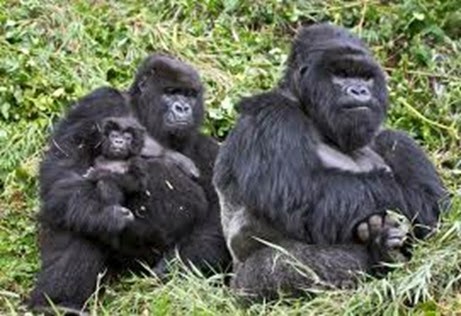
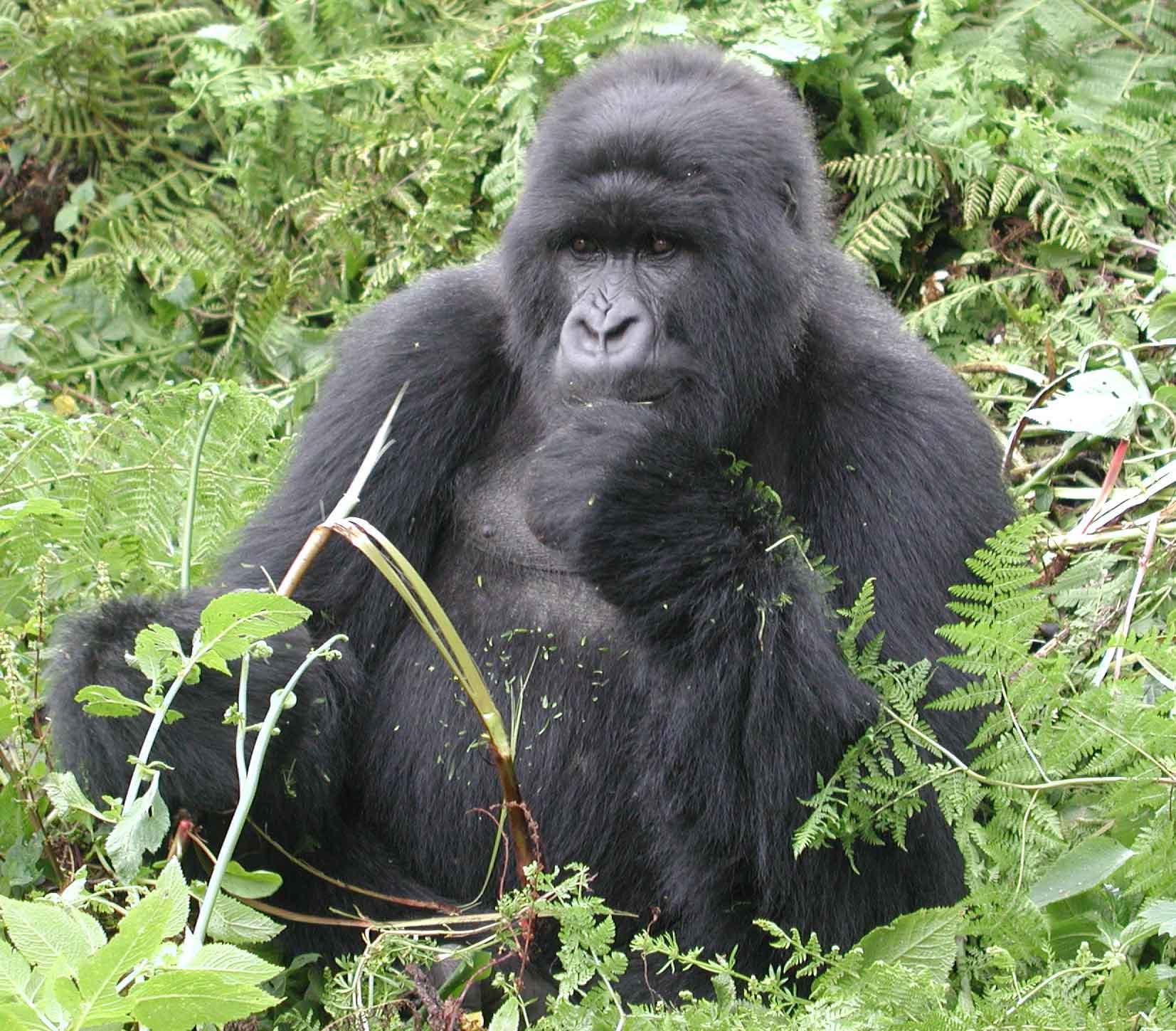
New Mountain Gorillas Census set for September 2015

A new census for Mountain Gorillas is set for September 2015 in the Great Virunga Massif is set for September, 2015, the Greater Virunga Trans boundary Collaboration- GVTC has said.
The massif includes Uganda's Bwindi and Mgahinga National Park, Virunga National Park in DR Congo and the Volcanoes National Park in Rwanda.

The last mountain gorillas census was conducted in September 2011 and its results indicated a 3.2% increase in gorilla population (to a total of about 880 in the wild) in the Greater Virunga the previous ones  having been conducted in 2006, 2002 and 1997. All other censuses before have taken place in a duration spacing of five years apart.

This census is aimed at estimating the current gorilla numbers of Uganda’s BINP, document information on illegal activities, the gorillas distribution and compile information on other mammals in the ecosystem.

The organizations involved in the planning and eventual implementation of the activity include Uganda Wildlife Authority, the Greater Virunga Trans boundary Collaborative Secretariat (GTVCS), the Institut Congolais pour la Conservation de la Nature, the Rwanda Development Board, local governments and the International Gorilla Conservation Programme, Max Planck Institute for Evolutionary Anthropology, Conservation Through Public Health, the Mountain Gorilla Veterinary Project, the Dian Fossey Gorilla Fund – International and us, the Institute for Tropical Forest Conservation.

James Byamukama, the Programme Manager at GVTC says the exercise, which should have started earlier, was delayed by the insecurity in DR Congo.  He however adds that they are set to conduct the census in September starting in Virunga National Park.
Byamukama says with the census, the collaboration will be able to plan for future conservation efforts and the emerging trends of threats to gorilla population. Periodic censuses of endangered populations of high-profile species including gorillas help conservationists to understand their population dynamics assess the success of conservation programmes aimed at ensuring their survival

Blogger Tags:
, and to ensure that they receive continued attention from the global conservation community.

The method of use in this census will be the sweep method as well as fecal samples collected for generic analysis.  In the sweep method, teams traverse each marked sector of the park in a zigzag manner. They look for fresh gorilla trails till their nests are found and counted.  The estimates are made based on nests encountered in the due course of the census. The estimates are made based on nests encountered in the due course of the census. In great apes mammals, research has proven that the sweeping has been the most efficient method to date unlike the transect,experts assert.
In a preparatory census meeting of the stakeholders recently in Kabale, UWA’s Senior Monitoring and Research co-coordinator, Mr. Aggrey Rwesiba stated how important this exercise is to Uganda Wildlife Authority. He noted that the census provided vital information for establishing best management strategies that could be applied at both local and global scales to conserve the mountain Gorilla population. He accordingly  stressed that the census was an important index for the different stakeholders on the effectiveness of their work towards conserving the mountain gorillas.

Unlike other censuses done before in Bwindi, generic analysis where the fecal samples will be analyzed to minimize error and ascertain more accurate figures of the gorillas. It is estimated that a distance of not less than 600km will be covered by various teams to be involved in the census around the entire. Many staff from Bwindi Impenetrable National Park has already committed themselves to be part of this historical event of counting gorillas and preparation are in a high notch. The vegetation and terrain of Bwindi forest make it uniquely different from that Virungas. This makes the census more challenging as well as exciting, something to look forward to. 
The Conservation Area Manager of Bwindi Mgahinga Conservation Area, Mr. Pontius Ezuma has committed resources such as standby vehicles for the field teams and security all through the census exercise. In his own admission, he expects a rigorous time ahead thus the need to adequately prepare since the exercise has to be accommodated with many routine activities in park.
In the census carried out in Bwindi population in was carried out in 2002,  results showed that the population had increased since the previous census in 1997 by approximately 7%, to 320 individuals according to McNeilage and others 2006 while the Virunga population currently numbers around 380 gorillas . Another census of the Bwindi gorilla population was carried out between April and June 2006 to determine the population's total size and structure, its distribution across Bwindi, and the potential impact of human disturbance on the population.
The results at the time showed show that the 5 habituated groups in Bwindi contained a total of 76 individuals at the time of the census. In addition to these, 25 unhabituated groups were found, containing 227 individuals along with 11 lone silverback males, giving a total uncorrected population count of 314 individuals.

Though gorillas have few natural predators, they are endangered due to the loss of habitat and forest clearing. They also fall victim to hunting for the wildlife trade, and through accidental snaring by poachers who are targeting antelopes for meat. Diseases that affect humans also pose a threat to apes and can spread quickly in such small populations.

Tuesday, December 3, 2013

Uganda Wildlife Authority Launches Night Game Drives in National Parks

Uganda Wildlife Authority (UWA) has launched night drives in a bid to boost tourism in the country. The drive launched last week is aimed at attracting more tourists to boost the economy. This comes after the authority embarked on massive promotion of tourism in the country.

Dr. Andrew Seguya, the executive director of Uganda Wildlife Authority, says the launch of the night drives at the parks is a big achievement for Uganda. He says many animals; particularly the carnivorous ones are active at night hunting for prey. He says this launch will give tourists better opportunities to view the animals hunting. He says the authority has already purchased open roof vehicles for the night drives.

Dr. Seguya says Uganda is expected to reap millions in foreign exchange after the launch.

He has appealed to the Ugandans to take this opportunity to view the wildlife of the country. Seguya says it is a rich experience to drive through the park at night while viewing the beautiful animals in the country.

Simplicious Gessa, the Public Relations Officer at Uganda Wildlife Authority, says the authority is set to introduce more packages for Ugandans.

Gesa says with time if the facilities are in place and the situation stabilizes, the authority may offer one day free visits for the locals to the parks. He says the authority is looking forward to the day when the locals will embrace wildlife as part of them and are ready to protect the animals.

He has appealed to the Ugandans to appreciate what nature has given them and be ready to protect it. Gessa says the authority will do everything to protect the wildlife and ensure that Uganda takes the lead in promoting tourism in the world.


Safaris where you can do night game drives


clip_image0013 Days Lake Mburo National Park:
Uganda’s smallest savannah national parks and it is home to 350 bird species as well as zebra, impala, eland, buffalo, Oribi, Defassa waterbuck, leopard, hippo, hyena, topi and reedbuck.

Continue Reading »

3 Days Murchison Falls Safari:
Murchison Falls National Park lies at the northern end of the Albertine Rift Valley. The park is bisected by the Victoria Nile, which plunges 45m over the remnant rift valley wall ....

Continue Reading »

clip_image0023 Days Queen Elizabeth Tour:
We take you for a magical wildlife experience to Uganda’s most popular tourist destination. Set against the backdrop of the jagged Rwenzori Mountains

Continue Reading »

5 Days Gorilla Trekking And Queen Elizabeth:
In just 5 days, we are good enough to combine your interests of visiting the Gorillas in Bwindi with the best of Wildlife in Queen Elizabeth National Park.

Continue Reading »

clip_image0036 Days Total Wildlife Safari:
Uganda’s most recommended wildlife safari, for wild animal lovers, it is the biggest chance ever to see all the Big Five starting with Rhino down to the Lions.

Continue Reading »

10 Days Incredible Tour:
Discover Uganda’s most beautiful parks, from the visitors that have booked our 10 days incredible, they testify as the best Uganda tourist circuit enabling them encounter the rarest of the rare in the Africa

Friday, October 25, 2013

Uganda among the Top-10 Most Popular destinations for tourists in Sub-Saharan Africa

Uganda is among the 10 destinations that are on course to turn into popular tourists’ destinations in Sub-Saharan Africa, according to a World Bank report. The Tourism in Africa: Harnessing Tourism for Growth and Improved Livelihoods report indicates that Uganda together with Rwanda, Burkina Faso, Gambia, Malawi, Mozambique, Senegal, Zambia, Zimbabwe and the Seychelles are scaling up tourism and emerging as a tourism destination.

rwanda mountain gorillas

According to Tourism Update the report, titled Tourism in Africa: Harnessing Tourism for Growth and Improved Livelihoods, stated Sub Saharan Africa’s tourism industry was set to drive economic growth on the continent and directly employ 6.7 million people by 2021.

Tourism is one of the largest and fastest growing sectors of the world economy, and tourism in Africa is ripe for development, the report notes.

For example, the number of tourists arriving in SSA has grown over 300% since 1990, with 2012 marking a high of 33.8 million tourists who visited the region.

Income generated from tourism has also climbed: Receipts from hotels, tours and other attractions in 2012 amounted to over US$36bn and directly contributed just over 2.8% to the region’s GDP, according to the report.

The report said these countries had simplified their tourism policies, liberalised air transport and diversified tourism while protecting their communities and environments, which created a positive investment climate for tourism development.

The World Bank has urged SSA governments to form alliances with the private sector-and the private sector to partner with government at local, regional and national levels.

Together they can plan and develop tourism infrastructure, increase transparency in land ownership and create a business-friendly environment for tour operators and other companies. When sustainably managed, tourism fuels economic transformation, accelerates reform, triggers infrastructure improvements, and empowers women and minorities in countries throughout Africa.

Thursday, January 31, 2013

Common Tourist Visa A Top Priority for East Africa Community for 2013

Dr. Richard Sezibera, EAC Secretary General has said the introduction of a single tourist Visa to the region, and the revival of an East African Passport across the member states, is one of the main priorities for the trade bloc in 2013 including the removal of non-tariff barriers in the aviation and tourism sectors.

These issues have been causing major disappointments among the tourism industry, which has for long been struggling with the expensive image of East Africa when travelling to several countries, where Visa fees for a family of four can run into 1.000 US Dollars if visiting all 5 member states.

This added cost is seen as an obstacle to promoting cross region safari packages and while Kenya permits the re-entry after obtaining an initial Visa when visiting other countries like Uganda, Rwanda, Burundi or Tanzania, none of the other countries in the region is offering the same option to tourists.

Stakeholders have for long blamed bureaucrats of dragging their feet over technical issues like revenue sharing, which in view of the highly advanced immigration technology in place at immigration check points today is now seen as a mere excuse by some member states to slow down integration and prolong the existence of other NTB’s in place.

The idea for a common Visa was first suggested by the Ugandan delegation in 2001 at the East African Community Committee for Tourism and Wildlife that was welcomed and shelved in bureaucracy.

Former Kenyan tourism minister Najib Balala early last year blamed dark forces from within the EAC of obstructing progress in such crucial areas, and for few was there any doubt in which direction his remarks were directed. Time will tell if during the remaining 11 ½ months of 2013 this long overdue task will be completed or dragged into yet another year.

[The East African Community (EAC) is an intergovernmental organisation comprising five countries in East Africa: Burundi, Kenya, Rwanda, Tanzania and Uganda. The geographical region encompassed by the EAC covers an area of 1.8 million square kilometres, with a combined population of about 132 million (July 2009 est.). ]


Related articles

Indifference among States Puts Single East Africa Community Tourist visa Plans in Balance
Who Needs and How to Apply for Rwanda Visa– Tourist Visa Entry Requirements

Monday, January 28, 2013

Uganda Tourism ministry to issue New Guidelines to Counter Emerging Issues

KAMPALA –tours/uganda-chimp-wildlife-gorilla-trek-7-days/GANDA: This will see the 1996 Tourism Act amended to suit the current to trend as well as cater for the emerging issues.

Leopard seen in Queen Elizabeth National ParkThe Ministry of Tourism, Wildlife and Antiquities has compiled a new set of guidelines that if adopted, will see the 1996 Tourism Act amended to suit the current to trend as well as cater for the emerging issues.

Top on the list is oil and gas mining activities, which are not catered for in the old Act. Stake holders from the ministry, tours/uganda-chimp-wildlife-gorilla-trek-7-days/ganda Wild Life Authority and other wildlife conservation organisations, are seeking to incorporate policies to legalise oil and gas mining without endangering the natural habitats of in the protected areas.

While 80 per cent of all oil wells are in protected areas, mining in such areas is an illegal activity according to the 1996 Tourism Act.
This review, therefore, seeks to reach a legal binding agreement on the co-existence of wildlife and oil and gas mining activities while minimising harm.

The principle wildlife officer in the Ministry of Tourism, Mr Akankwasa Barirega, said there was need to update the law to resonate with the changes that have happened since the enactment of the current laws.

“Very many things have come since then. There was discovery of oil and gas which have to be exploited,” Mr Barirega said.

Uganda’s 184 Tourism Police Officers Deployed after Graduation

KAMPALA, tours/uganda-chimp-wildlife-gorilla-trek-7-days/GANDA - Tourism, the world's most traded commodity and tours/uganda-chimp-wildlife-gorilla-trek-7-days/ganda's second foreign exchange earner at $662m behind remittances, cannot be left unattended to as an unregulated sector. The unit of 184 police officers was unveiled last week to protect and ensure safety of all tourists in tours/uganda-chimp-wildlife-gorilla-trek-7-days/ganda.

tours/uganda-chimp-wildlife-gorilla-trek-7-days/ganda Police on Friday 25th January graduated 184 officers to serve in the newly instituted tours/uganda-chimp-wildlife-gorilla-trek-7-days/ganda Tourism Police. Grandaunts have been undergoing a 1 month specially intensive course at the National Police School in Masindi which included tourism laws, regulations and policy, customer care and guest relations, understanding hospitality but also specially targeted techniques like security procedures and concepts, hostage rescue procedures, operational planning and weapons training. Staff from the tours/uganda-chimp-wildlife-gorilla-trek-7-days/ganda Tourist Board and the tours/uganda-chimp-wildlife-gorilla-trek-7-days/ganda Wildlife Authority were among those who delivered lectures and interacted with the officers during their month long training to instill a greater understanding to them how the sector works and interacts with the country’s economy and society at large.

Officiating over the pass-out the Inspector General of Police Lt. General Kayihura said: ‘It is important to develop a Tourism Police to counter the threat of terrorists who might target them (tourists) when they are here.

The officers will be deployed immediately to key tourism attractions, places of interest regularly visited by tourists but also to key hotels in the city of Kampala in order to boost existing surveillance and monitoring capacity.

The national police chief also announced on the occasion that a new dedicated anti terrorism training school will be set up in the district of Kanungu, which borders the key Bwindi Gorilla National Park and extends to the border with the Congo DR, where land has been secured for that purpose.

Peter Okoshi Simon, commandant of the new force said that for tours/uganda-chimp-wildlife-gorilla-trek-7-days/ganda to benefit from the industry, tourists both local and international should be protected.

“The Tourism Police must work with the sector to ensure that their work is well regulated,” Okoshi said. He added that the Tourism police are supposed to operate throughout the country in the different tourist destinations like the game parks, game reserves, hotels among others.

“The security force should be able to prevent crimes before they happen,” he said.

Tourism stakeholders were swift to extend praise to the government for providing specialist training for these 184 police officers while expressing hope that more such courses would now be conducted in order to boost numbers and allow deployment across the entire country to all areas and sites of importance to the tourism industry.

Last year, the tourism sector was threatened by political protests-the walk-to-work which left 10 people dead including a two year old and hundreds injured as police and protestors forced ends meet. The protests scared the would be visitors who feared for the lives.

Today, the country’s security can be described as stable although the For God and My Country (4GC formely activists for change (A4C)), the opposition pressure group continues to hold rallies addressing issues about the economy. This time around the rallies are to a greater extent peaceful as tours/uganda-chimp-wildlife-gorilla-trek-7-days/ganda police is trying to ensure that they don’t turn violent like the walk-to-work protests.

tours/uganda-chimp-wildlife-gorilla-trek-7-days/ganda, which was the top tourism destination in East African in the 1960s, lost its glory to Kenya due to the many civil wars it had.
The revamping of the tourism sector which started in the early 1990s hit a snag in 1999 when about eight British tourists were killed in Bwindi Impenetrable National Park by suspected Rwandan rebels believed to have come from the jungles of the Democratic Republic of Congo.
Its revival has been ongoing since then, and this has seen a tremendous growth with tours/uganda-chimp-wildlife-gorilla-trek-7-days/ganda now targeting about 1.2 million tourists this year.

Tuesday, January 8, 2013

World Wild Fund (WWF) Boosts Conservation of Rwenzori Mountains National Park

The World Wild Fund (WWF), under its Rwenzori Mountains Conservation and Environment Management Project, has devised several approaches to minimise degradation of the park.View of mt. speke, one of the  Rwenzori Mountains ranges

Mr David Duli, the country director WWF, an international conservation NGO, said the park is of great importance to the world because of its botany and beauty and therefore requires expertise to strengthen its conservation.

“We came up with the project in order to strengthen the conservation of the Rwenzori Mountains ecosystem and maintain its biodiversity and water catchment values in harmony with sustainable utilisation of resources for the benefit of Uganda and the international community” Mr Duli said. He noted that conservation efforts are helping the park to regenerate. The park covers the Rwenzori Mountain catchment area which, among others, includes Mubuku, Nyamwamba, Mpanga, Semliki rivers that flow from the mountain.

Rwenzori Mountains National Park is located in southwestern Uganda on the east side of the  Albertine rift valley. It is along the border with the Democratic Republic of the Congo (DRC), just above the equator. It is also a UNESCO World Heritage Site. It is situated in the Bundibugyo, Kabarole, and Kasese districts, 25 km from the small town of Kasese. The park has area of 996 km2, 70% of which is above 2,500 m.

The park comprises most of the centre and eastern half of the Rwenzori Mountains. The ice-capped Rwenzori Mountains are even higher than the Alps. Margherita Peak, one of Mount Stanley's twin summits is Africa's third highest peak at 5,109 m. Africa's fourth and fifth highest peaks (Mount Speke and Mount Baker) are also located in the park. The park has glaciers, snowfields, waterfalls, and lakes and is one of Africa's most beautiful mountain region.

Biodiversity is extraordinarily high with 17 regionally endemic birds and 12 regionally endemic mammals. The elephant, common chimpanzee and l'hoests monkey are globally threatened species (IUCN 1994b). The park is noted for its remarkable plants, which has been described as some of the most beautiful in the world (Riley, Laura; William Riley (2005). Nature's Strongholds: The World's Great Wildlife Reserves).

Flower of Dendrosenescios in Rwenzori with a beautifull bird percing on top

The broken montane forest dominated by Sybmphonia globulifera, Prunus, Yoshania alpina, Albizia spp. and Dombeya spp. occurs at about 2400 m. 199 tree species (18% of the country's total) have so far been recorded in this zone . Next is the bamboo (Arundinaria alpina) forest up to an altitude of 3000 m, a heather zone dominated by giant heathers such as Phillpia trimera and small trees such as Hagenia and Rapanea, frequently over 10 m in height up to 3800 m, and afro-alpine moorland that ends at the snowline at 4400 m.
There are five distinct vegetation zones in the park, which change with altitude. Most significant are the giant heathers, groundsels, ericas and lobelias of the tree heath and alpine zones.

The park has 241 species of birds (27% of the country's total), 78 species of butterfly, and four primate species.


The Kasese District natural resource officer, Mr Joseph Kitswera, said there has been a reduction in soil erosion and landslides. “Bare hills were restored which has reduced soil erosion, landslides and siltation in our rivers,” Mr Kitswera said.

He said conservation of the park will improve tourism in the Rwenzori region. More than a million trees have been planted on degraded hills in the Park covering more than 1,000 hectares of the protected area.


The Minister of Tourism, Ms Maria Mutagamba, who visited the park recently, said degradation in the parks is reducing.

“Much as the culture still remains, the problem has come down compared to the past when it was very rampant,” she said.

One hundred and two mammals species were recorded in the park. The Rwenzori duiker Cephalophus rubidus is found nowhere in the world and the Rwenzori otter shrew Micropotamogale rwenzorii is only known from here and Nyungwe National Park in Rwanda. The park has elephant, giant forest hog, sitatunga in small numbers and buffaloes, which had once disappeared, have re-appeared. Hyrax and leopard also occur in  the park as well as four species of diurnal primate: the common chimpanzee (curently estimated 500 indiviuals, Plumptre et al 2003a) found in the lower altitude forest areas, a sub-speceis of Agolan colobus (colobus angolensis ruwenzorii), the Rwenzori colobus, restricted to this park, L'Hoests monkey and the blue monkey 

Because of its physical and biological values, the park was recognized as a World Heritage Site in 1994. Among rare reptiles, the strange-nosed chameleon Bradypodion xenorhinum is endemic to the Rwenzoris.

Thursday, January 3, 2013

Shs50,000 spot fine for littering Entebbe


Authorities at Entebbe Municipal Council, where Uganda’s only international airport is located have introduced definite penalties against people found littering garbage as a measure to step up cleanliness in the town. The new penalty, that would include paying Shs50,000, according to Entebbe Mayor Vincent Kayanja, has been embedded in a new bylaw that came into force yesterday.

“A person found littering garbage from today will pay a definite penalty of Shs50,0000 where the whistleblower would part with Shs25,000 and the municipal enforcers and police who implement the law would share the remaining Shs25,000,” Mr. Kayanja said while officiating at the ‘Youth New Year Gala’ that saw residents competing in football, bicycle racing, ludo and boxing on Monday.

Mr Kayanja said Entebbe Municipality spends a lot of money on cleaning roads at the expense of a few negligent people who liter garbage. The Municipal Council spends at least Shs82m on collecting garbage per year.

Division A chairman David Wasswa Kasule said the new measure would reduce the costs on garbage collection.
This is not the first city or town to introduce a bylaw against littering. Kampala Central Division also has a bylaw where people are fined Shs50,000 on being caught littering the city.

Entebbe is also a popular night stop of several tourists and foreign visitors. Popular places of tourist interest in Entebbe include the Uganda Wildlife Education Center (Uganda's only zoo), the botanical gardens, several beach resorts, and a snake park.

Wednesday, January 2, 2013

Uganda’s Nyero rock paintings threatened by Weather and Vandalism

Nyero rock paintings , Uganda

Future generations risk losing Nyero Rock, a tourist destination in Ngora District, to vandalism and adverse weather conditions that have ruined the archeological paintings.
The three-tiered rock shelter, famous for its ancient paintings on its inner surfaces, is believed to date as far back as the Iron Age.

Ms Rose Ntale Mwanja, the commissioner of museums and monuments in the Ministry of Tourism, said the fading of the paintings was because of exposure to ultraviolet rays from sunlight and rainfall.
These form algae around the paintings, a process the government has tried to stop for a while but cannot because of the rules governing the preservation of the monuments.

“We tried to put cement to stop rain water from dripping onto the paintings at the two sites but we are now consulting with somebody to see if we can work without the cement,” Ms Mwanja said by telephone yesterday.
However, she said the site at Obuin in Soroti District was still intact because it is in a dark room, adding that the government had discovered another 56 paintings in the region.

“We have discovered other sites in Mukongoro, Komuge Kakoro, Kapir, Paliisa and idolwe Island in Namayingo District, which we have proposed to the United Nations Educational Scientific Cultural Organisation (Unesco) to be listed as world heritage sites as we embark on developing our rock art trail,” she said.
When contacted for a comment, both Ms Agnes Akiror, the State Minister for Tourism and Mr Augustine Omare Okurut, the secretary general of Unesco, confirmed the developments.

“We are trying to educate the communities to appreciate these natural sites to conserve them for tourism and encourage our own children to invest and develop them,” Ms Akiror said. “I brought this to the attention of Kumi District local administration sometime back but I do not think they took it seriously,” Mr Omare said.
He said so far, Uganda has only the Kasubi Tombs, Bwindi Impenetrable Forest and Mt. Rwenzori among the world heritage sites.

sotage@ug.nationmedia.com

Sunday, December 2, 2012

Kampala Aero Club To Fly Schedule Flights to Uganda National Parks and Serengeti

Kampala Aero Club (Fly Uganda) To Fly Schedule Flights to Uganda National Parks and Serengeti after Partnering with Tanzania’s Coastal Aviation

Fly Uganda now offers seat rates to all Uganda's National Parks. This long awaited service from Uganda’s leading Flying Safari Company will open up destinations to a much wider client base and make Uganda a more attractive destination. Operations commence on December 1st 2012. Uganda has seen many aviation companies come and go over the years, but only Fly Uganda has sustainably built the safari market in Uganda to become the largest domestic operator.

Per seat fares from Kajjansi to the main Ugandan national parks, start from US Dollars 270 to any of the three fields in Murchisons Falls, i.e. Pakuba, Chobe or Bugungu.Seats to Kasese, Fort Portal and Semliki will cost US D 290, the same as a seat to Mweya, Ishasha or the Kayonza Tea Estate field, closest to (14 km from) Bwindi National Park. Kidepo fares will start at US D 550, finally offering per seat options for air safaris across Uganda instead of forcing tourists to use expensive charter flights with the almost inevitable ‘empty legs’ which in the past often put the overall cost of a safari by air beyond the means of tourists.

Linking Uganda's National Parks with the Serengeti on Same Day Flying Safaris

Fly Uganda has joined hands with Coastal Aviation in Tanzania to provide a same day link between Uganda’s National Parks and The Serengeti.
The morning East-bound Fly Uganda flights will pick passengers from our Ugandan National parks to Kajjansi and then fly out of Entebbe with Coastal Aviation to The Serengeti. The morning West-bound Coastal Aviation flight will pick up passengers from Kilimanjaro, Manyara and The Serengeti arriving in Entebbe at midday to clear customs and immigration. They then continue with Fly Uganda to Uganda’s National Parks.

Tanzania’s Coastal Aviation and Uganda’s Kampala Aero Club and Flight Training Centre, aka Fly Uganda, will effective 15th December offer a unique link, connecting the great migration of Tanzania’s Serengeti with the prized mountain gorillas in Uganda’s Bwindi National Park. The flights will route via Entebbe where visitors clear immigration and customs before continuing to their final destination. The cooperation between the two airlines resolves a thorn in the side of air travel, prompted by Tanzania’s insistence to retain non tariff barriers and treating airlines from fellow EAC countries like foreign carriers in clear violation of the spirit of the East African Community and belying the full mouthed speeches made at the just concluded summit in Nairobi, where notably Tanzania’s president called for the removal of such restrictive practices.

This long awaited change will undoubtedly promote air safaris to a much greater extend, more so as key lodges and tented safari camps now have custom build 4x4 vehicles available in the parks, providing airstrip transfers and game drives on location. Flying with the Kampala Aeroclub has also been certified as 100 percent carbon neutral, the second such airline after Kenya’s Safarilink, underscoring East Africa’s trend to remain green by going green.

Visit www.flyuganda.com for more details, including the option to do some acrobatic flying with Capt. Howard Davenport, using a classic ‘Great Lakes’ two seater biplane for adrenaline pumping action in the skies over Kajjansi.

Saturday, December 1, 2012

ENTEBBE AIRSHOW SET FOR DECEMBER 15/16 (written by ETN)

Uganda’s Civil Aviation Authority is partnering to put together a show case aviation event on the weekend of December 15th and 16th, bringing together the aviation industry to give Ugandans a hands on experience.

Air Uganda has already offered to fly disabled children on a special flight on their MD 87 aircraft while the general aviation community from Kajjansi, the Kampala Aero Club, MAF aka Mission Aviation Fellowship and Ndege Juu will join hands with their colleagues from Entebbe such as Eagle Air and AirServ.

Also on board is the Uganda People’s Defence Forces Air Force and the East African Civil Aviation Academy from Soroti, the latter probably also doing a spot or two of career guidance when talking about the courses available at what is often referred to as the Flying School.

Capt. Howard Davenport from the Kampala Aero Club will be performing some of his stunning aerial aerobics displays while other aircraft like air force Sukois and a C130 will be doing fly pasts and low overflights to thrill the crowds, while sky divers will aim to hit the centre point on the ground as they come circling down from the skies above.

This is the second such airshow this year after the Kampala Aero Club, on a smaller and invitation only basis, celebrated their 15th anniversary at the Kajjansi airfield, drawing hundreds of spectators to the perimeter fence, but this time it is an open for all event at the Entebbe International Airport, celebrating not just 50 years of Uganda’s Independence but also 50 years of post independence aviation in the Pearl of Africa.

Source - ETN

Thursday, November 29, 2012

Lonely Planet names Uganda ‘THE 2013 BIRD-WATCHING DESTINATION’

As 2012 is slowly getting ready to hand over to the next year in line a new tagline will take over from the hype of this year, as The Pearl of Africa turned 50 and when the Lonely Planet Guide had named Uganda as their top destination for the year. While measuring the success in terms of numbers and revenues will take a bit longer, until the relevant data have been correlated and published, the country’s tourism industry is nevertheless setting its sights on the future. With over 1.000 bird species found in Uganda, bird watching has brought in growing numbers of hobby ornithologists from around the world but even within has ‘birding’ found new friends.

The Big Bird Watching Day is now an annual event, supported by the Uganda Wildlife Authority which grants free access to the park, and this annual bird count a few weeks ago has underscored once again the rich diversity of birds found, not just in parks but across the entire country. Organized by Nature Uganda and supported by the conservation and tourism fraternities, the event has now been transformed into naming Uganda being named a preferred bird watching destination, an accolade which will undoubtedly raise even more interest from abroad to come here and explore for instance Bwindi Forest, which the Africa Bird Club earlier this year declared the Number One birding site in Africa or in Queen Elizabeth National Park, home to over 600 bird species alone.

Nature Uganda and Birdlife International have mapped out 34 sites across Uganda as important bird watching areas, some inside but many outside the country’s protected areas which makes access possible without any park fees, though such payments of course go to the good use of maintaining park infrastructure.

The Uganda Tourist Board will make bird watching a major promotional activity for 2013 to highlight the country’s rich natural resources beyond being just known as the world’s biggest primate destination or for the adventure tourism attractions Uganda now has to offer.

Thursday, November 22, 2012

Mgahinga’s Gorillas- Nyakagezi Gorilla Family Return to Uganda, Trekking them now possible

The Nyakagezi Mountain Gorilla Family based in Mgahinga National Park which had crossed to Rwanda last year is back in South Western Uganda. All nine membersMgahinga Gorilla of Nyakagezi Family returned to Uganda are back and in a healthy condition. Nyakagezi Gorilla Group is the only resident habituated gorilla group in Mgahinga Gorilla National Park, located about 10 km from Kisoro.

This group is keeps migrating between Congo DR, Rwanda and Uganda, migrate across international borders, mainly in search of “greener pastures” (patches with more food). Across the three countries, such movements have drawn interest of the different countries especially when it becomes of Gorilla habituated to tourism. These kind of groups are known as transfrontier groups and are under the management of the trilateral memorandum of understanding signed between Uganda Wildlife authority (UWA), RDB by the time ORTPN and ICCN in 2006 on “the collaborative monitoring of and Sharing revenues from Transfrontier tourism Gorilla Groups”. Such cases have been happening: Kwitonda group moved 8years ago to PNV In Rwanda from PNV in DRC and has been benefiting of the implementation of the MoU by sharing the tourism revenue by 50% between Rwanda and DRC as indicated in the MoU.

This therefore implies that Uganda Wildlife Authority can now sell gorilla tracking permits for Mgahinga Gorilla National Park and therefore some relief of the pressure on Bwindi, where the bulk of the gorilla tracking takes place. It will also benefit tourism into the Kisoro area of Uganda, which in itself is one of the most scenic parts of the country and holds many more attractions interesting for tourists visiting the country.

Nyakagezi group of gorillas currently has 10 members. The family includes the lead silverback Bugingo who is around 5gorilla trek uganda0 years old and father to most of the group; his silverback sons, Mark and Marfia; and two blackbacks, Rukundo and Ndungutse, who love to pose and play in the trees. The two females, Nshuti and Nyiramwiza, both have babies Furraha and Nkanda respectively. Although gorilla tracking in Mgainga Gorilla National Park can take an entire day it is generally less physically demanding than that at Bwindi National Park.

Mgahinga Gorilla National PMgahinga Gorilla National Park's Muhavura, Sabinyo and Gahinga ark is located in the far south-western corner of Uganda. The huge cones of the Virunga Volcanoes, Muhavura (4,127m) , Sabinyo (3,645m) and Gahinga (3,474m), dominate the landscape here at Uganda’s smallest national park. Mgahinga may be Uganda’s smallest national park at only 33 km², but it combines with the Parc National des Virunga in the Democratic Republic of Congo and the Parc National des Volcans in Rwanda to create a conservation area of 434 km².

Other Wildlife and Attractions

Birds

The varied habitats of Uganda’s smallest park make it home to a variety of birds with 179-184 species recorded. The list includes the Ibis, Pin-tailed Whydah, Speckled Mousebird, Stone Chat, Grey-capped Warbler, Wax Bills, Yellow-vented Bulbul, Firefinch, White-naped Raven, Black Kite, Rwenzori Turaco, Blue-headed Coucal, Paradise Fly-catcher, Rwenzori Batis, Double-collared Sunbird, Rwenzori Nightjar.


Golden MonkeysGolden_Monkeys_Mgahinga_Uganda. There is an estimated 3000-4000 individuals in the Virunga area which 42-60 are habituated in Mgahinga

The endangered golden monkey is endemic to the Albertine Rift, and Mgahinga Gorilla National Park offers a rare chance to track these striking creatures, high in the dense bamboo forests on the Gahinga trail. There is an estimated 3000-4000 individuals in the Virunga area which 42-60 are habituated in Mgahinga.

Other Wildlife

Mgahinga is home to 76 species of mammals, although they are difficult to glimpse in the wild forest vegetation. They include giant forest hogs, bush pigs, forest buffaloes, elephants, bushbucks, golden cats, side striped jackals, black fronted duikers and South African porcupines.


Related articles:

Mountain Gorillas Population in Bwindi Impenetrable National Park shoots up to 400 (2011 Census Results Release)

How To Book Gorilla tracking & Trek Permits in Uganda

Comparing Gorilla Trekking Tours : Uganda Vs Rwanda – Compare prices, experience, hardness,etc

When is the Best time for gorilla trekking/ tracking in Rwanda and Uganda?

How to do a 1-Day Rwanda mountain gorilla trekking tour ...

Uganda Cuts Gorilla Trek Permit Prices to $350

Trekking Tour Packages in Rwanda and Uganda
1 day Gorilla trek Rwanda with tour price
2 days Gorilla tracking Rwanda with tour price
3 day Gorilla tracking Rwanda with tour price
4 days Rwanda Gorilla Tour -
5 days Gorillas trek Rwanda and Safari in Queen Elizabeth National Park Uganda
5 days Rwanda, Uganda Gorillas
3 days Uganda Gorilla tour
6 days gorilla tracking, wildlife safari

Monday, November 19, 2012

Uganda Wildlife Authority Starts Mountain Bike Riding in Mt. Elgon National Park

The Uganda Wildlife Authorities has introduced mountain bike-riding in Mt. Elgon National Park as a new tourist activity.

The assistant warden at the national park, Mr Stephen Nyadru, while speaking at the launch on Friday, said the move is aimed at attracting more tourists. He said activities will include traversing of rocks, washouts, and steep declines, on dirt trails, logging roads, and gravel roads that wind along lazy streams through forested valleys or trails that climb up steep mountainsides; and other unpaved environments.

“This is the first time we are introducing this form of tourism. We feel that after climbing the mountain, usually tourists remain dull during descending so this will be able to give them another exercise down the hills as a modern form of tourism in Uganda,” said Mr Nyadru.

He said the specific advantages of mountain bike-riding combines pleasure of being in the mountains with the health advantages of altitude and gradients, significant level of physical exercise and the possibility to cover longer distances.

The tourism official said the new activity complements other old tourists attractions.
They include scenic peaks, gorges, hot-springs, magnificent waterfalls, caves, and flora & fauna.

Others are the talking tree along in Kapkwai, and the caldera and crater lakes/pools. The Mt. Elgon area conservation manager, Mr Adonia Bintorwa, said on the first day of launching, the park earned Shs12 million from Ireland bikers - Concern Worldwide - who were on a tri-adventure of Mt Elgon.

Mr James Mcmanas, the expedition leader of about 17 bikers from Concern worldwide Ireland, said mountain bike or mountain bicycle (abbreviated MTB) created for off-road cycling, makes Mt Elgon now a place to go for all bikers.

The 1145km² Mt. Elgon National Park lies on an extinct volcano, one of uganda’s oldest physical features, first erupting around 20 million years ago. Mt. Elgon is capped by one of the world’s largest intact calderas, 40km² in size. This was created after an unusually violent eruption emptied the volcano’s magma reservoir. The cone, no longer supported by underlying molten rock, collapsed inwards, permanently blocking the main vent.

Mt. Elgon was once Africa’s highest mountain, far exceeding Kilimanjaro’s current 5895m. Millenia of erosion have reduced its hieghts to 4321m, relegating it to the 4th hieghest peak in East Africa and 7th on the continent.

Friday, November 16, 2012

STATEMENT BY UGANDA’S MINISTER OF TOURISM, WILDLIFE AND ANTIQUITIES ON THE OCCASION OF LAUNCHING MOUNTAIN GORILLA CENSUS POPULATION CENSUS IN BWINDI IMPENETRABLE NATIONAL PARK.

The Ministry of Tourism, Wildlife and Antiquities together with Uganda Wildlife Authority (UWA) are pleased to announce a considerable increase in the mountain gorilla population in Bwindi Impenetrable National Park (BINP) following a three-week census that was carried out in the park in September and October 2011.

The population of mountain gorillas has been confirmed to stand at a minimum of 400 according to results from the census that was carried out by UWA with assistance from the International Gorilla Conservation Program(IGCP),Institute for the Conservation of Nature(ICCN)in DRC and RDB from Rwanda.

Scientifically referred to as Gorilla beringei beringei, mountain gorillas live in families headed by a silverback which is the dominant male. However, gorilla families sometimes split up to form new entities especially when there is more than one silverback in a family.

The census results showed that currently there are 36 gorilla families in Bwindi and 16 solitary males. Of the 36 families,10 are habituated for tourism and research.

Following the two censuses carried out in the Virunga Massif and in Bwindi in 2011,it has been confirmed the world’s population of mountain gorillas now stands at a total of 880 after census results showed in 2010 that there were 480 mountain gorillas in the Virunga massif which comprises Mgahinga Gorilla National Park (Uganda),Volcanoes National Park (Rwanda) and Virunga National Park (DRC),and now the 400 which has been confirmed in Bwindi Impenetrable National Park which is entirely in Uganda.

This means that Uganda is host to more than half of the world’s population of mountain gorillas.

The census methods have evolved over time and now we use the latest genetic technology combined field methods to get the most accurate result. This result confirms beyond reasonable doubt that Uganda’s conservation efforts are paying off.

We would like to appreciate the technical support provided during the census by the International Gorilla Conservation Program(a coalition of the Africa Wildlife Foundation, Fauna and Flora International and WWF),the Max Planck Institute for Evolutionary Anthropology, Conservation Through Public Health, The Mountain Gorilla Veterinary Project, the Institute for Tropical Forest Conservation, and Dian Fossey Gorilla Fund International, and the financial support extended by WWF-Sweden with supplemental support from Berggorilla & RegenwaldDirektilfee.V .,the Wildlife Conservation Society, and the Max Planck Institute for Evolutionary Anthropology .

The last census that was carried out in Bwindi in 2006showed that the total number of mountain gorillas was 340,while an earlier census that was carried out in 2002showed the population was 320.

The increase in the population of mountain gorillas in Bwindi Impenetrable National Park is testimony to the sound natural resource management policies that are being implemented in the protected areas.

Bwindi Impenetrable National Park is one of UNESCO World Heritage Sites, and is also one of the most popular tourism destinations in Africa.

I take this opportunity to heartily congratulate Ugandans and the global community upon this conservation success.

For God and My Country

Hon. Maria Mutagamba

Minister of Tourism, Wildlife and Antiquities


Related articles:

Comparing Gorilla Trekking Tours : Uganda Vs Rwanda – Compare prices, experience, hardness,etc

My mountain gorilla tracking experience in Bwindi's Oruzogo gorilla family

How To Book Gorilla tracking & Trek Permits in Uganda and Rwanda

Affordable Private Road Transfers to Bwindi

Uganda Cuts Gorilla Trek Permit Prices to $350

Mountain Gorilla Trekking Tour Packages in Rwanda and Uganda

3 days Uganda Gorilla tour

4 days Rwanda Gorilla Tour -

1 day Gorilla trek Rwanda with tour price

2 days Gorilla tracking Rwanda with tour price

3 day Gorilla tracking Rwanda with tour price

5 days Gorillas trek Rwanda and Safari in Queen Elizabeth National Park Uganda

5 days Rwanda, Uganda Gorillas

6 days gorilla tracking, wildlife safari

14 days Uganda Rwanda Safari

7 days Uganda Gorilla Safaris

9 days Gorillas, primates wildlife

8 days Uganda Gorilla Game safari7 days Gorillas, chimpanzee, wildlife

UWA rescues 42 poisonous snakes and 147 chameleons bound for Czech Republic.

The reptiles were rescued just a few minutes away from being flown out to Czech Republic through Uganda’s Entebbe International Airport. They were found stuffed in one box with markings indicating that they are from a Kampala- based company, SME Breeders – and destined to Frischolz Import and Export company in the Czech Republic. UWA Publicist Lillian Nsubuga revealed that they had been on the lookout for the consignment at Entebbe International airport.

A concerned citizen tipped UWA about some suspicious consignment which they suspected to be drugs. But at the airport when they checked [one of the small bags within the box], they found they were snakes,” Nsubuga narrated.

Surprisingly, the snakes, which had been each separately packed in a white neatly made bag, were lying above 147 chameleons, 55 of which had already died –letting off a foul smell.

“This is a very coordinated crime. The way the box was packed with chameleons down and snakes up shows the level of sophistication and it is unlikely that it was done by a Ugandan,” Nsubuga said.

James Musinguzi, the acting Executive Director of the Uganda Wildlife Education Centre (UWEC), where the reptiles are now being kept, says there were eight types of poisonous snakes in the consignment. However, the UWEC chief indicated that they were conversant with only one type – the Jameson Mamba, of which only three snakes were in the consignment.

Musinguzi says the rest of the seven types do not naturally occur in Uganda. The chameleons included the three-horned type, a rare species mainly found on Mt Rwenzori due to their love for cold conditions.

The Uganda Wildlife Act allows individual companies to breed and export wildlife but with clearance from conservation bodies such as UWA and CITES, but SME Breeders have never been cleared for this purpose. Musinguzi said the impounded reptiles will be kept at UWEC for some time to enable the conservation bodies to bring in specialists who will ascertain whether these reptiles are suitable to be released into the wild.

“We will do an assessment to ascertain their lifestyle and types because some of them are exotic and don’t occur here,” Musinguzi said, adding: “We don’t want to introduce species in the parks that will disorganize the ecology.”

The impounding follows another swoop in which UWA captured 13 pieces of ivory in a restaurant in Zana, a suburb along Entebbe road. Yet another 62kg of ivory were also impounded on Monday morning at the airport.

Tuesday, October 16, 2012

Why You Must Visit Bigodi Wetland, Kibale and Fort Portal (Uganda)

Magombe Swamp, Bigodi Wetland Sanctuary
We visited the Bidogi Wetlands for a swamp walk, which is a home for 8 species of primates and many birds close to Kibale forest (where you can see the Chimpanzees).  The project main goal is to protect the Magombe Swamp, a haven for 200 bird species. The Bigodi Wetlands Sanctuary features 8 primate species, numerous other interesting mammals, many reptiles, and uncounted varieties of trees, shrubs and vines.
Guided walks $30 depart from the visitors centre on demand and take three hours. The sanctuary is just off the road between 
Fort Portal and Kamwenge, about 6km southeast of Kanyanchu, Kibale National Park's HQ Office.


Over 200 bird species in Bigodi Wetland
A Weaverbird in Bigodi Wetland
Birds are everywhere in the Sanctuary. Perhaps the favorite of visitors is the great blue turaco, shown above. Also frequently seen are varieties of papyrus gonoleks, hornbills, waxbills, weavers, cuckoos, kingfishers, flycatchers, and many, many others.
Great blue Turacco

Bigodi Wetland  project was initiated by a man who understood that to sustain the wetlands you need to involve the local people in the tourism. The benefits of the guided tours go directly to the local people so this village was already able to build a school and a health center. 

What I liked about the tour:
The enthousiastic guide with a lot of knowledge since he lives in the village
The beautifull swamp with primates and birds incl. the great Turacos
We asked for a combination with a village walk, this was quickly arranged so we visited the local medicine man, really interesting

Since your feet might get wet, they offer you rain boots


We were told not to buy souvenirs from the children in the village. The project has a little shop and they can bring their stuff there, so they can go to school instead of waiting for tourist.
On your tour, you will likely see several kinds of monkeys including black and white colobus, red colobus, mangabey, red tail, vervet, and L’Hoest. Other wetlands mammals include baboons, sitatunga (an increasingly endangered swamp antelope), bush pigs, civet cats, mongooses, bush bucks and an occasional chimpanzee.
Black and White Colobus Monkey you may encounter


We did the tour on the same day as our Chimpanzee tracking in the morning. Since this tour is very easy it's a good combination. The tour takes about 3 hours.

Over all: a win-win situation and a must visit!

Bring water and a hat as protection for the sun because it's hot!

Visit Bigodi and  Track Wild Chimps in Kibale >> 5 Days Chimpanzee, Bigodi Wetland and wildlife safari


Other Activities in Kibale National Park and Fort Portal Area

Related posts

What is fast-killing and fishing-off the Endagered Eastern Chimpanzee

 Why You Must Visit Bigodi Wetland, Kibale and Fort... 

What to expect from a safari to Kibale National Pa... 


Kalinzu Forest Reserve–A Natural Forest beaming with Chimps, Primates, butterflies, rear birds, etc

Special Tours to See chimpanzees, Gorillas and other Primates

3 Days Chimps Tracking tour in Kibale National Park

Rwanda chimpanzees tour- 4 days

5 Days Gorilla Tracking and Chimps Tour in Uganda

5 Days Gorilla Tracking and Chimps Tour in Rwanda

Gorillas, chimpanzee, wildlife - 7 days

12 Days Primates (chimps, gorillas, monkeys) tour in Uganda

9 days Primates and Wildlife tour in Uganda

1 Day Ngamba Island Chimps tour

Monday, September 3, 2012

New bird sightings in Murchison Falls National Park

Goods News reaching us here from a bird guide George Kafu at Murchison Falls is the presence of Pel's Fishing Owl and African Finfoot at Chobe River near Chobe Lodge.

http://gorillasandwildlifesafaris.com/uganda/uganda_murchison%20falls%20and%20chimpanzee.htm

He has just seen the Owl a few minutes ago on a walk around the Lodge area. The records for this bird at Murchison Falls have been reducing and making if very rare. 
Any one going there can give it a try. 
Chobe River is on the eastern part of the Park and is easily accessible.

Friday, August 31, 2012

Uganda Tourism Earnings shoot to $805m (Ush2, 000b)

Uganda’s foreign exchange earnings from tourism have increased from $662m (about sh1,655b) to $805m (about sh2,012.5b) over the last one year, the outgoing tourism minister, Prof. Ephraim Kamuntu, has said.

Kamuntu also said the contribution of tourism to Uganda’s Gross Domestic Product (GDP) had increased from 7.6% in May last year to 9.2% today.

Kamuntu, now water and environment minister, revealed this while handing over office to the new tourism minister, Maria Mutagamba, on Wednesday. Mutagamba has been water and environment minister for close to 12 years.


Saturday, August 25, 2012

Number of UK tourists to Uganda soars


The number of tourists coming to Uganda from the UK and Ireland has surpassed previous years’ records despite the recent Ebola outbreak. 

A statement from the Uganda High Commission in London said there were increased applications for Uganda immigration entry visas averaging about 50 applications per day. The peak was in May-June when applications reached the 80 per day mark.
Buffaloes in Queen Elizabeth National Park

The outgoing High Commissioner, Joan Rwabyomere, attributed this to the prevailing peace in the country and the distinctive attraction of Uganda as a tourist destination arising out of the variety of its game stock and its unspoilt scenic beauty.
 She noted that the tourism industry had grown enormously in Uganda with clearly visible features including improved service delivery, facilities and awareness.

Uganda generally has substantial natural resources for tourism with a variety of landscape and ecosystems, climates and cultures.


Rwabyomere added that the Uganda Mission had the capacity to process the high numbers of applications.

 Individual and group applications are processed in one working day with collection being on the next day between 11:00 a.m. and 1:00 p.m. Applications received through the Post take up to a week to be processed.

Tourism in Uganda is an important generator of foreign exchange, high-end employment, and investment.
 According to the World Economic Forum, the sector contributed over shs1.5 trillion ($660m), 8 per cent contribution to Gross Domestic Product in 2010. 
Mountain gorilla tracking is one major tourist attraction in Uganda

The Government has therefore encouraged increased investment in tourism, particularly in travel, accommodation and related facilities because this enhances tourists' experience in the country.