Showing posts with label chimps safari advice. Show all posts

Thursday, September 17, 2015

Kalinzu Forest Reserve–A Natural Forest beaming with Chimps, Primates, butterflies, rear birds, etc

Essentially an eastern extension of the Maramagambo Forest, the 137km² Kalinzu Forest Reserve is traversed by a number of scenic trails along the ridges and valleys of the Rift Valley Escarpment, offering views of the Rwenzoris, Lake Edward and the Kazinga Channel. kalinzu forest chimpanzee
The Forest is famous for 414 Species of Trees and Shrubs including the Ficus, Prunus Africana, the Stroboia, and Parinari among others.
In addition to an alluring variety of forest birds, Kalinzu protects six diurnal primate species: chimpanzees, olive baboon, black and white Colobus and red-tailed, blue and L’Hoest monkey, as well as the rare pygmy antelope. Nocturnal primates such as potto, and two varieties of galago can be sought on night walks, when you are also likely to hear the eerie shrieking of the tree hyrax.
The 2001 Primate Census put the total number of Chimpanzees in the Reserve at approximately 240. However, only two Groups of about 70 can be accessed by both Researchers and Tourists.
The Forest also harbours 378 Species of Birds such as the Great Blue Turaco, Black and White Casket, Cuckoos and Sunbirds.
Other varieties of Species include 262 Butterflies, 97 Moths, Reptiles and Flowers.
Because of its proximity to the Queen Elizabeth National Park, the Forest Reserve occasionally provides refuge to Savannah Grassland Species such as the Duikers, Leopards and Wild Pigs.
Tourist Activities in Kalinzu Forest
Tourist activities in the Reserve include
· Chimps tracking allowing 4 visitors per day at US Dollars 50 per person..
· Forest Walks,
· Conservation Education,
· Birding,
· Butterfly Identification,
· and small Mammal viewing.
How to Get to Kalinzu
Kalinzu Forest Reserve is located in Bushenyi District in western Uganda. It is approximately 375 km. (six hours drive) from the Capital City of Kampala. Because of the Albertine Terrain with old logging and winding roads, a four – wheel drive vehicle is recommended.
Accommodation while at Kalinzu
Accommodation in the Reserve is still informal with only a do-it- yourself Camping Site at the Forest Station at Nkombe. Visitors are advised to carry their own Tents. Visitors can also seek modest accommodation in Bushenyi/Ishaka Townships.
For Reservations, please contact the Range Manager on Tel: 256-41-0772 458389

Related posts

Kyambura Gorge Chimpanzees and the River of the Bl...

 Why You Must Visit Bigodi Wetland, Kibale and Fort... 

What to expect from a safari to Kibale National Pa... 


Kalinzu Forest Reserve–A Natural Forest beaming with Chimps, Primates, butterflies, rear birds, etc

Special Tours to See chimpanzees, Gorillas and other Primates

3 Days Chimps Tracking tour in Kibale National Park

Rwanda chimpanzees tour- 4 days

5 Days Gorilla Tracking and Chimps Tour in Uganda

5 Days Gorilla Tracking and Chimps Tour in Rwanda

Gorillas, chimpanzee, wildlife - 7 days

12 Days Primates (chimps, gorillas, monkeys) tour in Uganda

9 days Primates and Wildlife tour in Uganda

1 Day Ngamba Island Chimps tour


Tours to Kalinzu
Contact us if you would like us to include Kalinzu Forest on your tour program, or if you would like any more information about visiting Kalinzu Forest Reserve.
Tours to nearby places
3 days Queen Elizabeth National Park Tour
5 days: Uganda Kibale Forest and Queen Elizabeth N.Park safari with Chimpanzee tracking, primate walks, and Game drives.
Accommodation and Lodging near Kalinzu Forest Reserve
Kyambura Game Lodge
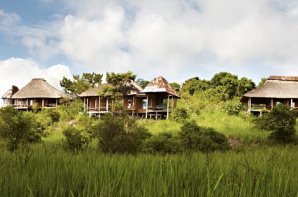
Kyambura Game Lodge Queen Elizabeth National Park
This eco-lodge is perched above the Kyambura Gorge at the edge of Queen Elizabeth National Park in Uganda.
Learn more >>


Queen Elizabeth Bush Lodge
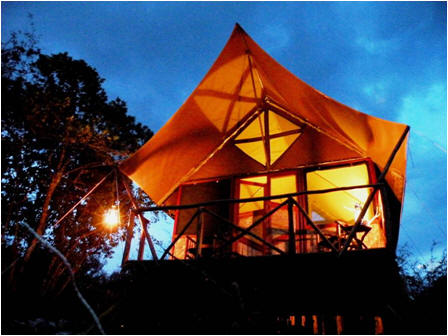
Located close to as well the chimpanzee tracking in Kyambura Gorge as to the prime game viewing areas in the park, it forms an excellent base for your exploration
Learn more >>


Mweya Safari Lodge
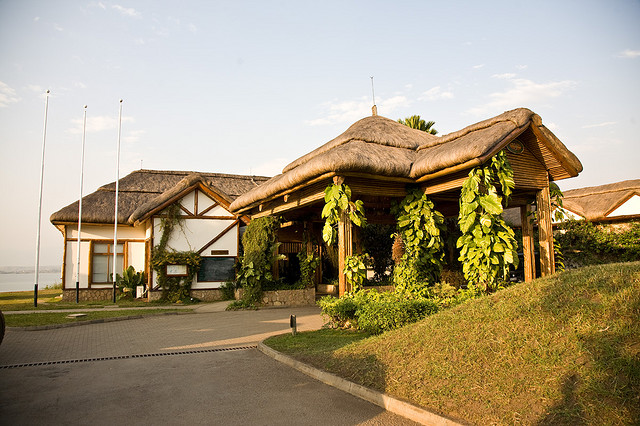
Beautifull Photo of Mweya Safari Lodge Uganda
One of the most beautifully situated lodges in Uganda, facing the bank of Kazinga Channel which routinely attracts large herds of buffalo, elephant, and incredible views of the "Mountains of the Moon" - the Rwenzoris. Learn more >>

Jacana Lodge
Beautifull Photo of Jacana Lodge Uganda
in the center of Queen Elizabeth National Park, a fifteen minute drive from the main road, but the scenery is nice. The lodge is on a beautiful lake in the forest. Many monkeys, some hippo-sounds at night. Learn more >>


Katara Lodge
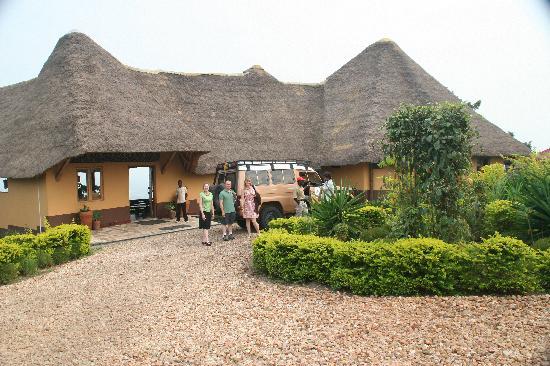
Katara Lodge Queen Elizabeth National Park
Katara lodge is a little way out of Queen Elizabeth National Park and in a small village but with fabulous views from the lodge (about 30mins from the main game drives in Queen Elizabeth National Park). Learn more >>


Tuesday, December 3, 2013

Ngamba Chimps fight for Kingship - Who will be the next king of Ngamba?

Plots and counter plots have been taking place following the demise of Mika, who was the king of the 48 chimps living on Ngamba Island on Lake Victoria. Mika died early October out of unknown causes that are still being investigated.

Ngamba Island Chimpanzee 

Who will be the next king of Ngamba? Will the king step on the pedestal of power at Ngamba in a bloodless take over?
Innocent Ampeire, a caregiver at Ngamba, said influential individuals in the group have been holding ‘political meetings’ to choose the next leader. “The ranking males like Tumbo, Umutama, Eddie and Robbie do not seem interested in the position, but often meet and seem to discuss whom to back,” says Ampeire.

Ngamba Island Chimpanzee Sanctuary  sitted on Lake Victoria
Ngamba Island Chimpanzee Sanctuary

He also pointed out that Kalema, Indi, Kisembo and Maisko are contesting for the position of alpha male who is entitled to have sex with the females and also eat first. In return the king is supposed to be a unifier who settles disputes and protects the weak from aggression.

The Island is a chimpanzee sanctuary managed by the Jane Goodall Institute. Ngamba Island consists of approximately 100 acres, 98 of which are forested and separated from the visitors area by an electric fence. Ngamba Island was officially opened to visitors in October 1999 and is currently home to 48 orphaned chimpanzees.
It is interesting to watch the chimps interact with each other and with their keepers. In the relatively short amount of time you are there you will be able to see such different personalities amongst the group, with some whistling for food and others clapping. Obviously the ideal option would be to re-introduce these orphaned chimpanzees to the wild however this is not possible for a number of different reasons and the sanctuary is not bad for second best.


Chimpanzee Tracking Tour and Safari Packages in Uganda

Sunday, December 2, 2012

Kampala Aero Club To Fly Schedule Flights to Uganda National Parks and Serengeti

Kampala Aero Club (Fly Uganda) To Fly Schedule Flights to Uganda National Parks and Serengeti after Partnering with Tanzania’s Coastal Aviation

Fly Uganda now offers seat rates to all Uganda's National Parks. This long awaited service from Uganda’s leading Flying Safari Company will open up destinations to a much wider client base and make Uganda a more attractive destination. Operations commence on December 1st 2012. Uganda has seen many aviation companies come and go over the years, but only Fly Uganda has sustainably built the safari market in Uganda to become the largest domestic operator.

Per seat fares from Kajjansi to the main Ugandan national parks, start from US Dollars 270 to any of the three fields in Murchisons Falls, i.e. Pakuba, Chobe or Bugungu.Seats to Kasese, Fort Portal and Semliki will cost US D 290, the same as a seat to Mweya, Ishasha or the Kayonza Tea Estate field, closest to (14 km from) Bwindi National Park. Kidepo fares will start at US D 550, finally offering per seat options for air safaris across Uganda instead of forcing tourists to use expensive charter flights with the almost inevitable ‘empty legs’ which in the past often put the overall cost of a safari by air beyond the means of tourists.

Linking Uganda's National Parks with the Serengeti on Same Day Flying Safaris

Fly Uganda has joined hands with Coastal Aviation in Tanzania to provide a same day link between Uganda’s National Parks and The Serengeti.
The morning East-bound Fly Uganda flights will pick passengers from our Ugandan National parks to Kajjansi and then fly out of Entebbe with Coastal Aviation to The Serengeti. The morning West-bound Coastal Aviation flight will pick up passengers from Kilimanjaro, Manyara and The Serengeti arriving in Entebbe at midday to clear customs and immigration. They then continue with Fly Uganda to Uganda’s National Parks.

Tanzania’s Coastal Aviation and Uganda’s Kampala Aero Club and Flight Training Centre, aka Fly Uganda, will effective 15th December offer a unique link, connecting the great migration of Tanzania’s Serengeti with the prized mountain gorillas in Uganda’s Bwindi National Park. The flights will route via Entebbe where visitors clear immigration and customs before continuing to their final destination. The cooperation between the two airlines resolves a thorn in the side of air travel, prompted by Tanzania’s insistence to retain non tariff barriers and treating airlines from fellow EAC countries like foreign carriers in clear violation of the spirit of the East African Community and belying the full mouthed speeches made at the just concluded summit in Nairobi, where notably Tanzania’s president called for the removal of such restrictive practices.

This long awaited change will undoubtedly promote air safaris to a much greater extend, more so as key lodges and tented safari camps now have custom build 4x4 vehicles available in the parks, providing airstrip transfers and game drives on location. Flying with the Kampala Aeroclub has also been certified as 100 percent carbon neutral, the second such airline after Kenya’s Safarilink, underscoring East Africa’s trend to remain green by going green.

Visit www.flyuganda.com for more details, including the option to do some acrobatic flying with Capt. Howard Davenport, using a classic ‘Great Lakes’ two seater biplane for adrenaline pumping action in the skies over Kajjansi.

Saturday, November 17, 2012

When is the best time, season, month to visit Kibale National Park to track chimps

Kibale National Park contains one of the loveliest and most varied tracts of tropical forest in Uganda. Forest cover interspersed by patches of grassland and swamp, dominates the northern and central parts of the park on an elevated plateau. The park ins home to a total of 60 mammal species, most famously the 13 species of primates including the chimpanzee. It also contains over 375 species of birds. Kibale adjoins Queen Elizabeth National Park to the south to create a 180-km long corridor for wildlife between Ishasha, the remote southern sector of Queen Elizabeth National Park, as Sebitoli in the north of Kibale.

Best Season to Visit to Kibale National Park and Track Chimps

Northern Kibale is the park’s wettest area, receiving mean annual rainfall of up to 1700mm, mostly during March-May and September-November. The climate is generally pleasant with a mean annual temperature range of 14˚-27˚C. Temperatures are highest (and rainfall lower) in the south where the terrain drops down onto the hot rift valley floor and forest gives way to open grasslands.

Dry Season: June to September is the driest time and temperatures average 80˚(25˚) when most animals remain near water, but be prepared for afternoon thunderstorms at anytime. The hot dry time is January to February and is good time to visit.

Rainy Season: It rains anytime from October to December and March to May when many roads become impassible.

What to Bring on a tour to Kibale National Park

Hiking boots are ideal for forest walks although stout walking shoes are adequate. Lightweight rain coats are advisable. Altitude and forest environment makes evenings cool and a lihgt jacket is recommended. If you choose to bring a camera, be aware that the dark-haired chimpanzees in typically dim conditions present challenging subjects.

Recommended Lodging and Accommodation Options in Kibale and Fort Portal

Ndali Lodge set stunningly amidst the Bunyaruguru crater lake region of Western Uganda, 24 kilometres south of Fort Portal

Kibale Forest Camp situated in a patch of indigenous forest, just outside Kibale Forest National Park. The camp consists of 7 African safari style tents, which are comfortably furnished with twin or double beds


Kyaninga Lodge Fort Portal Kibale - PoolKyaninga Lodge located 15 minutes outside Fort Portal town. Perched atop a hill overlooking a stunning blue crater
lake, the lodge enjoys spectacular panoramic views of the surrounding landscape


Primate Lodge Kibale Primate Lodge Kibale Campis located at the Kanyanchu Visitors Centre in Kibale
National Park. From Fort Portal follow the road to Kamwenge for 36 kms and branch off at the sign post directing to Primate Lodge Kibale.


Chimps Nest Kibale National Park KibaleChimps Nest Kibale near Nyabubale, a small village between Nkingo and Bigodi. It's only a 15-minute drive from Kanyanchu, the starting point of UWA chimp-tracking and other activities in Kibale Forest.


CVK Lakeside Resort.CVK Lakeside Resort Kibale - Budget Price AccommodationThis picturistic low budget priced accommodation is located near a beautiful Crater Lake Nyabikere


Mountain Of The Moon Hotel Fort Portal

Mountains of The Moon Hotel This is a large resort-style hotel, just outside of the center of Fort Portal. It features a large main building with a central garden and rooms surrounding an inside courtyard.


Rwenzori View Guest House  Fort PortalRwenzori View Guesthouse This is a small scale beautiful guest house in Fort Portal. The owners managed to get the perfect informal atmosphere for this place.


Related posts
What is fast-killing and fishing-off the Endagered Eastern Chimpanzee
Why You Must Visit Bigodi Wetland, Kibale and Fort...
What to expect from a safari to Kibale National Pa...
Kalinzu Forest Reserve–A Natural Forest beaming with Chimps, Primates, butterflies, rear birds, etc
Special Tours to See chimpanzees, Gorillas and other Primates
3 Days Chimps Tracking tour in Kibale National Park
Rwanda chimpanzees tour- 4 days
5 Days Gorilla Tracking and Chimps Tour in Uganda
5 Days Gorilla Tracking and Chimps Tour in Rwanda
Gorillas, chimpanzee, wildlife - 7 days
12 Days Primates (chimps, gorillas, monkeys) tour in Uganda
9 days Primates and Wildlife tour in Uganda
Ngamba Island Chimps tour

Saturday, November 10, 2012

What is fast-killing and finishing-off the Endangered Eastern Chimpanzee

Chimpanzees have already disappeared from 4 African countries, and are nearing extinction in many others. 
Kibale Forest Chimpanzees
Habituated Wild Chimps in Kibale National Park, Uganda

The estimated population of chimpanzees remaining on earth (for the eastern chimpanzees) is still only approximate because large areas of their range have never never been surveyed. The most recent estimate (Kormos et al. 2003) is 76,400- 119,600 eastern chimpanzees of an estimated 172,700-299,700 total for all subspecies.

The eastern chimpanzee, Pan troglodytes schweinfurthii, is classified as Endangered on the IUCN’s Red List of Threatened Species. These animals live in the Central African Republic, the Democratic Republic of Congo, Sudan, Uganda, Rwanda, Burundi, Tanzania and Zambia. Due to high levels of exploitation, death and injury, as well as loss of habitat and habitat quality as a result of expanding human activities, this subspecies is estimated to have experienced a significant population reduction in the past 20 to 30 years, according to the IUCN Red List. The Red List states, “The causes of the reduction, although largely understood, have certainly not ceased and are not easily reversible,” and states also, “It is suspected that this reduction will continue for the next 30 to 40 years.”


Estimates of eastern chimpanzee numbers by country from surveys within the past 10 years. 'Known sites' don't cover the full range where this subspecies is likely to occur.

Burundi 450
CAR ?
DRC 42,798
Rwanda 275
Sudan ?
Tanzania 2,750
Uganda 5,000
Total 51,273


Chimpanzees are most often found in moist and dry forests, and forest galleries extending into savanna woodlands. They are omnivorous, and their diet is variable according to individual populations and seasons. Fruit makes up about half their diet, but leaves, bark, and stems are also important. Mammals comprise a small but significant component of the diet of many chimpanzee populations. 

Chimpanzees form social communities of five to 150 animals, and there is great cultural variation between chimpanzee populations. Some fish for termites with sticks while others do not; some crack nuts, large snails or even tortoises and eat them, while others do not. Chimpanzees at neighboring sites tend to have similar behaviors. 
A yelling wild chimpanzee in Kalinzu forest Uganda
A wild Chimp yelling in Nyungwe
National Park, Rwanda

The major threats to the Eastern Chimpanzees including hunting for bushmeat, hunting for trade if infants, habitat loss or fragmentation, and disease transmission. Populations are being hunted across their range, particularly in the DRC and CAR (Central Africa Republic), where they are targeted as bushmeat (chimpanzees are relatively large and provide a reasonable amount of meat compared with other primates). When mothers with infants are killed, the infants are often kept alive as pets and often traded. This illegal traffic in wildlife, from DRC through East Africa, remains high, despite efforts to control it. 

While the Congo Basin forest block remains fairly intact, it is gradually being sub-divided by roads and human settlements, which is leading to increasing fragmentation of chimpanzee populations. Roads constructed either to link settlements or for removal of timber from logging concessions allow hunters to enter forests that were previously difficult to reach or inaccessible, which has increased the pressures on chimpanzees.
In East Africa (including Rwanda and Burundi) there’s less killing for bushmeat (although it does occur), but chimpanzee population are declining due to habitat loss and major fragmentations, as forest and woodland is converted to agriculture. Outside protected areas, habitat is fast being lost. 
A wild chimp in Kyambura Gorge - Uganda
A wild chimp in Kyambura Gorge

There is a great risk of disease transmission in East Africa as many chimpanzee populations live in close proximity to people and regularly come into contact with human feaces and other waste. Studies in Kibale National Park show that human gut fauna are found in chimpanzees and other primates that live adjacent to human settlement and that the similarities between the gut fauna of people and primates increases with increasing forest fragmentation. Disease risk is also exacerbated by tourism as people come within a few meters of the animals, enabling transmission of respiratory diseases. In addition, international tourists are more likely to be carrying novel diseases that the chimpanzees have never been exposed to.

The conservation of wild populations is important not only for conservation, but also for the survival of chimpanzee cultures in the region that are invaluable to helping us define our own place within the natural realm. 

Related posts

Kyambura Gorge Chimpanzees and the River of the Bl...

 Why You Must Visit Bigodi Wetland, Kibale and Fort... 

What to expect from a safari to Kibale National Pa... 


Kalinzu Forest Reserve–A Natural Forest beaming with Chimps, Primates, butterflies, rear birds, etc

Special Tours to See chimpanzees, Gorillas and other Primates

3 Days Chimps Tracking tour in Kibale National Park

Rwanda chimpanzees tour- 4 days

5 Days Gorilla Tracking and Chimps Tour in Uganda

5 Days Gorilla Tracking and Chimps Tour in Rwanda

Gorillas, chimpanzee, wildlife - 7 days

12 Days Primates (chimps, gorillas, monkeys) tour in Uganda

9 days Primates and Wildlife tour in Uganda

1 Day Ngamba Island Chimps tour

Wednesday, November 7, 2012

Kyambura Gorge Chimpanzees and the River of the Blind in Queen Elizabeth National Park

Kyambura gorge forest The Kyambura Gorge in Queen Elizabeth National Park is one of several places in Uganda where tourists can see chimpanzees in the wild. 
Kyambura Game Reserve,Kyambura-Gorge-A Wild-Chimp-Yelling also known as Kyambura Gorge, is one of the most popular tourist draw of  Queen Elizabeth National Park (QENP) in Uganda. It is home to a variety of wildlife, including the only primates in the Queen Elizabeth National Park. The area is an important water source for many animals and is surrounded by savanna, but is generally noted for its high concentration of primate life located in the gorge.
For what it's worth (at $50 for a chimpanzee tracking), I had an amazing experience with the chimps in Kyambura Gorge. They came down from the trees really close to us. It was the real surprise of my trip as I didn't have high expectations and I actually enjoyed it at least as much as the gorilla tracking, and at a fraction of the price. I think I was particularly lucky but it just goes to show that with wildlife there are no guarantees.
Kyambura Gorge has always been a bit of a gamble. They reckon it's a 50-50 proposition for seeing the chimps there.
Trekking the chimps in Kyambura Gorge is more physically challenging and therefore is suitable only for reasonably fit people. But it is a real rainforest experience, and the place is fantastic. In my opinion it is one of the best place for chimpanzee trekking in Uganda.
Something to say about the staff: I had a lady as a guide in Kyambura Gorge. She was very competent, polite and friendly. In fact, it was the only time in Uganda I had a really competent guide who knew the place and at least the animals we were looking for, and most important - who was really telling you something.
Kyambura is the only place in QENP where you can see habituated chimpanzees and oA Wild-Chimp-in-Kyambura-Gorgether types of primates including red-tailed monkey, black-and-white colobus, baboons and vervet monkeys. The park is also known for its variety of avian species including various falcons, the blue-headed bee-eater and the African Finfoot.
The Gorge forms the border between Queen Elizabeth National Park and the Kyambura Wildlife Reserve, a little visited tract of savannah notable less for its wildlife viewing than the waterbirds – in particular flamingo attracted to its lovely crater lakes.
How to get to Kyambura Godge
The Visitors’ center is located at the famous Fig Tree Camp on the rim of the Kyambura Godge, about 2.5 km east of the main road along the turn-off that is clearly sign-posted some 9km south of the bridge. Travellers without private transpoert can ask any bus or shared taxi to drop them at this juction. You are permitted to walk along the 2.5km track to Fig Tree Camp unguided, though some risk of encountering elephants, buffallo or other potentially dangerous animals does exist. Alternatively, charter a taxi from Katunguru, or from the village of Kyambura about 4km further south.
The turn-off to Kyambura Game Reserve runs east from Kyambura Village, 13km south of Katunguru bridge, where it is clearly signposted. The reserve entrance lies 4km past the turn-off, and it is another 9km from there to Flamingo Lake. Although this road isn’t in great condition, you’ll have no problem in a 4WD, and it is traversed by fairly steady trickle of shared taxis terminating at a small fishing village on the souther shore of Lake George
Kyambura, the RIVER OF THE BLIND
Local tradition has it that the Kyambura River had no name until one day, without warning, it flooded, surprising the locals who had lived along its banks or washed their clothing there. As the waters subsided, the locals one-by-one waded upriver to Lake George in search of the possessions that had been washed away in the flood. Invariably, they would return empty handed and announce, ‘Kyambura’ –  a local phrase meaning ‘I cannot see it’. This eventually became the river’s name.

Related posts

What is fast-killing and fishing-off the Endagered Eastern Chimpanzee

 Why You Must Visit Bigodi Wetland, Kibale and Fort... 

What to expect from a safari to Kibale National Pa... 


Kalinzu Forest Reserve–A Natural Forest beaming with Chimps, Primates, butterflies, rear birds, etc

Special Tours to See chimpanzees, Gorillas and other Primates

3 Days Chimps Tracking tour in Kibale National Park

Rwanda chimpanzees tour- 4 days

5 Days Gorilla Tracking and Chimps Tour in Uganda

5 Days Gorilla Tracking and Chimps Tour in Rwanda

Gorillas, chimpanzee, wildlife - 7 days

12 Days Primates (chimps, gorillas, monkeys) tour in Uganda

9 days Primates and Wildlife tour in Uganda

1 Day Ngamba Island Chimps tour

Tours to Kyambura Gorge
3 days Queen Elizabeth National Park Tour
5 days: Uganda Kibale Forest and Queen Elizabeth N.Park safari with Chimpanzee tracking, primate walks, and  Game drives.

Accommodation and Lodging near Kyambura Godge
Kyambura Game Lodge
Kyambura Game Lodge Queen Elizabeth National Park
This eco-lodge is perched above the Kyambura Gorge at the edge of Queen Elizabeth National Park in Uganda.
Learn more >>


Queen Elizabeth Bush Lodge
Located close to as well the chimpanzee tracking in Kyambura Gorge as to the prime game viewing areas in the park, it forms an excellent base for your exploration
Learn more >>


Mweya Safari  Lodge
Beautifull Photo of Mweya Safari Lodge Uganda
One of the most beautifully situated lodges in Uganda, facing the bank of Kazinga Channel which routinely attracts large herds of buffalo, elephant, and incredible views of the "Mountains of the Moon" - the Rwenzoris.             Learn more >>
 
Jacana Lodge
 Beautifull Photo of Jacana Lodge Uganda
in the center of Queen Elizabeth National Park, a fifteen minute drive from the main road, but the scenery is nice. The lodge is on a beautiful lake in the forest. Many monkeys, some hippo-sounds at night.  Learn more >>


Katara Lodge
 Katara Lodge Queen Elizabeth National Park
Katara lodge is a little way out of Queen Elizabeth National Park and in a small village but with fabulous views from the lodge (about 30mins from the main game drives in Queen Elizabeth National Park).   Learn more >>


Tuesday, October 16, 2012

Why You Must Visit Bigodi Wetland, Kibale and Fort Portal (Uganda)

Magombe Swamp, Bigodi Wetland Sanctuary
We visited the Bidogi Wetlands for a swamp walk, which is a home for 8 species of primates and many birds close to Kibale forest (where you can see the Chimpanzees).  The project main goal is to protect the Magombe Swamp, a haven for 200 bird species. The Bigodi Wetlands Sanctuary features 8 primate species, numerous other interesting mammals, many reptiles, and uncounted varieties of trees, shrubs and vines.
Guided walks $30 depart from the visitors centre on demand and take three hours. The sanctuary is just off the road between 
Fort Portal and Kamwenge, about 6km southeast of Kanyanchu, Kibale National Park's HQ Office.


Over 200 bird species in Bigodi Wetland
A Weaverbird in Bigodi Wetland
Birds are everywhere in the Sanctuary. Perhaps the favorite of visitors is the great blue turaco, shown above. Also frequently seen are varieties of papyrus gonoleks, hornbills, waxbills, weavers, cuckoos, kingfishers, flycatchers, and many, many others.
Great blue Turacco

Bigodi Wetland  project was initiated by a man who understood that to sustain the wetlands you need to involve the local people in the tourism. The benefits of the guided tours go directly to the local people so this village was already able to build a school and a health center. 

What I liked about the tour:
The enthousiastic guide with a lot of knowledge since he lives in the village
The beautifull swamp with primates and birds incl. the great Turacos
We asked for a combination with a village walk, this was quickly arranged so we visited the local medicine man, really interesting

Since your feet might get wet, they offer you rain boots


We were told not to buy souvenirs from the children in the village. The project has a little shop and they can bring their stuff there, so they can go to school instead of waiting for tourist.
On your tour, you will likely see several kinds of monkeys including black and white colobus, red colobus, mangabey, red tail, vervet, and L’Hoest. Other wetlands mammals include baboons, sitatunga (an increasingly endangered swamp antelope), bush pigs, civet cats, mongooses, bush bucks and an occasional chimpanzee.
Black and White Colobus Monkey you may encounter


We did the tour on the same day as our Chimpanzee tracking in the morning. Since this tour is very easy it's a good combination. The tour takes about 3 hours.

Over all: a win-win situation and a must visit!

Bring water and a hat as protection for the sun because it's hot!

Visit Bigodi and  Track Wild Chimps in Kibale >> 5 Days Chimpanzee, Bigodi Wetland and wildlife safari


Other Activities in Kibale National Park and Fort Portal Area

Related posts

What is fast-killing and fishing-off the Endagered Eastern Chimpanzee

 Why You Must Visit Bigodi Wetland, Kibale and Fort... 

What to expect from a safari to Kibale National Pa... 


Kalinzu Forest Reserve–A Natural Forest beaming with Chimps, Primates, butterflies, rear birds, etc

Special Tours to See chimpanzees, Gorillas and other Primates

3 Days Chimps Tracking tour in Kibale National Park

Rwanda chimpanzees tour- 4 days

5 Days Gorilla Tracking and Chimps Tour in Uganda

5 Days Gorilla Tracking and Chimps Tour in Rwanda

Gorillas, chimpanzee, wildlife - 7 days

12 Days Primates (chimps, gorillas, monkeys) tour in Uganda

9 days Primates and Wildlife tour in Uganda

1 Day Ngamba Island Chimps tour