Showing posts with label uganda tourist news. Show all posts

Thursday, May 21, 2015

Gorillas and Wildlife Safaris is 2015 Winner of Excellence

Gorillas and Wildlife Safaris Uganda has won the prestigious Certificate of Excellence from TripAdvisor, which honours businesses that consistently earn top ratings from TripAdvisor travellers.

With the rating of 5, Gorillas and Wildlife Safaris has earned a place among the very best. The award is given to only the most exceptional performers in the TripAdvisor global business community. It is a significant achievement deserving of recognition from both travellers and staff. In Uganda, the company is the the only tour operator to win the award in 2015.

TripAdvisor is the world’s largest travel site that recognizes the power of travellers’ feedback.’ We are proud to recognise Gorillas and Wildlife Safaris for earning exceptional traveller rating over the past year,’ confirmed Christine Petersen, the President Trip Advisor for Business. Ivan Wassaaka, the MD of Gorillas and Wildlife Safaris says that this certificate is a testimony to the reliably high standards in the company. “We strive to offer our customers a memorable experience, and this accolade is evidence that our hard work is translating into positive reviews on TripAdvisor.”

Also Alison Coups, Vice President of arketing for TripAdvisor for Business confirms this. “The Certificate of Excellence award provides top performing establishments around the world the recognition they deserve, based on feedback from those who matter most – their customers.”

We would like to say a BIG thank you to all our corporate and individual clients as well as companies that have been supporting Gorillas and Wildlife Safaris both in Uganda and Rwanda!

Interested in taking your holiday in Uganda and Rwanda? Why not contact one of our sales team now!

Friday, March 27, 2015

Uganda‬ is Safe, Calm and remains a Hospitable Country to visit

#‎Uganda‬ is Safe, Calm and remains a Hospitable Country to visit

International and some local media have carried stories to the effect that there are specific terror threats targeting Uganda and particularly Kampala Capital City.

In an emergency warning issued late Wednesday, the US mission in Kampala said it had "received information of possible terrorist threats to locations where Westerners, including US citizens, congregate in Kampala, and that an attack may take place soon" adding that some planned events had been cancelled at Kampala hotels. The US Embassy however, gave no further details.

Ugandan defence spokesman Paddy Ankunda said the warning was "absolutely" linked to the Al-Qaeda-backed Islamist's, who have carried out major attacks in Kampala in the past.

As you are all aware, Uganda is a key contributor to the African Union's AMISOM force battling the Al-Shabaab inside Somalia. However, the threat was "low level", added Ankunda.

Uganda alongside countries in the region, and others world over including the United States of America face the daily threat of terrorism from such groups as the Al Shabab and the Allied Democratic Forces, and have put in place effective counter terrorism measures, especially in Kampala – Uganda’s Capital and at other vital installations such as Entebbe International Airport so as to ensure that those groups do not succeed in their evil plans.

The Uganda Police, together with sister security agencies, continuously, and on a daily basis, focus on the threat of terrorism and evaluates whatever information relating to any possible attacks on the country.

As Uganda Tourism Board, we wish to reassure the public, especially the travelers to Uganda and in particular those visiting Kampala Capital City and Entebbe that there is no cause for alarm. Uganda, the Pearl of Africa is secure and out of any harm’s way. Our armed forces, police and intelligence are on full alert in all public places and tourist attractions to ensure that tourists continue enjoying our pristine destination.

However, even with this reassurance, Uganda Tourism Board asks for vigilance, and advises that you report any suspicious items lying in any premises, any suspicious individuals and activities to the nearest police station, security officer, or Local Council official.

For more information please contact

Uganda Tourism Board
Plot 42, Windsor Crescent, Kololo
Tel: +256 414 342 196/7 or Fax: +256 414 342 188
E: utb@tourismuganda.info

Wednesday, March 26, 2014

UGANDA MINISTRY ESTABLISHES TOURISM STOPOVERS ACROSS THE COUNTRY

Ministry of Tourism, Wildlife and Antiquities is setting up tourism stopovers to provide uniform information about the country. The centres will provide washrooms and information board about a particular region and centres of attraction in that region.

The process includes profiling the area and providing all the necessary tourism information to the tourists.Four centres are already running. They are; Muko along the Kabale-Kisoro highway, Kafu in Masindi off Gulu highway, Corner Kamdin in Oyam district and Busitema.

Jimmy Kigozi, a Senior Tourism Officer at the Ministry of Tourism, says the plan so far has four stopovers. He says they have so far profiled Muko and Kafu, and plan to profile Corner Kamdin and Busitema soon. Other sites will be profiled in due course.

The setup will be jointly monitored by officials from the Tourism Development department of the Tourism Ministry as well as physical planners from the Ministry of Lands.

Tuesday, March 18, 2014

RELIEF AS UGANDA GORILLA PERMITS GO ONLINE

All Gorilla permits will now be displayed online, but the viewing, bookings and sale of the online Gorilla permits will only be by locally registered tour operators.

The debate on putting Uganda gorilla permits was back in the media last month in which Uganda wildlife Authority Executive Director Dr Andrew Seguya was cited blaming the Minister of Tourism for causing the delay of operationalization. While addressing Members of the Uganda Parliament in Queen Elizabeth national Park, the executive director blamed the minister for suspending putting gorilla permits online pending investigations. He said that because of this, Uganda Wildlife Authority has lost of 20 billion shillings in unsold gorilla permits. He further mentioned that tourists don’t know where to find gorilla permits and that he wanted to break the monopoly of Uganda Tour Operators who often charge a price more than that of Uganda Wildlife Authority.

In response to this issue at hand , all Gorilla permits will be displayed online, but the viewing,bookings and sale of the online Gorilla permits will only be by locally registered tour operators.
The Minister of Tourism,Hon.Dr. Maria Mutagamba has made this directive in a letter dated 13th,March,2014 and titled “Operationalization of the online gorilla permits” which she has addressed to the UWA E.D, Chairman AUTO and Chairman UTA.


The squabble between the Association of Uganda Tour Operators (Auto) and Uganda Wildlife Authority began at the AUTO AGM in July 2013. Tour operators were concerned that putting gorilla trekking permits online for booking could put them out of business because it exposes them to international competition, where foreign travel companies could directly buy gorilla permits from UWA instead of going through them.
This good news as a result of the tireless efforts of the Executive of AUTO and its entire membership demand that all tour operators in Uganda heave a sigh of relief and pray that there is no turn of events.

Monday, January 13, 2014

Uganda National Museum–A Forgotten Rich Cultural heritage?

The museum, which occupies 3.359 hectares (approximately 13 acres), located on Plot 5, Kira road in Kamwokya, is in dire need of a facelift. Although it is evident that the exterior recently got a fresh brush of paint, a number of things need to be fixed. For instance, the benches in the garden are dilapidated, while the parking yard needs to be widened and repaved.

The museum was founded in 1908 and has exhibits and artifacts of traditional culture, archeology, history and science. It has various interesting sections riddled with artifacts that bring to life the different historical aspects of our society. For instance, in the Stone Age section, one is able to observe physical tools used by Stone Age people. These tools include stones, bones and wood used for cutting, scrapping and chipping, and how they evolved into the modern tools that Ugandans use today, or used in the recent past.

One is also able to see how we evolved from our ancestors, from the pre-historic period through the history of apes and how they evolved into humans. The story is told by the displayed pictures, as well as real tools and bones or skulls that make the history we learn in school seem more real.

Uganda’s multicultural and colourful past comes alive as one tours the History and Iron Age displays depicting the traditional ways of life in different kingdoms, tribes and communities of Uganda. Here one finds striking displays of traditional clothing (mostly bark cloth and animal skin), headdress, hairdressing, as well as hunting, the history of transportation, fishing, agriculture, war, religion, and how our ancestors spent their free time (traditional recreation).

Also of interest is the display that describes how justice was dispensed in Uganda many years ago. With no penal code, police force or criminal investigations department as they exist today, how did people in earlier days know/prove who had committed which crime and what punishment fitted him/her? One would be able to learn that the Madi and Lugbara used divine pots to assess the innocence of the accused.

However, despite this rich cultural heritage value, government believes that the museum has become a liability, having failed to generate any meaningful revenue. A trade centre in the same place, government feels, would perform much better. Yet government must also take part of the blame, having continually underfunded the museum. For instance, for the 2011/2012 financial year, it was allocated a mere Shs 50 million, money that certainly is not enough to meet its needs.

Over the years, the management of the museum has tried to come up with innovative ways to circumvent the funding crisis. It has, for instance, leased part of its land to the Uganda Wildlife Authority, which has established offices and to private developers like Ibamba restaurant. However, sources told us that the museum has no direct control over the resources generated from these ventures.

Management also introduced entry charges to boost the facility’s income. Until the early 2000s, Ugandans visiting the museum were not charged but, today, adults pay Shs 1,000 to enter and children, Shs 500. The entry fees for foreigners are Shs 3,000 for adults and Shs 1,500 for children. Visitors carrying still and video cameras pay an additional Shs 5,000 and Shs 20,000 respectively.

Wednesday, January 8, 2014

NEW WATER VESSEL PLYS BETWEEN ENTEBBE AND KALANGALA

Uganda Tour operators and tourists can now heave a sigh of relief after the introduction of MV-MOSES which is to provide transport to Kalangala ssese islands from nakiwogo Entebbe as the MV Kalangala undergoes a total overhaul in Mwanza.

According to a reliable source, each person boarding is charged Uganda Shillings 15000. The departure time from Entebbe time: 10:00am
Arrival time at ssese islands. 12:00.
Departure time from Ssese Islands: 3:00pm
Arrival time at Entebbe. 5:00pm.

Friday, January 3, 2014

Uganda Wildlife Authority New Card System a “Huge Success”

Uganda Wildlife Authority’s newly introduced Visitor card system has reportedly been a huge success making the authority save lots of money. Recently UWA decided to gradually change from  issuing paper entry permits and gorilla permits to plastic cards which act like ATM cards. The cards are loaded with a certain amount of money which the visitor can spend on any activity in the parks.

Jossy Muhangi, the acting Public Relations Manager Uganda Wildlife Authority says the Wildlife Card has been a huge success. He says they expect to roll out the wildlife card to cover all parks across the country, after the successful pilot project in Mgahinga Park last year.

The wildlife card system allows UWA to capture the details of the activities a tourist intends to carry out in the park after payment. On arrival, the card is loaded on a computer to check the details, after which the visitor is granted permission to proceed with his intended activities. Muhangi says with the card in place, those who used to dupe tourists into paying extra money cannot now succeed. He says criminals who forge UWA receipts and other documents can now easily be detected.

Muhangi says the system will also protect both tourists and wildlife officials from criminals who have been targeting with hopes of getting cash.

Muhangi says once paid, the card entitles a tourist to all the activities they have paid for. He says a visitor who wants to increase the number of activities within the park pays additional money to park officials who in turn will load all the details onto the card so that the visitor can enjoy his or her preferences.

Tuesday, December 3, 2013

Uganda Wildlife Authority Launches Night Game Drives in National Parks

Uganda Wildlife Authority (UWA) has launched night drives in a bid to boost tourism in the country. The drive launched last week is aimed at attracting more tourists to boost the economy. This comes after the authority embarked on massive promotion of tourism in the country.

Dr. Andrew Seguya, the executive director of Uganda Wildlife Authority, says the launch of the night drives at the parks is a big achievement for Uganda. He says many animals; particularly the carnivorous ones are active at night hunting for prey. He says this launch will give tourists better opportunities to view the animals hunting. He says the authority has already purchased open roof vehicles for the night drives.

Dr. Seguya says Uganda is expected to reap millions in foreign exchange after the launch.

He has appealed to the Ugandans to take this opportunity to view the wildlife of the country. Seguya says it is a rich experience to drive through the park at night while viewing the beautiful animals in the country.

Simplicious Gessa, the Public Relations Officer at Uganda Wildlife Authority, says the authority is set to introduce more packages for Ugandans.

Gesa says with time if the facilities are in place and the situation stabilizes, the authority may offer one day free visits for the locals to the parks. He says the authority is looking forward to the day when the locals will embrace wildlife as part of them and are ready to protect the animals.

He has appealed to the Ugandans to appreciate what nature has given them and be ready to protect it. Gessa says the authority will do everything to protect the wildlife and ensure that Uganda takes the lead in promoting tourism in the world.


Safaris where you can do night game drives


clip_image0013 Days Lake Mburo National Park:
Uganda’s smallest savannah national parks and it is home to 350 bird species as well as zebra, impala, eland, buffalo, Oribi, Defassa waterbuck, leopard, hippo, hyena, topi and reedbuck.

Continue Reading »

3 Days Murchison Falls Safari:
Murchison Falls National Park lies at the northern end of the Albertine Rift Valley. The park is bisected by the Victoria Nile, which plunges 45m over the remnant rift valley wall ....

Continue Reading »

clip_image0023 Days Queen Elizabeth Tour:
We take you for a magical wildlife experience to Uganda’s most popular tourist destination. Set against the backdrop of the jagged Rwenzori Mountains

Continue Reading »

5 Days Gorilla Trekking And Queen Elizabeth:
In just 5 days, we are good enough to combine your interests of visiting the Gorillas in Bwindi with the best of Wildlife in Queen Elizabeth National Park.

Continue Reading »

clip_image0036 Days Total Wildlife Safari:
Uganda’s most recommended wildlife safari, for wild animal lovers, it is the biggest chance ever to see all the Big Five starting with Rhino down to the Lions.

Continue Reading »

10 Days Incredible Tour:
Discover Uganda’s most beautiful parks, from the visitors that have booked our 10 days incredible, they testify as the best Uganda tourist circuit enabling them encounter the rarest of the rare in the Africa

Thursday, November 21, 2013

KIBAALE COMMUNITIES DEMAND FOR REVENUE


Communities neighbouring Kibaale National Park in Kabarole district have failed to access the revenue given to them by Uganda Wildlife Authority (UWA).
According to the wildlife statute 1996, UWA is expected to pay 20% of the park entry fees collected from wildlife protected areas to the local government of the area surrounding the wildlife protected areas.
The revenue is used to set up income generating projects for the communities, to deter them from exploiting the wildlife resources. The local communities help in fighting poaching, fire outbreaks and other illegal activities in the park which used to be the culprits.
In August, UWA gave Kabarole district local government 400 million shillings from the gate collections of Kibaale National Park. The funds were meant for Busoro Sub County for the parishes of Kaswa and Busoro, which neighbours the park. However, since then the residents in the two parishes have never accessed the funds. The money was supposed to be used to construct three bore holes, buy iron sheets for Busoro Primary School and construct a roadside market.
Roger Magezi, a resident of Busoro parish says the locals have on several occasions written to the district to release the money in vain. Magezi says if the boreholes had been constructed, it would solve the problem of water accessibility. He says the nearest water source in the area is 3 kilometres.
David Kusemererwa, the LCIII chairperson Busoro, claims the district diverted the funds adding that whenever he demands for the money he is ignored. Kusemererwa states that he has written to UWA to intervene in the matter.
But in our exclusive phone interview, Henry Tuhaise, the deputyCAO in-charge Burahya County, denies allegations that the money was diverted. Tuhaise says the communities aren’t accessing the funds because they have refused to provide their work plans and budget to the district.
He says in the past, the communities haven’t put the revenue share to proper use. Tuhaise cites last year when the local authorities in the sub-County diverted the money meant for the construction of Wild animal prevention barriers, and instead renovated a health centre and three schools, which the district were also planning to rehabilitate.
Martin Asiku, the warden Kibale Conservation Area, blames the district authorities for failing to remit the funds to the sub county authorities. He however says the communities should be transparent and put the funds to proper use.

Tuesday, November 19, 2013

OIL ACTIVITIES NOT INTERFERING WITH WILDLIFE


The UWA Executive Director Andrew Seguya has said that oil activities are not interfering with wildlife in the Albertine graben.

This is contrary to the information from other UWA officials who say that the activities going on in the Albertine have greatly affected wildlife in the area.

The officials in their presentations at two different foras said that there has been death of animals due to poisonous chemicals used during drilling which have found their way into the ground and into the water drank by the animals.

The officials also said that the ongoing activities have greatly restricted their movements in the national parks adding that the noise and vibrations of machines is greatly affecting them.
But Seguya says that those activities are no different from the other usual activities carried out by the park rangers or the noise made by tourists’ trucks in the protected areas. He said that there were challenges even before commencement of oil activities but what matters is how the challenges are handled.

He says that an oil unit has been set up in the strategic plan running from 2013-2018 to principally devise mitigation measures that need to be taken.
He added that rangers have been trained and deployed where exploration and drilling is taking place. A 24 hour team which is composed of UWA staff, staff from the National Environmental Management Authority (NEMA) and staff from the Petroleum Exploration and Exploration Department is responsible.

He said that he is confident that the challenges will be resolved because the oil companies are doing their part responsibly and that he is satisfied with their response.
In their presentations the, officials said that oil companies pay these rangers subsequently making it challenging for them to supervise their bosses.
But Seguya denied that the oil companies pay rangers. He said that what they do is pay UWA for the services it renders to them which he says is a basic principal of conservation called the polluter pays principle.
But the Projects Manager for Energy and Climate Change at the World Wildlife Fund (WWF)Robert Damulira says the impacts are now minimal and can probably be contained. But he doubts UWA’s competence in mitigating the medium term and long term impacts.

Damulira told our correspondent that the government and UWA in particular need to strengthen their policies and put some places in that region strictly off limits. He said for example the Albert-Nile Delta which is important to animals for mainly water need to be demarcated as off limits adding that he hopes that UWA and government will not be deceived by oil money to destroy Uganda’s important sector.
70 percent of the countries Protected Areas are in the Albertine and 50 percent of the oil wells lie with in these Protected Areas.

NEW UGANDA WILDLIFE ACT REVIEW


The proposed Wildlife Act amendments currently before the Uganda cabinet are aimed at streamlining the operations of the oil exploration in line with the wildlife existence and environmental conservation.


The review which has been carried out by Ministry of Tourism, Wildlife and Antiquities in consultation with Uganda Wildlife Authority (UWA), Uganda Tourism Board (UTB) and environmentalists aims to bridge the loopholes in the current act which among others offered lenient punishment for poachers.

The current act was also enacted before the discovery of oil and did not address the issues of exploration and disturbances to the wildlife, particularly in the Albertine Region.

Barirega Akankwasah, the Principal Wildlife Officer at Ministry of Tourism, Wildlife and Antiquity since oil plays a big role in the economy of any country, they cannot say exploration must not take place in the protected areas. Though he did not mention any specific proposals, Akankwasah says what the amendment will provide is an environment where the two can mutually exist.

He says the National Environment Act provides for environment impact assessment before engaging in any exploration. He says the there is also provision for the same in the current wildlife act. He says NEMA will come up with a broader impact assessment for oil and other sectors. He says this will ensure that both animals and oil activities can coexist.

Thursday, January 31, 2013

Common Tourist Visa A Top Priority for East Africa Community for 2013

Dr. Richard Sezibera, EAC Secretary General has said the introduction of a single tourist Visa to the region, and the revival of an East African Passport across the member states, is one of the main priorities for the trade bloc in 2013 including the removal of non-tariff barriers in the aviation and tourism sectors.

These issues have been causing major disappointments among the tourism industry, which has for long been struggling with the expensive image of East Africa when travelling to several countries, where Visa fees for a family of four can run into 1.000 US Dollars if visiting all 5 member states.

This added cost is seen as an obstacle to promoting cross region safari packages and while Kenya permits the re-entry after obtaining an initial Visa when visiting other countries like Uganda, Rwanda, Burundi or Tanzania, none of the other countries in the region is offering the same option to tourists.

Stakeholders have for long blamed bureaucrats of dragging their feet over technical issues like revenue sharing, which in view of the highly advanced immigration technology in place at immigration check points today is now seen as a mere excuse by some member states to slow down integration and prolong the existence of other NTB’s in place.

The idea for a common Visa was first suggested by the Ugandan delegation in 2001 at the East African Community Committee for Tourism and Wildlife that was welcomed and shelved in bureaucracy.

Former Kenyan tourism minister Najib Balala early last year blamed dark forces from within the EAC of obstructing progress in such crucial areas, and for few was there any doubt in which direction his remarks were directed. Time will tell if during the remaining 11 ½ months of 2013 this long overdue task will be completed or dragged into yet another year.

[The East African Community (EAC) is an intergovernmental organisation comprising five countries in East Africa: Burundi, Kenya, Rwanda, Tanzania and Uganda. The geographical region encompassed by the EAC covers an area of 1.8 million square kilometres, with a combined population of about 132 million (July 2009 est.). ]


Related articles

Indifference among States Puts Single East Africa Community Tourist visa Plans in Balance
Who Needs and How to Apply for Rwanda Visa– Tourist Visa Entry Requirements

Monday, January 28, 2013

Uganda’s 184 Tourism Police Officers Deployed after Graduation

KAMPALA, tours/uganda-chimp-wildlife-gorilla-trek-7-days/GANDA - Tourism, the world's most traded commodity and tours/uganda-chimp-wildlife-gorilla-trek-7-days/ganda's second foreign exchange earner at $662m behind remittances, cannot be left unattended to as an unregulated sector. The unit of 184 police officers was unveiled last week to protect and ensure safety of all tourists in tours/uganda-chimp-wildlife-gorilla-trek-7-days/ganda.

tours/uganda-chimp-wildlife-gorilla-trek-7-days/ganda Police on Friday 25th January graduated 184 officers to serve in the newly instituted tours/uganda-chimp-wildlife-gorilla-trek-7-days/ganda Tourism Police. Grandaunts have been undergoing a 1 month specially intensive course at the National Police School in Masindi which included tourism laws, regulations and policy, customer care and guest relations, understanding hospitality but also specially targeted techniques like security procedures and concepts, hostage rescue procedures, operational planning and weapons training. Staff from the tours/uganda-chimp-wildlife-gorilla-trek-7-days/ganda Tourist Board and the tours/uganda-chimp-wildlife-gorilla-trek-7-days/ganda Wildlife Authority were among those who delivered lectures and interacted with the officers during their month long training to instill a greater understanding to them how the sector works and interacts with the country’s economy and society at large.

Officiating over the pass-out the Inspector General of Police Lt. General Kayihura said: ‘It is important to develop a Tourism Police to counter the threat of terrorists who might target them (tourists) when they are here’.

The officers will be deployed immediately to key tourism attractions, places of interest regularly visited by tourists but also to key hotels in the city of Kampala in order to boost existing surveillance and monitoring capacity.

The national police chief also announced on the occasion that a new dedicated anti terrorism training school will be set up in the district of Kanungu, which borders the key Bwindi Gorilla National Park and extends to the border with the Congo DR, where land has been secured for that purpose.

Peter Okoshi Simon, commandant of the new force said that for tours/uganda-chimp-wildlife-gorilla-trek-7-days/ganda to benefit from the industry, tourists both local and international should be protected.

“The Tourism Police must work with the sector to ensure that their work is well regulated,” Okoshi said. He added that the Tourism police are supposed to operate throughout the country in the different tourist destinations like the game parks, game reserves, hotels among others.

“The security force should be able to prevent crimes before they happen,” he said.

Tourism stakeholders were swift to extend praise to the government for providing specialist training for these 184 police officers while expressing hope that more such courses would now be conducted in order to boost numbers and allow deployment across the entire country to all areas and sites of importance to the tourism industry.

Last year, the tourism sector was threatened by political protests-the walk-to-work which left 10 people dead including a two year old and hundreds injured as police and protestors forced ends meet. The protests scared the would be visitors who feared for the lives.

Today, the country’s security can be described as stable although the For God and My Country (4GC formely activists for change (A4C)), the opposition pressure group continues to hold rallies addressing issues about the economy. This time around the rallies are to a greater extent peaceful as tours/uganda-chimp-wildlife-gorilla-trek-7-days/ganda police is trying to ensure that they don’t turn violent like the walk-to-work protests.

tours/uganda-chimp-wildlife-gorilla-trek-7-days/ganda, which was the top tourism destination in East African in the 1960s, lost its glory to Kenya due to the many civil wars it had.
The revamping of the tourism sector which started in the early 1990s hit a snag in 1999 when about eight British tourists were killed in Bwindi Impenetrable National Park by suspected Rwandan rebels believed to have come from the jungles of the Democratic Republic of Congo.
Its revival has been ongoing since then, and this has seen a tremendous growth with tours/uganda-chimp-wildlife-gorilla-trek-7-days/ganda now targeting about 1.2 million tourists this year.

Tuesday, January 8, 2013

World Wild Fund (WWF) Boosts Conservation of Rwenzori Mountains National Park

The World Wild Fund (WWF), under its Rwenzori Mountains Conservation and Environment Management Project, has devised several approaches to minimise degradation of the park.View of mt. speke, one of the  Rwenzori Mountains ranges
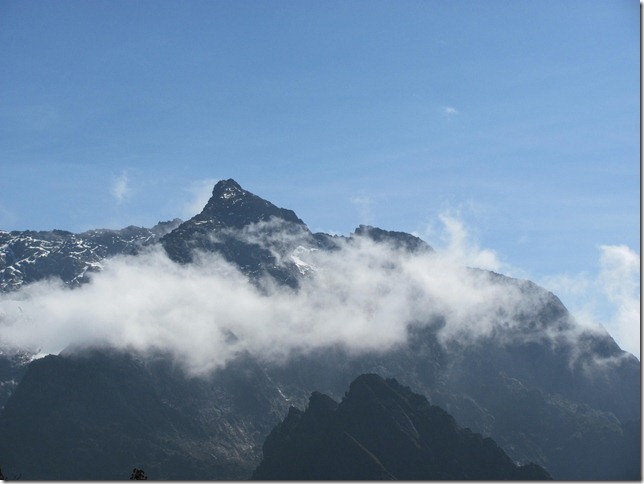
Mr David Duli, the country director WWF, an international conservation NGO, said the park is of great importance to the world because of its botany and beauty and therefore requires expertise to strengthen its conservation.

“We came up with the project in order to strengthen the conservation of the Rwenzori Mountains ecosystem and maintain its biodiversity and water catchment values in harmony with sustainable utilisation of resources for the benefit of Uganda and the international community” Mr Duli said. He noted that conservation efforts are helping the park to regenerate. The park covers the Rwenzori Mountain catchment area which, among others, includes Mubuku, Nyamwamba, Mpanga, Semliki rivers that flow from the mountain.

Rwenzori Mountains National Park is located in southwestern Uganda on the east side of the  Albertine rift valley. It is along the border with the Democratic Republic of the Congo (DRC), just above the equator. It is also a UNESCO World Heritage Site. It is situated in the Bundibugyo, Kabarole, and Kasese districts, 25 km from the small town of Kasese. The park has area of 996 km2, 70% of which is above 2,500 m.

The park comprises most of the centre and eastern half of the Rwenzori Mountains. The ice-capped Rwenzori Mountains are even higher than the Alps. Margherita Peak, one of Mount Stanley's twin summits is Africa's third highest peak at 5,109 m. Africa's fourth and fifth highest peaks (Mount Speke and Mount Baker) are also located in the park. The park has glaciers, snowfields, waterfalls, and lakes and is one of Africa's most beautiful mountain region.

Biodiversity is extraordinarily high with 17 regionally endemic birds and 12 regionally endemic mammals. The elephant, common chimpanzee and l'hoests monkey are globally threatened species (IUCN 1994b). The park is noted for its remarkable plants, which has been described as some of the most beautiful in the world (Riley, Laura; William Riley (2005). Nature's Strongholds: The World's Great Wildlife Reserves).

Flower of Dendrosenescios in Rwenzori with a beautifull bird percing on top

The broken montane forest dominated by Sybmphonia globulifera, Prunus, Yoshania alpina, Albizia spp. and Dombeya spp. occurs at about 2400 m. 199 tree species (18% of the country's total) have so far been recorded in this zone . Next is the bamboo (Arundinaria alpina) forest up to an altitude of 3000 m, a heather zone dominated by giant heathers such as Phillpia trimera and small trees such as Hagenia and Rapanea, frequently over 10 m in height up to 3800 m, and afro-alpine moorland that ends at the snowline at 4400 m.
There are five distinct vegetation zones in the park, which change with altitude. Most significant are the giant heathers, groundsels, ericas and lobelias of the tree heath and alpine zones.

The park has 241 species of birds (27% of the country's total), 78 species of butterfly, and four primate species.


The Kasese District natural resource officer, Mr Joseph Kitswera, said there has been a reduction in soil erosion and landslides. “Bare hills were restored which has reduced soil erosion, landslides and siltation in our rivers,” Mr Kitswera said.

He said conservation of the park will improve tourism in the Rwenzori region. More than a million trees have been planted on degraded hills in the Park covering more than 1,000 hectares of the protected area.


The Minister of Tourism, Ms Maria Mutagamba, who visited the park recently, said degradation in the parks is reducing.

“Much as the culture still remains, the problem has come down compared to the past when it was very rampant,” she said.

One hundred and two mammals species were recorded in the park. The Rwenzori duiker Cephalophus rubidus is found nowhere in the world and the Rwenzori otter shrew Micropotamogale rwenzorii is only known from here and Nyungwe National Park in Rwanda. The park has elephant, giant forest hog, sitatunga in small numbers and buffaloes, which had once disappeared, have re-appeared. Hyrax and leopard also occur in  the park as well as four species of diurnal primate: the common chimpanzee (curently estimated 500 indiviuals, Plumptre et al 2003a) found in the lower altitude forest areas, a sub-speceis of Agolan colobus (colobus angolensis ruwenzorii), the Rwenzori colobus, restricted to this park, L'Hoests monkey and the blue monkey 

Because of its physical and biological values, the park was recognized as a World Heritage Site in 1994. Among rare reptiles, the strange-nosed chameleon Bradypodion xenorhinum is endemic to the Rwenzoris.

Friday, January 4, 2013

Indifference among States Puts Single East Africa Community Tourist visa Plans in Balance

PLANS to have an East African Community (EAC) single tourist visa remain in balance as some partner states show signs of indifference with regard to adopting common policies necessary to spearhead the project.

Although it was initially envisaged as a fundamental initiative that would help attract more foreign earnings through increased tourists, some member countries seem to be dragging their feet in implementation.

Rica Rwigamba, in charge of Tourism and Conservation at the Rwanda Development Board (RDB), could not tell exactly when the regional visa will start operating.
She said that delays by other member countries have derailed progress.
“Everybody would want to have it but there are some pre-requisite factors, especially harmonising immigration policies and ICT to help ease the process. We are pushing it but we realised it requires a lot of consultations because we need to be at the same level,” she said.

Rwigamba explained that while Rwanda had made significant strides in use of ICT, there was need for the rest of the EAC partner states to move at the same pace if the trading bloc is to become a single tourist destination.


Initially, the single tourist visa had been planned to be operational by July 2012.

For instance, coming to Rwanda, one can apply for a visa online and get it, a facility that can hardly be found in other member states.

It is expected that the projected single visa would save potential tourists time and the rigorous process of having to jump from one embassy to the other to apply for different visas to travel across the East African region.

“Today travelers want to have a much wider menu. And it is easier to market the block as a single destination as opposed to one country. It means having features like the Mountain Gorillas in Rwanda, Maasai Mara in Kenya, Kilimanjaro in Tanzania, among others, all on one menu,” she said.

The long procedures in acquiring visa by tourists, especially those from Europe, the Americas sometimes discourages them, forcing them to divert to other destinations.

The EAC Sectoral Council on Tourism and Wildlife Management has called on partner states to fast-track the introduction of the single EAC tourist visa, saying the process was taking unnecessarily too long.
The move to have the single EAC visa followed an appeal by tourism boards of the five partner states requesting for a common visa to accelerate promotion of the region as a single tourist destination.

Rwigamba, however, says that they expect to have hold negotiations at the ministerial level starting next year during which they will assess the recommendations and determine a way forward.

Tourism in east Africa is among the highest earners in terms of investments, with enormous employment opportunities.
In Rwanda, from January to September 2012 tourism is estimated to have generated US$210.5 million, compared to US$184.4 million it generated during the same period in 2011 – that represents an increase of 14 per cent.
The number of tourists from EAC member states and Democratic Republic of Congo also increased from 498,617 to 639,536.

The majority of the international tourists came from the United States of America, United Kingdom, Belgium and Germany, according to official figures.

Thursday, January 3, 2013

Shs50,000 spot fine for littering Entebbe


Authorities at Entebbe Municipal Council, where Uganda’s only international airport is located have introduced definite penalties against people found littering garbage as a measure to step up cleanliness in the town. The new penalty, that would include paying Shs50,000, according to Entebbe Mayor Vincent Kayanja, has been embedded in a new bylaw that came into force yesterday.

“A person found littering garbage from today will pay a definite penalty of Shs50,0000 where the whistleblower would part with Shs25,000 and the municipal enforcers and police who implement the law would share the remaining Shs25,000,” Mr. Kayanja said while officiating at the ‘Youth New Year Gala’ that saw residents competing in football, bicycle racing, ludo and boxing on Monday.

Mr Kayanja said Entebbe Municipality spends a lot of money on cleaning roads at the expense of a few negligent people who liter garbage. The Municipal Council spends at least Shs82m on collecting garbage per year.

Division A chairman David Wasswa Kasule said the new measure would reduce the costs on garbage collection.
This is not the first city or town to introduce a bylaw against littering. Kampala Central Division also has a bylaw where people are fined Shs50,000 on being caught littering the city.

Entebbe is also a popular night stop of several tourists and foreign visitors. Popular places of tourist interest in Entebbe include the Uganda Wildlife Education Center (Uganda's only zoo), the botanical gardens, several beach resorts, and a snake park.

Sunday, December 2, 2012

Kampala Aero Club To Fly Schedule Flights to Uganda National Parks and Serengeti

Kampala Aero Club (Fly Uganda) To Fly Schedule Flights to Uganda National Parks and Serengeti after Partnering with Tanzania’s Coastal Aviation

Fly Uganda now offers seat rates to all Uganda's National Parks. This long awaited service from Uganda’s leading Flying Safari Company will open up destinations to a much wider client base and make Uganda a more attractive destination. Operations commence on December 1st 2012. Uganda has seen many aviation companies come and go over the years, but only Fly Uganda has sustainably built the safari market in Uganda to become the largest domestic operator.

Per seat fares from Kajjansi to the main Ugandan national parks, start from US Dollars 270 to any of the three fields in Murchisons Falls, i.e. Pakuba, Chobe or Bugungu.Seats to Kasese, Fort Portal and Semliki will cost US D 290, the same as a seat to Mweya, Ishasha or the Kayonza Tea Estate field, closest to (14 km from) Bwindi National Park. Kidepo fares will start at US D 550, finally offering per seat options for air safaris across Uganda instead of forcing tourists to use expensive charter flights with the almost inevitable ‘empty legs’ which in the past often put the overall cost of a safari by air beyond the means of tourists.

Linking Uganda's National Parks with the Serengeti on Same Day Flying Safaris

Fly Uganda has joined hands with Coastal Aviation in Tanzania to provide a same day link between Uganda’s National Parks and The Serengeti.
The morning East-bound Fly Uganda flights will pick passengers from our Ugandan National parks to Kajjansi and then fly out of Entebbe with Coastal Aviation to The Serengeti. The morning West-bound Coastal Aviation flight will pick up passengers from Kilimanjaro, Manyara and The Serengeti arriving in Entebbe at midday to clear customs and immigration. They then continue with Fly Uganda to Uganda’s National Parks.

Tanzania’s Coastal Aviation and Uganda’s Kampala Aero Club and Flight Training Centre, aka Fly Uganda, will effective 15th December offer a unique link, connecting the great migration of Tanzania’s Serengeti with the prized mountain gorillas in Uganda’s Bwindi National Park. The flights will route via Entebbe where visitors clear immigration and customs before continuing to their final destination. The cooperation between the two airlines resolves a thorn in the side of air travel, prompted by Tanzania’s insistence to retain non tariff barriers and treating airlines from fellow EAC countries like foreign carriers in clear violation of the spirit of the East African Community and belying the full mouthed speeches made at the just concluded summit in Nairobi, where notably Tanzania’s president called for the removal of such restrictive practices.

This long awaited change will undoubtedly promote air safaris to a much greater extend, more so as key lodges and tented safari camps now have custom build 4x4 vehicles available in the parks, providing airstrip transfers and game drives on location. Flying with the Kampala Aeroclub has also been certified as 100 percent carbon neutral, the second such airline after Kenya’s Safarilink, underscoring East Africa’s trend to remain green by going green.

Visit www.flyuganda.com for more details, including the option to do some acrobatic flying with Capt. Howard Davenport, using a classic ‘Great Lakes’ two seater biplane for adrenaline pumping action in the skies over Kajjansi.

Saturday, December 1, 2012

ENTEBBE AIRSHOW SET FOR DECEMBER 15/16 (written by ETN)

Uganda’s Civil Aviation Authority is partnering to put together a show case aviation event on the weekend of December 15th and 16th, bringing together the aviation industry to give Ugandans a hands on experience.

Air Uganda has already offered to fly disabled children on a special flight on their MD 87 aircraft while the general aviation community from Kajjansi, the Kampala Aero Club, MAF aka Mission Aviation Fellowship and Ndege Juu will join hands with their colleagues from Entebbe such as Eagle Air and AirServ.

Also on board is the Uganda People’s Defence Forces Air Force and the East African Civil Aviation Academy from Soroti, the latter probably also doing a spot or two of career guidance when talking about the courses available at what is often referred to as the Flying School.

Capt. Howard Davenport from the Kampala Aero Club will be performing some of his stunning aerial aerobics displays while other aircraft like air force Sukois and a C130 will be doing fly pasts and low overflights to thrill the crowds, while sky divers will aim to hit the centre point on the ground as they come circling down from the skies above.

This is the second such airshow this year after the Kampala Aero Club, on a smaller and invitation only basis, celebrated their 15th anniversary at the Kajjansi airfield, drawing hundreds of spectators to the perimeter fence, but this time it is an open for all event at the Entebbe International Airport, celebrating not just 50 years of Uganda’s Independence but also 50 years of post independence aviation in the Pearl of Africa.

Source - ETN

Thursday, November 29, 2012

Lonely Planet names Uganda ‘THE 2013 BIRD-WATCHING DESTINATION’

As 2012 is slowly getting ready to hand over to the next year in line a new tagline will take over from the hype of this year, as The Pearl of Africa turned 50 and when the Lonely Planet Guide had named Uganda as their top destination for the year. While measuring the success in terms of numbers and revenues will take a bit longer, until the relevant data have been correlated and published, the country’s tourism industry is nevertheless setting its sights on the future. With over 1.000 bird species found in Uganda, bird watching has brought in growing numbers of hobby ornithologists from around the world but even within has ‘birding’ found new friends.

The Big Bird Watching Day is now an annual event, supported by the Uganda Wildlife Authority which grants free access to the park, and this annual bird count a few weeks ago has underscored once again the rich diversity of birds found, not just in parks but across the entire country. Organized by Nature Uganda and supported by the conservation and tourism fraternities, the event has now been transformed into naming Uganda being named a preferred bird watching destination, an accolade which will undoubtedly raise even more interest from abroad to come here and explore for instance Bwindi Forest, which the Africa Bird Club earlier this year declared the Number One birding site in Africa or in Queen Elizabeth National Park, home to over 600 bird species alone.

Nature Uganda and Birdlife International have mapped out 34 sites across Uganda as important bird watching areas, some inside but many outside the country’s protected areas which makes access possible without any park fees, though such payments of course go to the good use of maintaining park infrastructure.

The Uganda Tourist Board will make bird watching a major promotional activity for 2013 to highlight the country’s rich natural resources beyond being just known as the world’s biggest primate destination or for the adventure tourism attractions Uganda now has to offer.

Thursday, November 22, 2012

Mgahinga’s Gorillas- Nyakagezi Gorilla Family Return to Uganda, Trekking them now possible

The Nyakagezi Mountain Gorilla Family based in Mgahinga National Park which had crossed to Rwanda last year is back in South Western Uganda. All nine membersMgahinga Gorilla of Nyakagezi Family returned to Uganda are back and in a healthy condition. Nyakagezi Gorilla Group is the only resident habituated gorilla group in Mgahinga Gorilla National Park, located about 10 km from Kisoro.

This group is keeps migrating between Congo DR, Rwanda and Uganda, migrate across international borders, mainly in search of “greener pastures” (patches with more food). Across the three countries, such movements have drawn interest of the different countries especially when it becomes of Gorilla habituated to tourism. These kind of groups are known as transfrontier groups and are under the management of the trilateral memorandum of understanding signed between Uganda Wildlife authority (UWA), RDB by the time ORTPN and ICCN in 2006 on “the collaborative monitoring of and Sharing revenues from Transfrontier tourism Gorilla Groups”. Such cases have been happening: Kwitonda group moved 8years ago to PNV In Rwanda from PNV in DRC and has been benefiting of the implementation of the MoU by sharing the tourism revenue by 50% between Rwanda and DRC as indicated in the MoU.

This therefore implies that Uganda Wildlife Authority can now sell gorilla tracking permits for Mgahinga Gorilla National Park and therefore some relief of the pressure on Bwindi, where the bulk of the gorilla tracking takes place. It will also benefit tourism into the Kisoro area of Uganda, which in itself is one of the most scenic parts of the country and holds many more attractions interesting for tourists visiting the country.

Nyakagezi group of gorillas currently has 10 members. The family includes the lead silverback Bugingo who is around 5gorilla trek uganda0 years old and father to most of the group; his silverback sons, Mark and Marfia; and two blackbacks, Rukundo and Ndungutse, who love to pose and play in the trees. The two females, Nshuti and Nyiramwiza, both have babies Furraha and Nkanda respectively. Although gorilla tracking in Mgainga Gorilla National Park can take an entire day it is generally less physically demanding than that at Bwindi National Park.

Mgahinga Gorilla National PMgahinga Gorilla National Park's Muhavura, Sabinyo and Gahinga ark is located in the far south-western corner of Uganda. The huge cones of the Virunga Volcanoes, Muhavura (4,127m) , Sabinyo (3,645m) and Gahinga (3,474m), dominate the landscape here at Uganda’s smallest national park. Mgahinga may be Uganda’s smallest national park at only 33 km², but it combines with the Parc National des Virunga in the Democratic Republic of Congo and the Parc National des Volcans in Rwanda to create a conservation area of 434 km².

Other Wildlife and Attractions

Birds

The varied habitats of Uganda’s smallest park make it home to a variety of birds with 179-184 species recorded. The list includes the Ibis, Pin-tailed Whydah, Speckled Mousebird, Stone Chat, Grey-capped Warbler, Wax Bills, Yellow-vented Bulbul, Firefinch, White-naped Raven, Black Kite, Rwenzori Turaco, Blue-headed Coucal, Paradise Fly-catcher, Rwenzori Batis, Double-collared Sunbird, Rwenzori Nightjar.


Golden MonkeysGolden_Monkeys_Mgahinga_Uganda. There is an estimated 3000-4000 individuals in the Virunga area which 42-60 are habituated in Mgahinga

The endangered golden monkey is endemic to the Albertine Rift, and Mgahinga Gorilla National Park offers a rare chance to track these striking creatures, high in the dense bamboo forests on the Gahinga trail. There is an estimated 3000-4000 individuals in the Virunga area which 42-60 are habituated in Mgahinga.

Other Wildlife

Mgahinga is home to 76 species of mammals, although they are difficult to glimpse in the wild forest vegetation. They include giant forest hogs, bush pigs, forest buffaloes, elephants, bushbucks, golden cats, side striped jackals, black fronted duikers and South African porcupines.


Related articles:

Mountain Gorillas Population in Bwindi Impenetrable National Park shoots up to 400 (2011 Census Results Release)

How To Book Gorilla tracking & Trek Permits in Uganda

Comparing Gorilla Trekking Tours : Uganda Vs Rwanda – Compare prices, experience, hardness,etc

When is the Best time for gorilla trekking/ tracking in Rwanda and Uganda?

How to do a 1-Day Rwanda mountain gorilla trekking tour ...

Uganda Cuts Gorilla Trek Permit Prices to $350

Trekking Tour Packages in Rwanda and Uganda
1 day Gorilla trek Rwanda with tour price
2 days Gorilla tracking Rwanda with tour price
3 day Gorilla tracking Rwanda with tour price
4 days Rwanda Gorilla Tour -
5 days Gorillas trek Rwanda and Safari in Queen Elizabeth National Park Uganda
5 days Rwanda, Uganda Gorillas
3 days Uganda Gorilla tour
6 days gorilla tracking, wildlife safari