Saturday, November 23, 2013

1100 visit Murchison Falls National Park as eclipse boosts tourism in Uganda

Murchison Falls National Park registered 11,260 visitors during the recent hybrid eclipse excitement and bagged shs100m in entry fees in three days, said the Uganda Wildlife Authority (UWA) tourism warden, Joshua Masereka.

Tourism generated $1b (about 2.7 trillion) in 2012, according to a recent World Ban study. This is about 38% of exports, and it generated 56% of GDP, making it the biggest source of income.
The lodges in the park were all booked to capacity and tour operators such as Mpolampola and Jangu Kampala had brisk business,” said Maseruka.
“After the eclipse, the tourists saw the animals, birds and the vegetation is endowed with.”
UWA Executive Director Andrew Seguya said the guest list is expected to increase since the park’s Baker’s Trail was recently voted among the top 20 in the world.
“If it is appealing in a raw form, you should expect many more tourists upon completion,” Seguya said.
Nile Safari Lodge manager Davidson Kinyera said the eclipse gave Uganda exposure in a new perspective.
“Our accommodation, wines and food were on demand in October, which has always been low season,” he noted.
“Other than the eclipse, our guests were awed by the mighty Murchison Falls, the animals and a variety of vegetation:.
Kinyera adds that there is also spot fishing at Murchison Falls National Park with records of catches weighing more than 108kg.
“Spot fishing is a challenge for anglers who prefer to do it right on the banks”, says Kinyera.
“The strong current and highly oxygenates waters help breed huge Nile Perche, which gives the tourists a chance to make a record breaking catch.
A 120km game drive is evidence of the rejuvenation of elephants, bush bucks and antelopes. They compete for space with buffaloes, hippos and hyenas.
“The hunting of wild animals is as old as mankind in Uganda,” says Seguya, but adds that hunting animals for meat and skins has never been a threat to wildlife as poaching today.
The threat stems from the skyrocketing price of ivory and an increase in the number of foreigners. Arrests of foreigners in transit with ivory, scales and birds have been made at Entebbe Airport several times.
“Every effort is being made to protect our wildlife,” Seguya says.
Tours and Safaris to Murchison Falls National Park
  2 days Murchison Falls National Park tour and Game Safari (with Ziwa Rhino Sanctuary


Thursday, November 21, 2013

KIBAALE COMMUNITIES DEMAND FOR REVENUE


Communities neighbouring Kibaale National Park in Kabarole district have failed to access the revenue given to them by Uganda Wildlife Authority (UWA).
According to the wildlife statute 1996, UWA is expected to pay 20% of the park entry fees collected from wildlife protected areas to the local government of the area surrounding the wildlife protected areas.
The revenue is used to set up income generating projects for the communities, to deter them from exploiting the wildlife resources. The local communities help in fighting poaching, fire outbreaks and other illegal activities in the park which used to be the culprits.
In August, UWA gave Kabarole district local government 400 million shillings from the gate collections of Kibaale National Park. The funds were meant for Busoro Sub County for the parishes of Kaswa and Busoro, which neighbours the park. However, since then the residents in the two parishes have never accessed the funds. The money was supposed to be used to construct three bore holes, buy iron sheets for Busoro Primary School and construct a roadside market.
Roger Magezi, a resident of Busoro parish says the locals have on several occasions written to the district to release the money in vain. Magezi says if the boreholes had been constructed, it would solve the problem of water accessibility. He says the nearest water source in the area is 3 kilometres.
David Kusemererwa, the LCIII chairperson Busoro, claims the district diverted the funds adding that whenever he demands for the money he is ignored. Kusemererwa states that he has written to UWA to intervene in the matter.
But in our exclusive phone interview, Henry Tuhaise, the deputyCAO in-charge Burahya County, denies allegations that the money was diverted. Tuhaise says the communities aren’t accessing the funds because they have refused to provide their work plans and budget to the district.
He says in the past, the communities haven’t put the revenue share to proper use. Tuhaise cites last year when the local authorities in the sub-County diverted the money meant for the construction of Wild animal prevention barriers, and instead renovated a health centre and three schools, which the district were also planning to rehabilitate.
Martin Asiku, the warden Kibale Conservation Area, blames the district authorities for failing to remit the funds to the sub county authorities. He however says the communities should be transparent and put the funds to proper use.

Tuesday, November 19, 2013

OIL ACTIVITIES NOT INTERFERING WITH WILDLIFE


The UWA Executive Director Andrew Seguya has said that oil activities are not interfering with wildlife in the Albertine graben.

This is contrary to the information from other UWA officials who say that the activities going on in the Albertine have greatly affected wildlife in the area.

The officials in their presentations at two different foras said that there has been death of animals due to poisonous chemicals used during drilling which have found their way into the ground and into the water drank by the animals.

The officials also said that the ongoing activities have greatly restricted their movements in the national parks adding that the noise and vibrations of machines is greatly affecting them.
But Seguya says that those activities are no different from the other usual activities carried out by the park rangers or the noise made by tourists’ trucks in the protected areas. He said that there were challenges even before commencement of oil activities but what matters is how the challenges are handled.

He says that an oil unit has been set up in the strategic plan running from 2013-2018 to principally devise mitigation measures that need to be taken.
He added that rangers have been trained and deployed where exploration and drilling is taking place. A 24 hour team which is composed of UWA staff, staff from the National Environmental Management Authority (NEMA) and staff from the Petroleum Exploration and Exploration Department is responsible.

He said that he is confident that the challenges will be resolved because the oil companies are doing their part responsibly and that he is satisfied with their response.
In their presentations the, officials said that oil companies pay these rangers subsequently making it challenging for them to supervise their bosses.
But Seguya denied that the oil companies pay rangers. He said that what they do is pay UWA for the services it renders to them which he says is a basic principal of conservation called the polluter pays principle.
But the Projects Manager for Energy and Climate Change at the World Wildlife Fund (WWF)Robert Damulira says the impacts are now minimal and can probably be contained. But he doubts UWA’s competence in mitigating the medium term and long term impacts.

Damulira told our correspondent that the government and UWA in particular need to strengthen their policies and put some places in that region strictly off limits. He said for example the Albert-Nile Delta which is important to animals for mainly water need to be demarcated as off limits adding that he hopes that UWA and government will not be deceived by oil money to destroy Uganda’s important sector.
70 percent of the countries Protected Areas are in the Albertine and 50 percent of the oil wells lie with in these Protected Areas.

NEW UGANDA WILDLIFE ACT REVIEW


The proposed Wildlife Act amendments currently before the Uganda cabinet are aimed at streamlining the operations of the oil exploration in line with the wildlife existence and environmental conservation.


The review which has been carried out by Ministry of Tourism, Wildlife and Antiquities in consultation with Uganda Wildlife Authority (UWA), Uganda Tourism Board (UTB) and environmentalists aims to bridge the loopholes in the current act which among others offered lenient punishment for poachers.

The current act was also enacted before the discovery of oil and did not address the issues of exploration and disturbances to the wildlife, particularly in the Albertine Region.

Barirega Akankwasah, the Principal Wildlife Officer at Ministry of Tourism, Wildlife and Antiquity since oil plays a big role in the economy of any country, they cannot say exploration must not take place in the protected areas. Though he did not mention any specific proposals, Akankwasah says what the amendment will provide is an environment where the two can mutually exist.

He says the National Environment Act provides for environment impact assessment before engaging in any exploration. He says the there is also provision for the same in the current wildlife act. He says NEMA will come up with a broader impact assessment for oil and other sectors. He says this will ensure that both animals and oil activities can coexist.

Tuesday, November 5, 2013

UGANDA TOURISM MINISTRY EMBARKS ON FENCING GAME PARKS

DSC07711
Ministry of Tourism, Wildlife and Antiquities has embarked on fencing and digging trenches around the Murchison national parks to contain marauding animals. The affected districts include Nwoya, Amuru, Moyo.
Communities neighboring Murchison national park have for long accused Uganda Wildlife Authority-UWA and Ministry of Tourism of negligence and failure to control the animals.

However, the ministry says it has embarked on a comprehensive program to fence off the park to deter animals from crossing into the crop fields. George Owoyesigire, the Acting Principal Wildlife Officer says he has personally been monitoring the digging of trenches in the Murchison National Park and the success rate is between 70-80 percent.
He says with such high success rate, more trenches will be dug to deter the elephants from crossing to the gardens. Owoyesigire says apart from the trenches, the ministry is also experimenting the mixture of red pepper, used oil, chain-link and constructing buffalo walls to tame the animals.
Owoyesigire however says the biggest challenge in Murchison is the high water table and rocky nature that prevents them from constructing the trenches. He says the ministry is devising other means to use where the soils collapse easily because of the high water table.

Friday, October 25, 2013

Uganda among the Top-10 Most Popular destinations for tourists in Sub-Saharan Africa

Uganda is among the 10 destinations that are on course to turn into popular tourists’ destinations in Sub-Saharan Africa, according to a World Bank report. The Tourism in Africa: Harnessing Tourism for Growth and Improved Livelihoods report indicates that Uganda together with Rwanda, Burkina Faso, Gambia, Malawi, Mozambique, Senegal, Zambia, Zimbabwe and the Seychelles are scaling up tourism and emerging as a tourism destination.

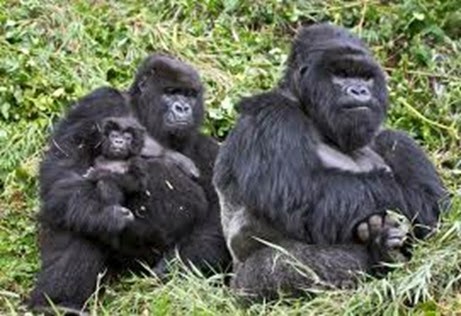
rwanda mountain gorillas

According to Tourism Update the report, titled Tourism in Africa: Harnessing Tourism for Growth and Improved Livelihoods, stated Sub Saharan Africa’s tourism industry was set to drive economic growth on the continent and directly employ 6.7 million people by 2021.

Tourism is one of the largest and fastest growing sectors of the world economy, and tourism in Africa is ripe for development, the report notes.

For example, the number of tourists arriving in SSA has grown over 300% since 1990, with 2012 marking a high of 33.8 million tourists who visited the region.

Income generated from tourism has also climbed: Receipts from hotels, tours and other attractions in 2012 amounted to over US$36bn and directly contributed just over 2.8% to the region’s GDP, according to the report.

The report said these countries had simplified their tourism policies, liberalised air transport and diversified tourism while protecting their communities and environments, which created a positive investment climate for tourism development.

The World Bank has urged SSA governments to form alliances with the private sector-and the private sector to partner with government at local, regional and national levels.

Together they can plan and develop tourism infrastructure, increase transparency in land ownership and create a business-friendly environment for tour operators and other companies. When sustainably managed, tourism fuels economic transformation, accelerates reform, triggers infrastructure improvements, and empowers women and minorities in countries throughout Africa.

Wednesday, October 23, 2013

MURCHISON FALLS FERRY GROUNDED

MURCHISON FALLS FERRY GROUNDED
murchison ferry
The Murchison Falls Ferry is undergoing repairs to enhance Visitor safety. It was grounded on the 22nd October in order to install New ferry Pontoons. The ferry is expected to resume its routes on the 1st of November 2013. Tour Operators are advised to use the Karuma route for activities on the Northern Bank .
According to UWA, the contractor has been briefed to expedite the works so that it doesn't interfere with the preparations for the eclipse events.

UWA regrets all inconveniences it may have caused!!!

For any unusual challenges, contact the Conservation Area Manager, for Murchison Falls National Park, Mr. Tom Okello on 0772 550 294 and Tourism Warden , Joshua Masereka on 0783 482 298.