Tuesday, June 21, 2016

ELEPHANT ELECTROCUTED AT QUEEN ELIZABETH NATIONAL PARK

ELEPHANT ELECTROCUTED AT QUEEN ELIZABETH NATIONAL PARK
Ezaruku Draku Franklin (URN) 

An adult bull elephant was Monday morning discovered dead in Mweya Peninsula of Queen Elizabeth National Park. 

Uganda Wildlife Authority Public Relations Manager Jossy Muhangi says that the carcass of the 35-year-old elephant was found lying near a ground transformer with cables attached to a nearby electric pole.

Muhangi adds that the wire mesh fence surrounding the transformer, a few meters from the Visitor Information Centre, was smashed by the jumbo, trying to force his way through the enclosure. The body was discovered by rangers on patrol.

He says UWA management called Umeme, the power service providers, who temporarily switched off the power to allow the recovery of tusks from the carcass. Veterinary experts are conducting a postmortem.

This is the third case of reported fatal electrocution in less than four years following two other cases involving elephants in Katunguru and Fig tree areas of Rubirizi district.

Saturday, June 11, 2016

Uganda Launches e-Visa application

All those who have guests, friends or relatives visiting Uganda, kindly advise them to apply for the Visas online. Soon they will be no issuance at the point of entry.
It is not yet however known if Uganda will continue for the time being with a  parallel process of Visa on arrival as has been the case all along and clarification is sought on this crucial issue.

If your visa or permit application is approved, it establishes that you are eligible for the approved visa or permit, but does not establish that your application is definitely approved.
Upon arrival to Uganda (at the selected point of entry) or to the Immigration Office Headquarters, you will be inspected by an Immigration Officer who may determine if your application is finally approved. All information provided by you, or on your behalf by a designated third party, must be true and correct. A visa or permit application approval may be revoked at any time and for any reason, such as new information influencing eligibility. You may be subject to administrative or criminal penalties if you knowingly and willfully make a materially false, fictitious, or fraudulent statement or representation in an electronic visa or permit application submitted by you or on your behalf.

Please indicate you have read and understand the information provided above.
The process would work as follows:
1) Anyone arriving from 01st June 2016 who require Visas must have applied online and on completion and submitting the application intending travelers are to receive a bar coded email notification.
2) On arrival at any border post, airport or land borders, that email must be presented and the bar code will be scanned into the immigration system. A Visa sticker will then be printed, including a scanned in picture and will be inserted into the passport on payment of the respective Visa fee.
3) For any Visa extensions, again the process is due to be completed on line though it is thought that anyone in Kampala may apply in person at the Immigration Headquarters at the Ministry of Internal Affairs.
4) These applications will be for regular single entry Visa, the common East African Tourist Visa (covering besides Uganda also Kenya and Rwanda), multiple entry Visa and Business Visa.
5) Access to the application platform can be found at www.visas.immigration.go.ug
In a related development will applications for special passes and work permits also from 01st of June onwards be done online.
Relevant statements from the Ministry of Tourism, the Uganda Tourism Board and the Ugandan private sector are expected to be issued in due course further explaining the modalities of these transactions.

Try it and let us know how it works.


Monday, May 16, 2016

Who Needs and How to Apply for Rwanda Visa– Tourist Visa Entry Requirements, East Africa Tourist visa application

If you are a foreiegner visiting Rwanda, you should submit your visa application to the Rwandese embassy or diplomatic mission near you for processing.
Where this mission isn't available, you can request for a visa acceptance letter online which you will present on arrival to get your visa upon payment of the visa fee  - $30.

Citizens of the East Africa Community can get a renewable 6 months' visitor's pass upon arrival for no fee.
Nationals of all African countries traveling to or transiting through Rwanda can   obtain a entry visa upon arrival without necessarily making prior application and pay for a visa ($30) where applicable.

In view of the existing bilateral agreements, citizens of the following countries can visit Rwanda without a Visa for a period of 90 days: Hong Kong, Democratic Republic of the Congo, Phillipines, Mauritius and Singapore.

Nationals of Australia, Germany, Israel, New Zealand, Republic of South Africa, Sweden, United Kingdom, and United States of America will be issued with entry visa valid for a period up to 30 days and pay for a visa ($30) upon arrival without prior application. 
Nationals of the countries mentioned above not exempted from visa may also choose to get visa at Rwanda Diplomatic Missions (except the UN Mission in New York) or online.

Use the following link to apply for visa online:Click here
Try to do it 72 hours before and record your tracking number. A return ticket is mandatory for all those jetting into Rwanda. It is advisable to check with the nearest Rwandese consulate or visit: http://www.migration.gov.rw/ for more information.
When I say you MUST fill the form, I really mean it, many visitors are actually kicked out of the border for not doing it!

APPLICATION FOR THE EAST AFRICA TOURIST VISA (1 VISA = ENTRY TO RWANDA, UGANDA, KENYA)
To qualify for the East Africa Tourist visa, you must be a foreigner who wants to visit simultaneously the Republic of Kenya, Republic of Rwanda and Republic of Uganda for tourism.
The holder of the East Africa Tourist Visa shall enter from the country that issued the visa and move within the two other countries without applying for another visa or paying another visa fee.
The holder shall also be allowed to move out of the Republic of Kenya, Republic of Rwanda and Republic of Uganda; and return without having to pay for another visa. This will only be applicable in the period of 90 days.
Applications for this visa shall be lodged at any of the diplomatic representation of the Republic of Kenya, Republic of Rwanda and Republic of Uganda, at the Immigration Offices of the respective countries or online where applicable click here to apply online in Rwanda.

REQUIREMENTS:
*      One clear colored passport size photo with white background, recently taken without glasses, caps and scurf; (the photo should be attached to the application form by use of glue stick. Stapling and clipping the photo to the application form is not advisable).
*      A complete filled application form click here to download application form

*      An application letter addressed to the issuing authority of the concerned country 

Transit single entry visas for up to 2 days are given at a cost of $30 at the same cost as the single entry tourist visa which is available for up to 90 days.
You will make the payment at the point where you enter the country. It is very important to remember that you need a confirmation letter (or a hotel confirmation, Tour operator invitation/ tour confirmation letter, copy of gorilla permit) to get a Rwanda visa and therefore you need to contact your contact in Rwanda or consulate in your country to get this document.

Please note that if you are planning to apply for resident/business or missionary multiple entry visas upon entry to Rwanda you will need to obtain police clearance from your home country. We advise you to obtain police clearance before travelling as this may often take longer than expected.

Entry Requirements - Passport Validity
You must hold a valid passport to enter Rwanda. Your passport must be valid for the proposed duration of your stay. No additional period of validity beyond this is required. However, it is always sensible to have a short period of extra validity on your passport in case of any unforeseen delays to your departure. You do not have to wait until your old passport expires to apply to renew it. Any time left on your old passport when you apply will be added to your new passport, up to a maximum of nine months. 


However, Yellow fever vaccination certificates are in theory compulsory for entry or exit, but in reality are rarely requested.


Thursday, September 17, 2015

Kalinzu Forest Reserve–A Natural Forest beaming with Chimps, Primates, butterflies, rear birds, etc

Essentially an eastern extension of the Maramagambo Forest, the 137km² Kalinzu Forest Reserve is traversed by a number of scenic trails along the ridges and valleys of the Rift Valley Escarpment, offering views of the Rwenzoris, Lake Edward and the Kazinga Channel. kalinzu forest chimpanzee
The Forest is famous for 414 Species of Trees and Shrubs including the Ficus, Prunus Africana, the Stroboia, and Parinari among others.
In addition to an alluring variety of forest birds, Kalinzu protects six diurnal primate species: chimpanzees, olive baboon, black and white Colobus and red-tailed, blue and L’Hoest monkey, as well as the rare pygmy antelope. Nocturnal primates such as potto, and two varieties of galago can be sought on night walks, when you are also likely to hear the eerie shrieking of the tree hyrax.
The 2001 Primate Census put the total number of Chimpanzees in the Reserve at approximately 240. However, only two Groups of about 70 can be accessed by both Researchers and Tourists.
The Forest also harbours 378 Species of Birds such as the Great Blue Turaco, Black and White Casket, Cuckoos and Sunbirds.
Other varieties of Species include 262 Butterflies, 97 Moths, Reptiles and Flowers.
Because of its proximity to the Queen Elizabeth National Park, the Forest Reserve occasionally provides refuge to Savannah Grassland Species such as the Duikers, Leopards and Wild Pigs.
Tourist Activities in Kalinzu Forest
Tourist activities in the Reserve include
· Chimps tracking allowing 4 visitors per day at US Dollars 50 per person..
· Forest Walks,
· Conservation Education,
· Birding,
· Butterfly Identification,
· and small Mammal viewing.
How to Get to Kalinzu
Kalinzu Forest Reserve is located in Bushenyi District in western Uganda. It is approximately 375 km. (six hours drive) from the Capital City of Kampala. Because of the Albertine Terrain with old logging and winding roads, a four – wheel drive vehicle is recommended.
Accommodation while at Kalinzu
Accommodation in the Reserve is still informal with only a do-it- yourself Camping Site at the Forest Station at Nkombe. Visitors are advised to carry their own Tents. Visitors can also seek modest accommodation in Bushenyi/Ishaka Townships.
For Reservations, please contact the Range Manager on Tel: 256-41-0772 458389

Related posts

Kyambura Gorge Chimpanzees and the River of the Bl...

 Why You Must Visit Bigodi Wetland, Kibale and Fort... 

What to expect from a safari to Kibale National Pa... 


Kalinzu Forest Reserve–A Natural Forest beaming with Chimps, Primates, butterflies, rear birds, etc

Special Tours to See chimpanzees, Gorillas and other Primates

3 Days Chimps Tracking tour in Kibale National Park

Rwanda chimpanzees tour- 4 days

5 Days Gorilla Tracking and Chimps Tour in Uganda

5 Days Gorilla Tracking and Chimps Tour in Rwanda

Gorillas, chimpanzee, wildlife - 7 days

12 Days Primates (chimps, gorillas, monkeys) tour in Uganda

9 days Primates and Wildlife tour in Uganda

1 Day Ngamba Island Chimps tour


Tours to Kalinzu
Contact us if you would like us to include Kalinzu Forest on your tour program, or if you would like any more information about visiting Kalinzu Forest Reserve.
Tours to nearby places
3 days Queen Elizabeth National Park Tour
5 days: Uganda Kibale Forest and Queen Elizabeth N.Park safari with Chimpanzee tracking, primate walks, and Game drives.
Accommodation and Lodging near Kalinzu Forest Reserve
Kyambura Game Lodge
Kyambura Game Lodge Queen Elizabeth National Park
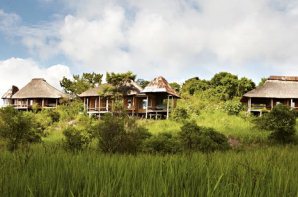
This eco-lodge is perched above the Kyambura Gorge at the edge of Queen Elizabeth National Park in Uganda.
Learn more >>


Queen Elizabeth Bush Lodge
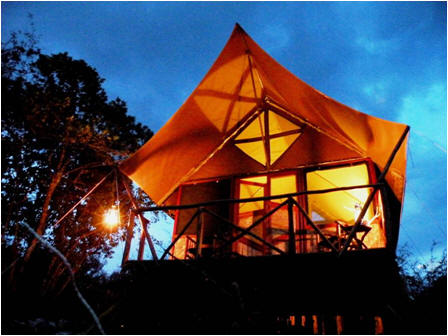
Located close to as well the chimpanzee tracking in Kyambura Gorge as to the prime game viewing areas in the park, it forms an excellent base for your exploration
Learn more >>


Mweya Safari Lodge
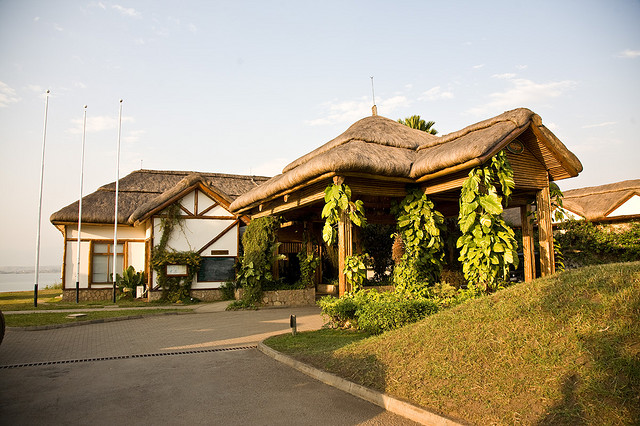
Beautifull Photo of Mweya Safari Lodge Uganda
One of the most beautifully situated lodges in Uganda, facing the bank of Kazinga Channel which routinely attracts large herds of buffalo, elephant, and incredible views of the "Mountains of the Moon" - the Rwenzoris. Learn more >>

Jacana Lodge
Beautifull Photo of Jacana Lodge Uganda
in the center of Queen Elizabeth National Park, a fifteen minute drive from the main road, but the scenery is nice. The lodge is on a beautiful lake in the forest. Many monkeys, some hippo-sounds at night. Learn more >>


Katara Lodge
Katara Lodge Queen Elizabeth National Park
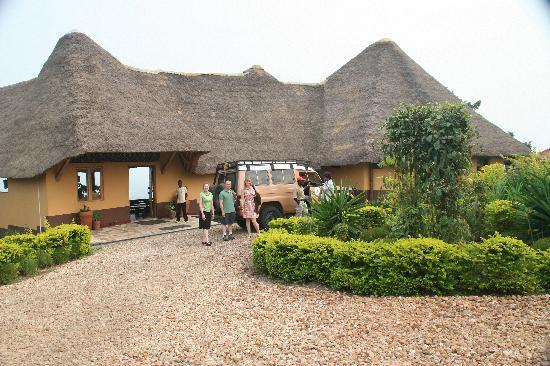
Katara lodge is a little way out of Queen Elizabeth National Park and in a small village but with fabulous views from the lodge (about 30mins from the main game drives in Queen Elizabeth National Park). Learn more >>


Tuesday, September 15, 2015

Uganda Wildlife Authority opens up road to King Rwenzururu's burial site

The Uganda Wildlife Authority (UWA) has embarked on a programme to open a road that leads to the first king of the Rwenzururu Kingdom in the Rwenzori Mountains.
Late Isaya Mukirania Kyibanzanga I, who led the Bakonzo and the Bamba in a rebellion in 1961 against Toro Kingdom died in 1966. He was buried at the peak of the hill- Bulemba in the steep mountains of Rwenzori in Ihandiro sub - county in Kasese District.

"We are working with the local communities to construct a road so that tourists can reach Bulemba and see where the first king of the Bakonzo was buried," Frederick Kiiza, the Rwenzori Mountains National Park chief warden, said.
UWA has so far constructed a modern hut at Bulemba,  about 500m below the Isaya Mukirania Kyibanzanga's grave and a rest camp along the foot path to the tomb.

The Ihandiro sub - county chairperson, Fenhansi Baluku, confirmed that UWA had already released some money for clearing the bush that had grown on the Murushenga-Kibigha road that leads to Bulemba.

Murushenga-Kibigha road was first made between 1959 and 1960 by the Canadians who owned Kirembe Copper mines to extend the mining to Kigombya in the mountains.
Baluku told a gathering who trekked to Bulemba, 30 km from Bwera town in Bukonzo West, that clearing of the bush had already started to pave way for re - excavating the road.

Officiating at the celebrations that were held under the theme, "Exploring and Sustaining tourism potential in the Rwenzori Mountains," the speaker of the Rwenzururu Kingdom, Enock Muhindo called on the youth to respond positively to what had led the Bakonzo and Bamba to wage rebellion.
He reminded the Rwenzururu subjects that after the demise of Kyibanzanga I, his first born son, Charles Wesley Mumbere Iremangoma, took over the kingdom and on August 15, 1981 declared the end of the war of violence.

Muhindo also advised the Rwenzururu youth to cooperate with fellow youth in Toro Kingdom.

"We must work together to bring peace in the Rwenzori region and live in harmony with other cultural institutions because we cannot develop in isolation, "he stressed.  An American tourist , Lauren Burton, one of those who trekked to Bulemba to attend the celebrations, said: "I have enjoyed being here.  The Rwenzori Mountains are beautiful from every corner. "

Wednesday, August 5, 2015

Bwindi Habituates 2 more gorilla families for Tourism

Two new groups of mountain gorillas are being habituated for tourism and research in Bwindi Impenetrable National Park.

The groups, named Bushaho and Bikingi, are named for their home ranges and contain some individuals from previously habituated groups. Both groups are led by former Nkuringo group silverbacks, Bahati and Bikingi.

There are 8 babies between these two groups (6 in Bikingi and 2 in Bushaho)! The groups are being habituated for tourism, yes.

Habituation allows veterinarians to visit the groups regularly and closely monitor them for any sign of illness or injury - and intervene to save a life when it is necessary. It also allows the rangers to monitor the group on a daily basis - and for instance, report a gorilla who has become caught in a poacher's snare so that veterinarians can intervene and administer the necessary treatment immediately.

When combined with the estimated 480 gorillas inhabiting the Virunga Volcanoes to the south (the only other location where mountain gorillas exist) , the world’s population of mountain gorilla now stands at 880. The mountain gorillas of Bwindi and the Virungas are the only gorilla populations known to be increasing; all other populations are thought to be in decline due to hunting and habitat loss.

The rise in mountain gorilla populations also indicates the success of a continued collaboration between the Uganda Wildlife Authority with the Institut Congolais pour la Conservation de la Nature (ICCN) in the Democratic Republic of Congo and the Rwanda Development Board (RDB); the Virunga Mountains lie on the borders of three countries, requiring the participation of agencies from Uganda, Democratic Republic of Congo, and Rwanda for effective monitoring and enforcement. Bwindi, however, is located in Uganda, but in the spirit of regional collaboration, the ICCN and RDB sent support teams for the 2011 Bwindi census effort.

Although far fewer in number than their western relatives, mountain gorillas have had a profound effect on both the public and the naturalists who have encountered them. While collecting specimens in Africa for the American Museum of Natural History in the early 20th Century, U.S. explorer Carl Akeley became concerned about the future of the mountain gorilla, helping to establish Africa’s first national park—now Virunga National Park—in 1925 to protect the gorillas.

Thursday, July 30, 2015

New Mountain Gorillas Census set for September 2015

A new census for Mountain Gorillas is set for September 2015 in the Great Virunga Massif is set for September, 2015, the Greater Virunga Trans boundary Collaboration- GVTC has said.
The massif includes Uganda's Bwindi and Mgahinga National Park, Virunga National Park in DR Congo and the Volcanoes National Park in Rwanda.

The last mountain gorillas census was conducted in September 2011 and its results indicated a 3.2% increase in gorilla population (to a total of about 880 in the wild) in the Greater Virunga the previous ones  having been conducted in 2006, 2002 and 1997. All other censuses before have taken place in a duration spacing of five years apart.

This census is aimed at estimating the current gorilla numbers of Uganda’s BINP, document information on illegal activities, the gorillas distribution and compile information on other mammals in the ecosystem.

The organizations involved in the planning and eventual implementation of the activity include Uganda Wildlife Authority, the Greater Virunga Trans boundary Collaborative Secretariat (GTVCS), the Institut Congolais pour la Conservation de la Nature, the Rwanda Development Board, local governments and the International Gorilla Conservation Programme, Max Planck Institute for Evolutionary Anthropology, Conservation Through Public Health, the Mountain Gorilla Veterinary Project, the Dian Fossey Gorilla Fund – International and us, the Institute for Tropical Forest Conservation.

James Byamukama, the Programme Manager at GVTC says the exercise, which should have started earlier, was delayed by the insecurity in DR Congo.  He however adds that they are set to conduct the census in September starting in Virunga National Park.
Byamukama says with the census, the collaboration will be able to plan for future conservation efforts and the emerging trends of threats to gorilla population. Periodic censuses of endangered populations of high-profile species including gorillas help conservationists to understand their population dynamics assess the success of conservation programmes aimed at ensuring their survival

Blogger Tags:
, and to ensure that they receive continued attention from the global conservation community.

The method of use in this census will be the sweep method as well as fecal samples collected for generic analysis.  In the sweep method, teams traverse each marked sector of the park in a zigzag manner. They look for fresh gorilla trails till their nests are found and counted.  The estimates are made based on nests encountered in the due course of the census. The estimates are made based on nests encountered in the due course of the census. In great apes mammals, research has proven that the sweeping has been the most efficient method to date unlike the transect,experts assert.
In a preparatory census meeting of the stakeholders recently in Kabale, UWA’s Senior Monitoring and Research co-coordinator, Mr. Aggrey Rwesiba stated how important this exercise is to Uganda Wildlife Authority. He noted that the census provided vital information for establishing best management strategies that could be applied at both local and global scales to conserve the mountain Gorilla population. He accordingly  stressed that the census was an important index for the different stakeholders on the effectiveness of their work towards conserving the mountain gorillas.

Unlike other censuses done before in Bwindi, generic analysis where the fecal samples will be analyzed to minimize error and ascertain more accurate figures of the gorillas. It is estimated that a distance of not less than 600km will be covered by various teams to be involved in the census around the entire. Many staff from Bwindi Impenetrable National Park has already committed themselves to be part of this historical event of counting gorillas and preparation are in a high notch. The vegetation and terrain of Bwindi forest make it uniquely different from that Virungas. This makes the census more challenging as well as exciting, something to look forward to. 
The Conservation Area Manager of Bwindi Mgahinga Conservation Area, Mr. Pontius Ezuma has committed resources such as standby vehicles for the field teams and security all through the census exercise. In his own admission, he expects a rigorous time ahead thus the need to adequately prepare since the exercise has to be accommodated with many routine activities in park.
In the census carried out in Bwindi population in was carried out in 2002,  results showed that the population had increased since the previous census in 1997 by approximately 7%, to 320 individuals according to McNeilage and others 2006 while the Virunga population currently numbers around 380 gorillas . Another census of the Bwindi gorilla population was carried out between April and June 2006 to determine the population's total size and structure, its distribution across Bwindi, and the potential impact of human disturbance on the population.
The results at the time showed show that the 5 habituated groups in Bwindi contained a total of 76 individuals at the time of the census. In addition to these, 25 unhabituated groups were found, containing 227 individuals along with 11 lone silverback males, giving a total uncorrected population count of 314 individuals.

Though gorillas have few natural predators, they are endangered due to the loss of habitat and forest clearing. They also fall victim to hunting for the wildlife trade, and through accidental snaring by poachers who are targeting antelopes for meat. Diseases that affect humans also pose a threat to apes and can spread quickly in such small populations.