Thursday, July 30, 2015

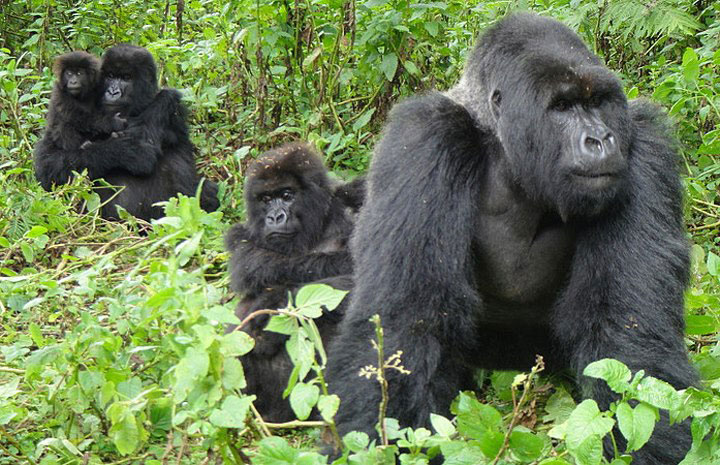
New Mountain Gorillas Census set for September 2015

A new census for Mountain Gorillas is set for September 2015 in the Great Virunga Massif is set for September, 2015, the Greater Virunga Trans boundary Collaboration- GVTC has said.
The massif includes Uganda's Bwindi and Mgahinga National Park, Virunga National Park in DR Congo and the Volcanoes National Park in Rwanda.

The last mountain gorillas census was conducted in September 2011 and its results indicated a 3.2% increase in gorilla population (to a total of about 880 in the wild) in the Greater Virunga the previous ones  having been conducted in 2006, 2002 and 1997. All other censuses before have taken place in a duration spacing of five years apart.

This census is aimed at estimating the current gorilla numbers of Uganda’s BINP, document information on illegal activities, the gorillas distribution and compile information on other mammals in the ecosystem.

The organizations involved in the planning and eventual implementation of the activity include Uganda Wildlife Authority, the Greater Virunga Trans boundary Collaborative Secretariat (GTVCS), the Institut Congolais pour la Conservation de la Nature, the Rwanda Development Board, local governments and the International Gorilla Conservation Programme, Max Planck Institute for Evolutionary Anthropology, Conservation Through Public Health, the Mountain Gorilla Veterinary Project, the Dian Fossey Gorilla Fund – International and us, the Institute for Tropical Forest Conservation.

James Byamukama, the Programme Manager at GVTC says the exercise, which should have started earlier, was delayed by the insecurity in DR Congo.  He however adds that they are set to conduct the census in September starting in Virunga National Park.
Byamukama says with the census, the collaboration will be able to plan for future conservation efforts and the emerging trends of threats to gorilla population. Periodic censuses of endangered populations of high-profile species including gorillas help conservationists to understand their population dynamics assess the success of conservation programmes aimed at ensuring their survival

Blogger Tags:
, and to ensure that they receive continued attention from the global conservation community.

The method of use in this census will be the sweep method as well as fecal samples collected for generic analysis.  In the sweep method, teams traverse each marked sector of the park in a zigzag manner. They look for fresh gorilla trails till their nests are found and counted.  The estimates are made based on nests encountered in the due course of the census. The estimates are made based on nests encountered in the due course of the census. In great apes mammals, research has proven that the sweeping has been the most efficient method to date unlike the transect,experts assert.
In a preparatory census meeting of the stakeholders recently in Kabale, UWA’s Senior Monitoring and Research co-coordinator, Mr. Aggrey Rwesiba stated how important this exercise is to Uganda Wildlife Authority. He noted that the census provided vital information for establishing best management strategies that could be applied at both local and global scales to conserve the mountain Gorilla population. He accordingly  stressed that the census was an important index for the different stakeholders on the effectiveness of their work towards conserving the mountain gorillas.

Unlike other censuses done before in Bwindi, generic analysis where the fecal samples will be analyzed to minimize error and ascertain more accurate figures of the gorillas. It is estimated that a distance of not less than 600km will be covered by various teams to be involved in the census around the entire. Many staff from Bwindi Impenetrable National Park has already committed themselves to be part of this historical event of counting gorillas and preparation are in a high notch. The vegetation and terrain of Bwindi forest make it uniquely different from that Virungas. This makes the census more challenging as well as exciting, something to look forward to. 
The Conservation Area Manager of Bwindi Mgahinga Conservation Area, Mr. Pontius Ezuma has committed resources such as standby vehicles for the field teams and security all through the census exercise. In his own admission, he expects a rigorous time ahead thus the need to adequately prepare since the exercise has to be accommodated with many routine activities in park.
In the census carried out in Bwindi population in was carried out in 2002,  results showed that the population had increased since the previous census in 1997 by approximately 7%, to 320 individuals according to McNeilage and others 2006 while the Virunga population currently numbers around 380 gorillas . Another census of the Bwindi gorilla population was carried out between April and June 2006 to determine the population's total size and structure, its distribution across Bwindi, and the potential impact of human disturbance on the population.
The results at the time showed show that the 5 habituated groups in Bwindi contained a total of 76 individuals at the time of the census. In addition to these, 25 unhabituated groups were found, containing 227 individuals along with 11 lone silverback males, giving a total uncorrected population count of 314 individuals.

Though gorillas have few natural predators, they are endangered due to the loss of habitat and forest clearing. They also fall victim to hunting for the wildlife trade, and through accidental snaring by poachers who are targeting antelopes for meat. Diseases that affect humans also pose a threat to apes and can spread quickly in such small populations.

Friday, July 24, 2015

British Airways suspends Heathrow–Entebbe route flights

British Airways (BA) final flights to and from Entebbe airport to London Heathrow will be on October 2 and October 3, 2015 respectively as the company suspends all its services.

BA says after a review of its flight schedules, Heathrow-Entebbe route was not considered commercially viable.

british-airways-entebbe-london-heathrow-flights-suspended-2015

Thursday, June 11, 2015

2015 Gorilla's families in Rwanda- the 10 Mountain gorilla families for tracking in Volcanoes National Park

As of January 2015, there are 10 habituated gorilla groups which are for tourism purposes, and these are the ones that gorilla trackers visit. At maximum 8 persons can visit each gorilla gorilla group per day spending a maximum one hour each visit. These groups include Susa group, Sabinyo, Amahoro, Group 13 (Agasha group), Kwitonda, Umubano, Bwengye, Hirwa, Karinsimbi, Ugenda.
In Rwanda, you can only track mountain gorilla in Volcanoes National Park (Parc National des Volcans), a part of the wider Virunga (mountains). At least 480 mountain gorillas inhabit this (Virunga) complex and live at altitudes ranging from 2,300-4,500 m ranging within the southern part of Virunga National Park (DRC), and the Volcanoes National Park northern Rwanda, while a few use the Mgahinga National Park, southwestern Uganda.
In Rwanda, Gorilla’s families or groups are divided into two those which are for the study/ research purposes and these are only accessed by scientists and researchers. These include: Beetsme, and Pablo’s Shida’s and have the largest number of individuals.
There are then also 10 habituated gorilla groups which are for tourism purposes, and these are the ones that gorilla trackers visit. At maximum 8 persons can visit each gorilla gorilla group per day spending a maximum one hour each visit. These groups include Susa group, Sabinyo, Amahoro, Group 13 (Agasha group), Kwitonda, Umubano, Bwengye, Hirwa, Karinsimbi, Ugenda.

1. Susa Group (Susa A Family) - the gorilla group that was famously studied by Dian Fossey.
It derives its name from the Susa River which flows through their home range. This family is the hardest to trek as it tends to range high into the mountains but RDB’s Tourism & Conservation trackers will know well in advance where the group is located the day before in advance for the next trackers. Sometimes tourists have been barred from tracking the group because of its distant location. This group is very impressive with a family size now of 28 gorilla membersSusa gorilla group Rwanda with 3 Silverbacks. It was the largest gorilla group before it split into two. The group had 42 individuals and when one visited it, all you could see where Gorillas all over. The group is well known for the young twins named Byishimo & Impano who are very playful. It also contains one of the oldest known habituated gorillas, Poppy. Born in 1976 Poppy is believed to be from one of Dian Fossey's original gorilla groups.
Typically, a mother abandons one of the twins, as it is almost impossible for her to care for both. As we watched the mother, Nyabitondore, care for the twins, Impano and Byishimo, at times we thought she would go insane from the task. But today you can enjoy the two bouncing around and playing as if nothing ever happened.

2. Karisimbi Family (Susa-B)
This is the family that split from the Original Susa (Susa-A) family and now it’s called Susa-B or Karisimbi Group. It contains 15 individuals and it always stays in the slopes of Karisimbi Volcano (4507M). which the highest pick of Rwanda. The Karisimbi Group is better suited to visits for more serious hikers. It appears that they have established their home range high up on the slopes of the Karisimbi caldera. Thus, a visit to this group may well end up as a full-days trek. The group sometimes migrates to higher altitude and hence makes tracking difficult. However, RDB tourism and conservation guides know where to find the group a day before. Tracking this gorilla family may sometimes be prohibited because of its distant location.

3. Sabyinyo Gorilla Group
Sabyinyo is an easily accessible group led by the powerful silverback Guhonda. Guhonda, the largest silverback of all the groups, who is well known for his massive physical appearance. Guhonda has kept his main challenger, Ryango, out of his group as a lonely silverback. There are fewer members within this family than in the other groups however they are equally impressive as a family.
The group was named after the Sabyinyo volcano which means "old man's teeth". Sabyinyo is one of the groups closest to the park's edge with 8 individuals: 1 Silverback (the biggest in the park); 3 Adult females; 1 Non adult female; 2 Juveniles and 1 Baby.

4. Amahoro Gorilla Group
Meaning "peaceful group", Amahoro, is the most peaceful of all the gorilla groups. The group has 17 individuals: 1 Silverback; 2 Blackbacks; 5 Adult females; 2 Sub adult males; 2 Juveniles and 5 Babies.  However, peace comes at a price. Ubumwe, the group's silverback is so peaceful, easy going and calm, he has lost group members to Charles in the Umubano group.
To reach Amahoro one must endure a fairly steep climb however the climb is well worth it once in contact with this tranquil group.

Amahoro gorilla group

5. Umubano Group

Meaning "neighborliness", Umubano a family of 11 individuals: 1 Silverback; 1 Sub adult male; 3 Adult females and 6 Babies.Umubano were originally Amahoro members but broke off after the dominant silverback (Ubumwe) was challenged by Charles, now the leader of Umubano.

As Charles matured into a silverback of the same rank as Ubumwe, he could not stand being given orders and decided to stage a fight and challenge Ubumwe. The fight went on for weeks and then months. Finally, Charles managed to snatch from Ubumwe a few females and formed his own group; thus Umubano was formed. Since then, he has commanded respect and recognition from Ubumwe. We have observed, on various occasions, interactions between the two silverbacks, but no fighting has been seen since the great battle ended.


6. 13 Group (aka Agasha Group)
When first habituated this group had only 13 members hence its name. Now the group has approximately 25 members: 1 Silverback; 12 Adult females; 2 Sub adult female; 3 Juvenile and 7 Babies. Formerly this group was commanded by Nyakarima who was challenged by Agashya meaning "the news". Agashya indeed made news by first watching and estimating Nyakarima's strengths and eventually challenging him to a fierce fight by taking off with his whole group. This was a shock to Nyakarima and an unprecedented event in observed gorilla history. Agashya then moved up the volcano to secure his group and make sure Nyakarima did not track them. Agashya has since increased his group's numbers by snatching from other groups and assimilating other lone gorillas, rapidly increasing the group from 12 to 25 individuals.
Agashya is known, at the first sign of trouble, to take his whole group up to the top of the volcano. Once, while we were taking a group of tourists to see Group 13 this exact scenario unfolded. Agashya felt that there was another silverback who was about to challenge him. In response, he took the group up the volcano. Every time we thought we were close to see them, Agashya would move the group further uphill. We did not reach them until the very top, where we finally got a chance to see them. By the time we got back to the car we had walked for 12 hours. While it was an exhausting day, it was magical to see gorillas at the top the world.

13 gorilla group

7. Kwitonda Family
This 18-member group is led by a silverback known as Kwitonda which means “humble one” and has two silverbacks and one blackback. Having migrated from DRC, this group tends to range far making it a moderately difficult trek. Together with Susa B this is one of the difficult groups to track

Kwitonda gorilla group

8. Hirwa Group (meaning "lucky one")
This group came into the lime light on the 17th of June 2006 when trackers witnessed its formation by the merging of some members from two different existing families, namely from Group 13 and Sabyinyo making a very small group then. As luck would have it, other gorillas joined the group and now Hirwa has 9 individuals: 1 Silverback; 3 Adult females; 2 Sub adult females and 3 Babies.

Despite being the newest group on the block, Hirwa exhibits strength and holds its own amongst all the other established groups.

Hirwa gorilla group

9. Bwenge Family
The family size of this group is 11 individuals with Silverback. It is mostly found on the Slopes of the Karisoke Volcano. The group is led by a silverback named Bwenge and was formed in 2007 when he left his natal group and was gradually joined by females from other groups. This group has had some hard times; this is because there were some deaths of 6 infants. However now the group is growing strong with 2 successful births in the last few years and a strong capable silverback leader. The trek to see the group is tough and one has to hike up the hill or like 3 hours (gaining approximately 600m in elevation). The trails are sometimes muddy and very steep. Apparently it was also the group that was featured in the movie "Gorillas in the Mist".


10. Ugenda Family
This Group is found in Karisimbi area of Rwanda. The Family Size consists of 11 gorillas with 2 silverbacks. Its name means “being on the move” and was named because it was always moving from one area to another. Since it’s not in one place, tracking it may be some how difficult and involves also moving from one place to another to locate them.

Related articles:

Comparing Gorilla Trekking Tours : Uganda Vs Rwanda – Compare prices, experience, hardness,etc

When is the Best time for gorilla trekking/ tracking in Rwanda and Uganda?

2 days Gorilla tracking Rwanda with tour price
3 day Gorilla tracking Rwanda with tour price
Gorillas trekking  and Chimps Rwanda - 4 days tour

7 Days Rwanda Primates Tour

9 Days Rwanda Tour

Friday, June 5, 2015

What to wear and take when trekking to see the gorillas?

What to wear and take when trekking to see the gorillas; what should I wear for gorilla tracking; what is the dress code for gorilla tracking; what should I pack for gorilla tracking; how should I prepare for gorilla tracking/ trekking?

Put on your sturdiest walking shoes, and thick trousers and a long-sleeved top as protection against vicious stinging nettles. It’s often cold when you set out, so start off with a sweatshirt or jersey (which also help protect against nettles). The gorillas are thoroughly used to people, so it makes little difference whether you wear bright or muted colours. rwanda mountain gorillas

Whatever clothes you wear to go tracking are likely to get very dirty as you slip and slither in the mud, so if you have pre-muddied clothes, you might as well wear them. When you are grabbing handloads of thorny vegetation, a pair of old gardening gloves are helpful. If you feel safer with a walking-stick, you will be offered a wooden one at the start of the ascent.

Carry as little as possible, ideally in a waterproof bag of some sort. During the rainy season,a poncho or raincoat might be a worthy addition to your daypack, while sunglasses and a hat are a good idea at any time of the year. You may well feel like a snack during the long hike, and should certainly carry enough drinking water - at least one litre, more to visit the Susa Group. Bottled water is sold in Ruhengeri town. Especially during the rainy season, make sure your camera gear is well protected – if your bag isn’t waterproof, seal your camera gear in a plastic bag.

Binoculars are not necessary to see the gorillas. In theory, birdwatchers want to carry binoculars, though in practice only the dedicated are likely to make use of them – the trek up to the gorillas is normally very directed, and walking up the steep slopes and through the thick vegetation tends to occupy one’s eyes and mind.

If you are carrying much gear and food/water, it is advisable to hire one of the porters who hang about at the car park in the hope of work. This costs Rfr5,000 per porter. Locals have asked us to emphasize that it is not demeaning or exploitative to hire a porter to carry your daypack; on the contrary, tourists who refuse a porter for ‘ethical reasons’ are simply denying income to poor locals and making it harder for them to gain any benefit from tourism.

You may need to show your passport or some other form of identification when you check-in; find out about this from ORTPN beforehand.

Gorilla Safaris

    3 Days Gorilla Tour:
    For many years, we pride at arranging and organizing the best Gorilla experiences, book with us the most interesting and popular safaris in Africa as we turn your dream holiday to reality.

    Continue Reading »

    4 Days Kibale And Bwindi Tour:
    We are very certain that you will find this experience very unique; it takes you to Kibale, Africa’s greatest tropical rain forests for Chimpanzee trekking.

    Continue Reading »

    5 Days Gorilla Trekking And Queen Elizabeth:
    In just 5 days, we are good enough to combine your interests of visiting the Gorillas in Bwindi with the best of Wildlife in Queen Elizabeth National Park.

    Continue Reading »

    7 Days Amazing Discoveries:
    A great journey across Uganda taking you in the highlights and Uganda’s best Safari parks. This safari has been long time favorite with safari enthusiasts.

    Continue Reading »

    10 Days Incredible Tour:
    Discover Uganda’s most beautiful parks, from the visitors that have booked our 10 days incredible, they testify as the best Uganda tourist circuit enabling them encounter the rarest of the rare in the Africa jungles

    Continue Reading »

    11 Days Great Adventure:
    Carefully planned and sorted with high end Lodge facilities throughout the safari. Have a chance of visiting Uganda’s best national parks while staying at high premium Lodge facilities

    Continue Reading »

Tuesday, June 2, 2015

The Batwa Trail in Bwindi Impenetrable National Park

The Batwa Trail in Bwindi Impenetrable National Park


Batwa Trail is a community based tour product developed by the Batwa community near Bwindi in conjunction with the Uganda Wildlife Authority and Pearls of Uganda an NGO:-
Batwa Pygmies Bwindi mgahinga uganda

It starts at the base of Mt Muhavura at 8.00 am and finishes by 3-4 pm. You'll need walking shoes, hat, and raingear, and a packed lunch with sufficient drinks.

The Batwa Trail runs across the lower slopes of the Muhavura and Gahinga volcanoes in Mgahinga Gorilla National Park. The forest is home to a variety of wildlife but the Batwa Trail is far from being a conventional nature walk. With the help of Batwa guides, you'll see the forest as a larder, pharmacy, builder's yard, tool kit and, above all a home. Along the trail, you'll fire a bow and arrow, check hives for wild honey, help repair a Batwa shelter, harvest plants for medicine and food, light a fire without a matches, listen to legends and learn about Batwa traditions.

The highlight of the trail is a descent into the Garama cave, a 200m-long lava tube beneath Mt. gahinga. The Batwa are famed for their music and dance and their historic, subterranean council chamber in Garama Cave provides the setting for an unforgettable performance.

The Batwa trail is celebration of the forest culture of the "'first people." It is impossible, however, to ignore the fact that Batwa life has greatly changed. The day's events conclude with a discussion about the Batwa's current situation; how it can be improved; and progress to date towards doing so.

To visit the Batwa while tracking the gorillas of Bwindi please visit www.trekgorillatours.com/uganda-4-days-gorilla-tour-batwa-pygmies-visit-bwindi.html

Friday, May 29, 2015

Cheaper Gorilla tracking permits for November 2015 in Mgahinga Gorilla National Park

Don’t miss an experience with the rare mountain gorillas in Mgahinga national park. Permit fees have been cut to Shs 150,000 from Shs 250,000 for domestic tourists (and all East African Community citizens).
Foreign tourists now pay $350 instead of the previous $600.
This promotional offer runs till end of May 2015.
Mgahinga is home of the eight-member ‘Nyakagezi’ mountain gorilla family, which consists of five males (silverbacks), two females and a two-year-old baby named Mutagamba after Tourism Minister Maria Mutagamba. 
The current promotion is intended to boost the number of visitors to the park. On average, 130 tourists have been visiting the park every month but officials expect the numbers to increase to at least 200 during the promotion. The months of April to May and November are  thought to have fewer tourists visiting the park. 
Apart from gorilla tracking, Mgahinga’s other tourist activities include viewing of the rare golden monkeys at $90  for foreigners and Shs 30,000  for East Africans. 
The famous Batwa trail, which offers historical and social behaviours of the indigenous Batwa people, who lived in Mgahinga’s tropical forests, costs $80  for foreigners and Shs 50,000 for  East Africans. There’s also mountain climbing, which features hiking the treacherous Mt Muhabura, which peaks at 4,137m.
3 days/ 2nights Uganda Gorilla trek in Mgahinga   

Uganda 4 days Gorilla tracking tour with Hike Sabyinyo volcano/ Muhavura/ Gahinga/ Sabinyo Gorge in Mgahinga

OTHER TOURIST ATTRACTIONS AND ACTIVITIES NEAR OR IN MGAHINGA GORILLA NATIONAL PARK
Viewpoint
Just above Ntebeko Gate is a small platform offering a magnificent view of Magahinga National Park and the surrounding area. To the south the three volcanoes, to the north miles of small gardens, Lake Mutanda and the hills of Bwindi Impenetrable Forest. To the west a great view of the Western Rift valley in Congo.
Difficulty: easy; walking time: 30 min; distance 1km
Garama Cave
Almost 100 years ago there was a conflict between the Batwa (pygmies) and the Bantu population. The Batwa lived in the forests and the Bantu had their gardens and villages. The Batwa raided the Bantu in their villages and disappeared in the forests. The Bantu had no idea that there was a very large cave in the forest where the Batwa were hiding. Garama cave is 342 meters long and today it is only home to bats. During the visit the guide will tell you more about Garama Cave and the history and the life of the Batwa.
Difficulty: easy; walking time: 3 hrs; distance 4 km. NB: bring a torch!
Mount Magahinga
Around 58% of Magahinga National Park is covered with bamboo forest, a delicacy for the Gorillas and the Golden Monkeys. The walk to the top of the Mgahinga Volcano takes us through a very nice example of pure natural bamboo forest. This walk offers a good chance to see the rare Golden Monkey and Bushbucks. At the top (3474m) you will find a good view and a lush swamp in the crater.
Difficulty: moderate; walking time: 6 hrs; distance 6 km; elevation gain: 1100 m.
Sabinyo Gorge
This walk takes us through the lush vegetation in the gorge of the Sabinyo. It is moist with a dense vegetation. A small river at the bottom of the gorge is responsible for creating this paradise over time. At the end of the walk is a small but nice waterfall and a very good view of all the peaks. A good place for lunch! The gorge is a good place for seeing birds, especially the Ruwenzori Turacoo. Golden Monkeys and Duikers can also be spotted.
Difficulty: moderate; walking time: 4 hrs; distance 6 km; elevation gain: very little.
: bring good walking shoes!
Mount Sabinyo
Mount Sabinyo is the oldest of the three volcanoes, quite eroded and that is why it has its name, which means: "teeth of the old man"! This volcano has three challenging peaks. The trail takes you up a ridge along the eastern side to Peak 1. If you wish to continue, the climb to Peak 2 involves walking a ridge with breathtaking drops into the gorges of Rwanda and Uganda. Finally, the hike up to Peak 3 is steep with several ladders and much scrambling. On top of peak 3 (3669m) you will be in Rwanda, Uganda and Congo at the same time! The Sabinyo hike takes you through all different vegetation belts, and you have good chances of seeing Golden Monkeys, Duiker, Rwenzori Turacos and Sunbirds.
Difficulty: you have to be fit! walking time: 8 hrs; distance 14 km; elevation gain: 1300 m.
: bring good walking shoes!
Border Trail
This hike takes you first toward Sabinyo. The trail climbs up the base of Sabinyo for a while through fine montane forest before turning towards Congo. Along the way you will get a great view of Sabinyo's gorge and peaks. Upon reaching Congo you cut back along the international border. The return leg to park head quarters is a great section for birding. The two rest huts along the way are good places for a break. Look closely for the Golden Monkeys and signs of elephants.
Difficulty: moderate; walking time: 8 hrs; distance 10 km; elevation gain: very little.
: bring good walking shoes!
Free Birding
Yes, free birding along the edge of the park is now available on request. The guides are very happy to take you out from 5-6 pm if you book by 10 am that morning. Birds that can be seen: Ibis, Whydah, Speckled Moosebird, Fire Finch, Stonechat, Grey Capped Warbler, Waxbills and Yellow-Vented Bulbul.
: bring your binoculars!
Village Walk
Walk with a local guide or on your own through the gardens and villages of the Bufumbira and Bachiga tribes. On your way you will learn a lot about how the people live and work. Often there is the possibility to eat at a local place or sometimes with a family. Other walks take us over the hills to Lake Mutanda and there you can go with a dugout canoe to Python Island and see birds near a swamp.
Difficulty: moderate; walking time: 3-5 hrs; distance 3-8 km; elevation gain: very little.
Batwa Trail
Batwa Trail is a community based tour product developed by the Batwa community near Bwindi in conjunction with the Uganda Wildlife Authority and Pearls of Uganda an NGO:-
It starts at the base of Mt Muhavura at 8.00 am and finishes by 3-4 pm. You'll need walking shoes, hat, and raingear, and a packed lunch with sufficient drinks.
The Batwa Trail runs across the lower slopes of the Muhavura and Gahinga volcanoes in Mgahinga Gorilla National Park. The forest is home to a variety of wildlife but the Batwa Trail is far from being a conventional nature walk. With the help of Batwa guides, you'll see the forest as a larder, pharmacy, builder's yard, tool kit and, above all a home. Along the trail, you'll fire a bow and arrow, check hives for wild honey, help repair a Batwa shelter, harvest plants for medicine and food, light a fire without a matches, listen to legends and learn about Batwa traditions.
The highlight of the trail is a descent into the Garama cave, a 200m-long lava tube beneath Mt. gahinga. The Batwa are famed for their music and dance and their historic, subterranean council chamber in Garama Cave provides the setting for an unforgettable performance.
The Batwa trail is celebration of the forest culture of the "'first people." It is impossible, however, to ignore the fact that Batwa life has greatly changed. The day's events conclude with a discussion about the Batwa's current situation; how it can be improved; and progress to date towards doing so.
3 days Uganda Gorilla tour
  3 days Uganda Gorillas (by Flight)
  3 day Gorilla tracking Rwanda
  4 Days Rwanda, Uganda Gorilla Trekking Tour
  4 days Rwanda Gorillas, golden monkeys trek Tour
(3 days available)
  4 days Uganda Gorillas, golden monkeys trek Tour

 
Uganda 4 days Gorilla tracking tour, Safari in Queen Elizabeth National Park
  Uganda 4 Days Gorillas, Chimps
 
Uganda 4 days Gorillas, Batwa pygmies
 
Uganda 4 days Gorillas, Lake Bunyonyi Canoe Trekking
  4 days Uganda Gorillas with 2 treks (by Flight)
  Rwanda 4 days  Gorillas, Chimps Tour
 
Rwanda 4 days  Gorillas, Volcano Hiking Bisoke, Dian Fossey tomb
  Uganda 5 days Gorillas, Kibale Chimps Tour
 
Uganda 5 days Gorilla tracking tour with Wildlife Safari in Queen Elizabeth National Park
 
  Rwanda 5 days Gorillas, Nyungwe Chimps
  5 days Rwanda Gorillas and Uganda Safari in Queen Elizabeth National Park
 
5 days Uganda Rwanda Gorillas
 
6 Days Gorilla Trek tour, Kibale Chimps tracking, Wildlife BIG 5 Safaris in Queen Elizabeth National
 
6 days gorilla tracking, wildlife safari in Queen Elizabeth, Lake Mburo National Park
 
7 days Rwanda, Uganda Gorillas, Chimps trek Safari
 
7 days Uganda tour and holiday to Murchison Falls, mountain gorillas, Chimpanzees in Kibale Forest and Gorillas in Bwindi Impenetrable
 
7 days Gorillas, chimpanzee, wildlife  


Thursday, May 21, 2015

Gorillas and Wildlife Safaris is 2015 Winner of Excellence

Gorillas and Wildlife Safaris Uganda has won the prestigious Certificate of Excellence from TripAdvisor, which honours businesses that consistently earn top ratings from TripAdvisor travellers.

With the rating of 5, Gorillas and Wildlife Safaris has earned a place among the very best. The award is given to only the most exceptional performers in the TripAdvisor global business community. It is a significant achievement deserving of recognition from both travellers and staff. In Uganda, the company is the the only tour operator to win the award in 2015.

TripAdvisor is the world’s largest travel site that recognizes the power of travellers’ feedback.’ We are proud to recognise Gorillas and Wildlife Safaris for earning exceptional traveller rating over the past year,’ confirmed Christine Petersen, the President Trip Advisor for Business. Ivan Wassaaka, the MD of Gorillas and Wildlife Safaris says that this certificate is a testimony to the reliably high standards in the company. “We strive to offer our customers a memorable experience, and this accolade is evidence that our hard work is translating into positive reviews on TripAdvisor.”

Also Alison Coups, Vice President of arketing for TripAdvisor for Business confirms this. “The Certificate of Excellence award provides top performing establishments around the world the recognition they deserve, based on feedback from those who matter most – their customers.”

We would like to say a BIG thank you to all our corporate and individual clients as well as companies that have been supporting Gorillas and Wildlife Safaris both in Uganda and Rwanda!

Interested in taking your holiday in Uganda and Rwanda? Why not contact one of our sales team now!